🇮🇶 Iraq · Lions of Mesopotamia
Iraq travelogue: routes, football and local culture
Between Mesopotamian ruins and teahouses
The travel story
Baghdad. The Tigris River. Six in the morning. A fisherman stood at the bow of his wooden skiff, casting his net with the exact same motion depicted on Assyrian reliefs two thousand years ago. Across the river, Mutannabi Street was waking up — booksellers unrolling tarpaulins, laying out yellowed volumes on open-air stalls. The teahouse opposite was sending up the morning's first tendril of charcoal smoke. From a speaker somewhere along the riverbank came the morning news in Arabic — the Iraqi parliament debating some bill, the anchor's pace as rapid as someone trying to finish a sentence before the Ramadan fast begins. Only the distant fighter jets and the occasional pigeon crossing overhead reminded you that this was not an ancient Mesopotamian morning — this was Iraq in 2026.
I had not come here out of heroism. Not because I wanted to 'challenge' a country defined as dangerous by Western media. It was because, after a single search for 'Iraq World Cup 2026,' my screen had shown more than travel warnings — it had shown a photograph of the ruins of Babylon. A blue-glazed lion, two and a half thousand years old, behind a chain-link fence in a dusty courtyard, almost entirely alone. My thought at that moment: if Babylon is still there, why is no one going?
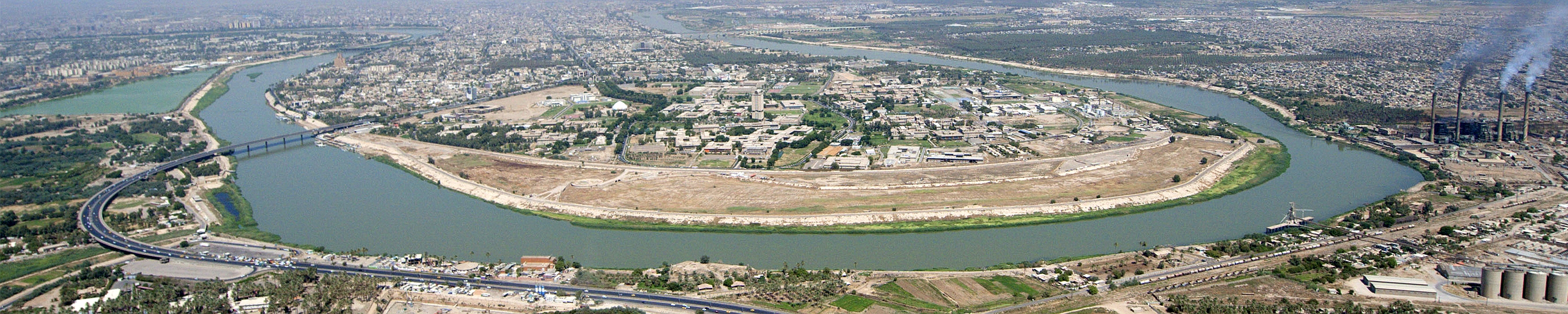
Iraq sits in the Middle East, ancient Mesopotamia — 'the land between two rivers.' The Tigris and Euphrates meet here, giving birth to humanity's earliest civilization: cuneiform writing, the Code of Hammurabi, the Hanging Gardens. Wars and conflict since 2003 have rewritten this country's name from 'cradle of civilization' to 'conflict zone.' But the Lions of Mesopotamia — Iraq's national team — will represent this country on the World Cup stage in 2026. For many people who have never searched for Iraq, football is the first reason to open this door.
Mutannabi Street hosts Baghdad's best book market every Friday. The selection is a scrambled timeline: yellowed poetry collections beside cheap English textbooks, Saddam-era political pamphlets beside dog-eared Arabic translations of Harry Potter. A bookstore owner — reading glasses perched on his nose, fingers gray from decades of ink and dust — spoke to me in English: 'During Saddam's time, the bookstores on this street were burned. During the American invasion, they were burned again. But the books didn't die, and the river didn't change.' He gestured outside at the Tigris: 'This river is older than every regime we've had combined. It has seen the kings of Babylon, the poets of the Abbasid dynasty, British tanks — and now it watches us.'
Places, routes and match-day culture
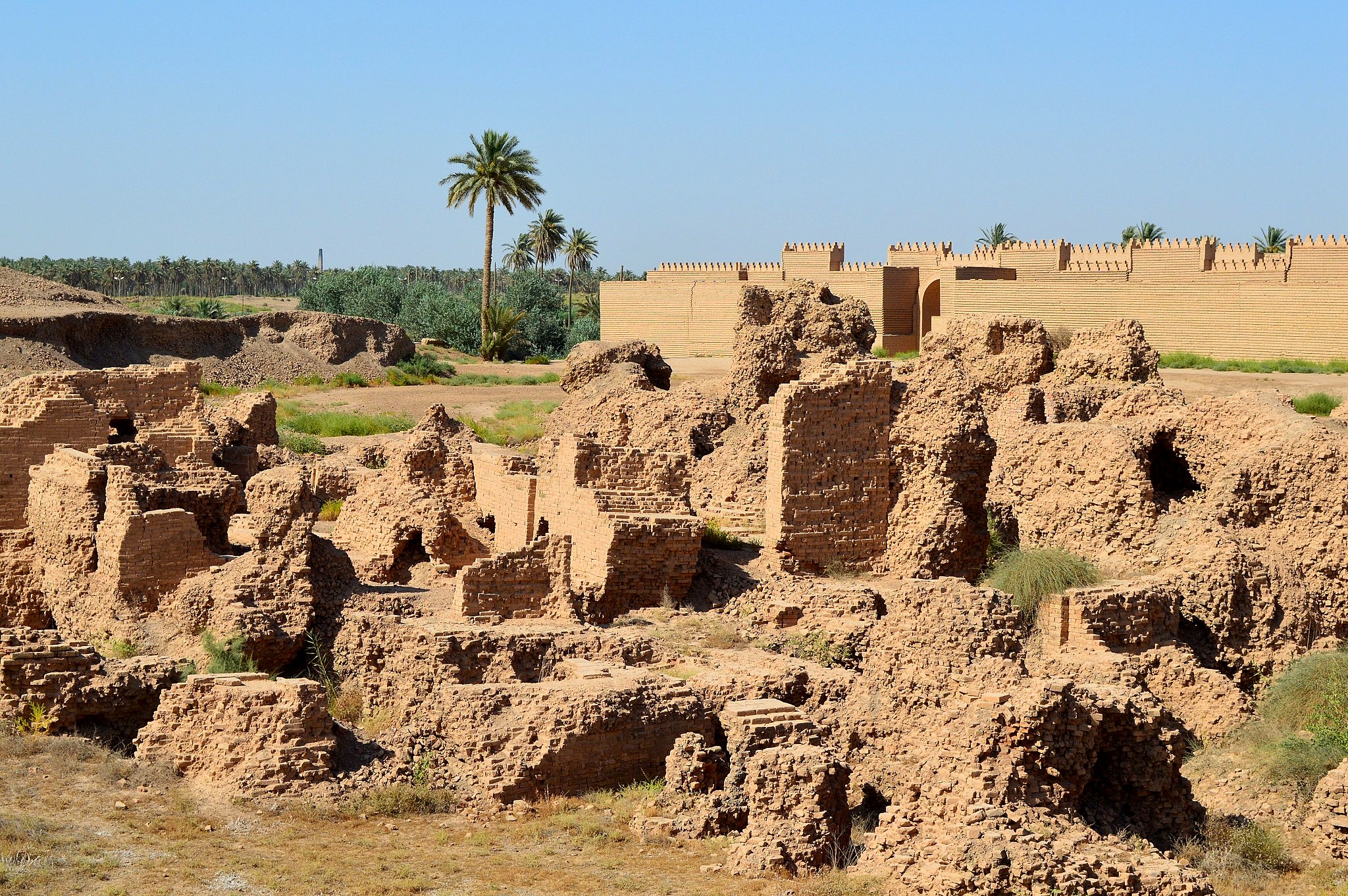
The ruins of Babylon are about eighty-five kilometers south of Baghdad, a two-hour drive. But those two hours pass through at least four military checkpoints and a stretch of airspace that American drones once patrolled heavily. Arriving, I counted two vehicles in the parking lot — one belonging to the guide and the other to a staff member of Iraq's antiquities authority. The guide, a local from Babylon Governorate named Hassan, opened the heavy iron gate of the archaeological site with the casual ease of someone unlocking their own backyard: 'It's not tourist season — Babylon is never tourist season.' He pointed at the Ishtar Gate — its blue-glazed bricks, the dragons and bulls still intact — and said: 'When Nebuchadnezzar II built this gate, Babylon was the largest city on Earth. Now — now it doesn't even have a bus route.' There was no self-pity in his tone. Just a statement.
Further north, Erbil, the capital of the Kurdistan Region of Iraq, operates at an entirely different pace and security level. The Citadel — the oldest continuously inhabited settlement on Earth, never abandoned in six thousand years — rises from the city center like a giant sand-colored cake. A Kurdish university student took me to his favorite kebab stall and, between ravenous bites, told me about Aymen Hussein's latest goal, scored with a header against Oman. 'The whole teahouse in Erbil jumped at once — Kurds, Arabs, Turkmen — there was only one identity in that room.' He used his kebab skewer to draw the shape of a football pitch on the table, and wrote two words in the middle: Iraq.
The Mesopotamian Marshes in the south — the legendary site of the Garden of Eden — were the last, and most surreal, thing I saw in Iraq. Floating reed houses known as mudhif rocked gently on the water. Water buffalo showed nothing above the surface but nostrils and a pair of curved horns. A boatman, standing in his mashoof canoe, said in simple English: 'Saddam once tried to drain all these marshes — to punish the Marsh Arabs who lived here. The water disappeared for ten years. Then the Americans came, and the water returned. Now — the water goes down, it comes up, it goes down again. The marshes are still the marshes.' He dipped his paddle; ahead of us, a flock of white birds lifted off. No commentary was needed. The facts themselves carried all the weight.
On my last evening in Baghdad, I returned to the teahouse on Mutannabi Street. Same seat, same pot of Arabic coffee. At the next table, a young man was translating the latest Iraq World Cup qualifying news from his phone to his friends in Arabic, the words 'Mbappé' and 'Messi' occasionally breaking through — football is the universal dialect. As I wrote these final notes, the call to prayer sounded from outside. The Tigris, invisible in the darkness, was only audible now — the sound of water moving. I wanted to fit everything into a single sentence, but Hassan — the guide from Babylon — had already written it for me when I left: 'You know, less than a hundred years after Nebuchadnezzar died, Babylon was empty. But today's travel guidebooks? Iraq gets a single line: Do not travel. This city's luck is not great — history gave it a title too grand, and the present gave it a review too small.' I paid for my coffee. I signed the guestbook — even though no one would read it.
Discover more countries
Travel stories from other countries
Cape Verde
Entering an Atlantic archipelago through its music
Curacao
One island, two worlds
Uzbekistan
Searching for modern answers on an ancient trade route
Jordan
Tracing the entire journey backward from the Treasury's light
Haiti
Returning home through the eyes of a diaspora footballer
DR Congo
City → River → Rainforest → Lava lake
Qatar
The real bill for 24 hours in Doha
Netherlands
From Amsterdam's canals to Breda's football ground, water routes and land routes unfold together
Switzerland
A geographical-acoustic travelogue, from Zurich lake mist to the whistle of Jungfrau trains
Morocco
An olfactory-map travelogue, from spice markets to the sweetness of mint tea
South Africa
From the silence of Robben Island to street football in Soweto, seeing how Bafana Bafana kicks the country back into one team
Japan
An immersive five-senses travelogue, from Shibuya's live screens to the sea breeze of Yokohama
Senegal
From Dakar street football and the silence of Goree Island to the salt light of Lac Rose, understanding the Lions of Teranga
Korea
An immersive five-senses travelogue, from street football in Hongdae to dusk in Chuncheon
Ivory Coast
Lagoons, cocoa, and orange shirts.
Norway
A landscape-contrast travelogue, from the edge of the North Sea to the depths of the fjords
Uganda
An immersive five-senses travelogue, from Kampala street football to Bwindi's silverback gorillas
← View all stories · Country travel guide · Browse all downloadable travel maps
Plan with confidence
Iraq travelogue FAQ
What does this Iraq travelogue cover?
It connects Iraq's routes, landscapes, food and football culture with practical next steps in the country guide.
Where can I find practical Iraq travel information?
Use the Iraq travel guide for entry planning, transport, budgets and route ideas, then confirm time-sensitive requirements with official sources.
Is this page a substitute for official travel advice?
No. Entry rules, safety guidance and transport conditions can change; confirm them with official sources before booking.