🇭🇹 Haiti · Les Grenadiers
Haiti travelogue: routes, football and local culture
Returning home through the eyes of a diaspora footballer
The travel story
Frantzdy Pierrot said something after training. It wasn't about football — although he's a forward for the Haitian national team, plays for a club in France, and is one of the few people who represent Haiti on an international stage. He said: 'Every time I go back to Haiti, the customs officers at Port-au-Prince airport know my mother. Not because of football — because she used to sell banana bread on the street outside the terminal.'
I built the entire journey from that sentence. Not because it's about football, but because it instantly opens an alternative entrance into Haiti: a country defined not by travel advisories but by homecoming memories and everyday resilience.
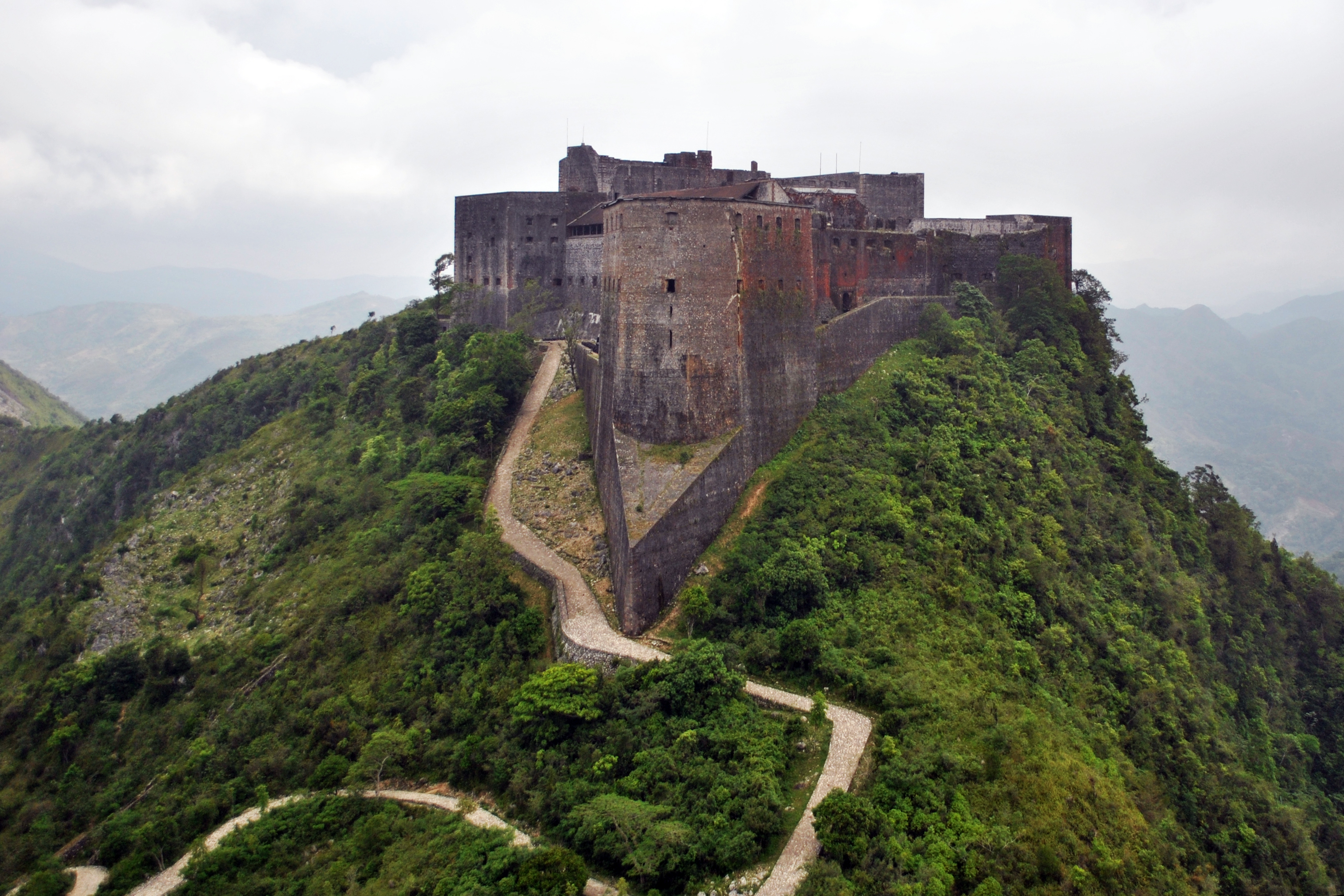
Haiti sits in the Caribbean Sea, sharing the island of Hispaniola with the Dominican Republic. It is one of the poorest countries in the Western Hemisphere and has endured overlapping shocks of political turmoil, gang violence, and natural disasters in recent years. Most countries' 2025 travel advice for Haiti boils down to the same sentence: Do not travel. But Haiti is also the world's first independent republic founded by a slave rebellion. This country declared its existence behind the stone walls of the Citadelle Laferrière in 1804 — and over two hundred years later, the fortress is still standing.
Arrival in Port-au-Prince was not beautiful. Kompa music exploded from the worn-out PA system in the arrivals hall — that rhythm twisting African drums and Caribbean melodies together, making your shoulders move involuntarily. Two kids squeezed through the crowd at baggage claim to help me with my bag — not out of kindness, but hoping for a tip. The humidity was more suffocating than the tarmac outside. The honest truth: Haiti's first impression is not romantic. But I decided I would neither glamorize nor distort — only record.
Heading north along the coastal highway, through scrubland and occasional roadside markets, Cap-Haïtien rose on the horizon. The Citadelle Laferrière — the largest fortress in the Western Hemisphere — squats at nine hundred meters above sea level like a stone beast. The mountain path leading to it is so steep that the horses' panting is louder than their bells. At the summit, I leaned against the two-hundred-year-old stone wall, gasping, and a local guide beside me said: 'You know, this fortress has never been attacked. It's so big nobody ever dared.' At the foot of the mountain, children were playing football on a patch of bare ground. The pitch lines were painted in the red and blue of the Haitian flag — compressing a national monument and an everyday football match into a single frame. This is the truest rhythm of the Haitian narrative.
Places, routes and match-day culture
Jacmel is a city made of papier-mâché and pigment — its carnival masks are the most intricate artworks in the entire Caribbean, and the artisans who make them mostly live in houses without reliable electricity. A mask-maker crouched in his doorway. The mask in his hands was half smile, half roar — a lion's mane morphing into human teeth, bird feathers melting into African patterns. 'During carnival, everyone wears a mask,' he said. 'But beneath the mask is the real Haiti. There's fear there, and anger, and a rhythm that makes you dance until sunrise. Haitians never wear just one mask.' I thought of Wilde-Donald Guerrier — the Haitian national team winger who journeyed from the southern coast of Port-à-Piment to European football pitches. His life trajectory is like a Jacmel mask: half hardship, half a brilliance that forces the world to look.
Griot — fried pork chunks served with pikliz, a fiery pickled slaw — announced itself from three blocks away. The woman running the stall was around sixty, a faded apron tied around her waist, and when she saw me taking photos she grinned and added two extra pieces of meat to my plate: 'Eat more. You need it.' The heat of pikliz rivals any Asian chili sauce — Haitians use spice to confront the heat, the poverty, everything that can't be solved by complaining. In the hissing oil of the griot, in the Kompa leaking from street corners, in the speed of the market women's hands shelling beans, I saw something I can only describe with the word resilience.
On my last night in Haiti, I stood on the balcony of a hotel in Port-au-Prince watching the scattered lights on the hills — not streetlights, but candles and kerosene lamps, the daily markers of neighborhoods without power. I thought about the cold language of travel advisories — 'high crime rate,' 'inadequate infrastructure,' 'do not travel.' Those statements are not factually wrong. But if you only read those statements, you wouldn't know how Haitians make the hottest pickled slaw in the Caribbean. You wouldn't know why the stones of the Citadelle still stand after two hundred years. You wouldn't know why Pierrot's mother sold banana bread outside the airport terminal, and why twenty years later her son would kick Haiti's name into the world's line of sight from an international pitch.
Back to what Pierrot said at the end of the interview: 'Haiti's flag says L'Union Fait La Force — unity makes strength. As a kid I didn't understand. Now, every time I put on the national team jersey, I think of my mother selling bread on the street. That's not giving up. That's the Haitian way — when the bus doesn't come, you set up your own stand.'
Discover more countries
Travel stories from other countries
Cape Verde
Entering an Atlantic archipelago through its music
Curacao
One island, two worlds
Uzbekistan
Searching for modern answers on an ancient trade route
Jordan
Tracing the entire journey backward from the Treasury's light
DR Congo
City → River → Rainforest → Lava lake
Iraq
Between Mesopotamian ruins and teahouses
Qatar
The real bill for 24 hours in Doha
Netherlands
From Amsterdam's canals to Breda's football ground, water routes and land routes unfold together
Switzerland
A geographical-acoustic travelogue, from Zurich lake mist to the whistle of Jungfrau trains
Morocco
An olfactory-map travelogue, from spice markets to the sweetness of mint tea
South Africa
From the silence of Robben Island to street football in Soweto, seeing how Bafana Bafana kicks the country back into one team
Japan
An immersive five-senses travelogue, from Shibuya's live screens to the sea breeze of Yokohama
Senegal
From Dakar street football and the silence of Goree Island to the salt light of Lac Rose, understanding the Lions of Teranga
Korea
An immersive five-senses travelogue, from street football in Hongdae to dusk in Chuncheon
Ivory Coast
Lagoons, cocoa, and orange shirts.
Norway
A landscape-contrast travelogue, from the edge of the North Sea to the depths of the fjords
Uganda
An immersive five-senses travelogue, from Kampala street football to Bwindi's silverback gorillas
← View all stories · Country travel guide · Browse all downloadable travel maps
Plan with confidence
Haiti travelogue FAQ
What does this Haiti travelogue cover?
It connects Haiti's routes, landscapes, food and football culture with practical next steps in the country guide.
Where can I find practical Haiti travel information?
Use the Haiti travel guide for entry planning, transport, budgets and route ideas, then confirm time-sensitive requirements with official sources.
Is this page a substitute for official travel advice?
No. Entry rules, safety guidance and transport conditions can change; confirm them with official sources before booking.