🇭🇹 Haiti · Les Grenadiers
Haiti Stories: Afore Ah Gaed tae Haiti, Ilkane Askit Me the Same Question
Returnin hame throu the een o a diaspora fitbawer
Frantzdy Pierrot said somethin efter trainin. It wisnae aboot fitbaw — awbesit he's a forrit for the Haitian naitional team, plays for a club in Fraunce, an is ane o the few fowk wha represent Haiti on an internaitional stage. He said: 'Ivry time Ah gang back tae Haiti, the customs officers at Port-au-Prince airport ken ma mither. No acause o fitbaw — acause she uised tae sell banana breid on the street ootside the terminal.'
Ah biggit the hail journey frae that sentence. No acause it's aboot fitbaw, but acause it instantly apens an alternative entrance intae Haiti: a kintra defined no by traivel advisories but by hamecomin memories an ivryday resilience.
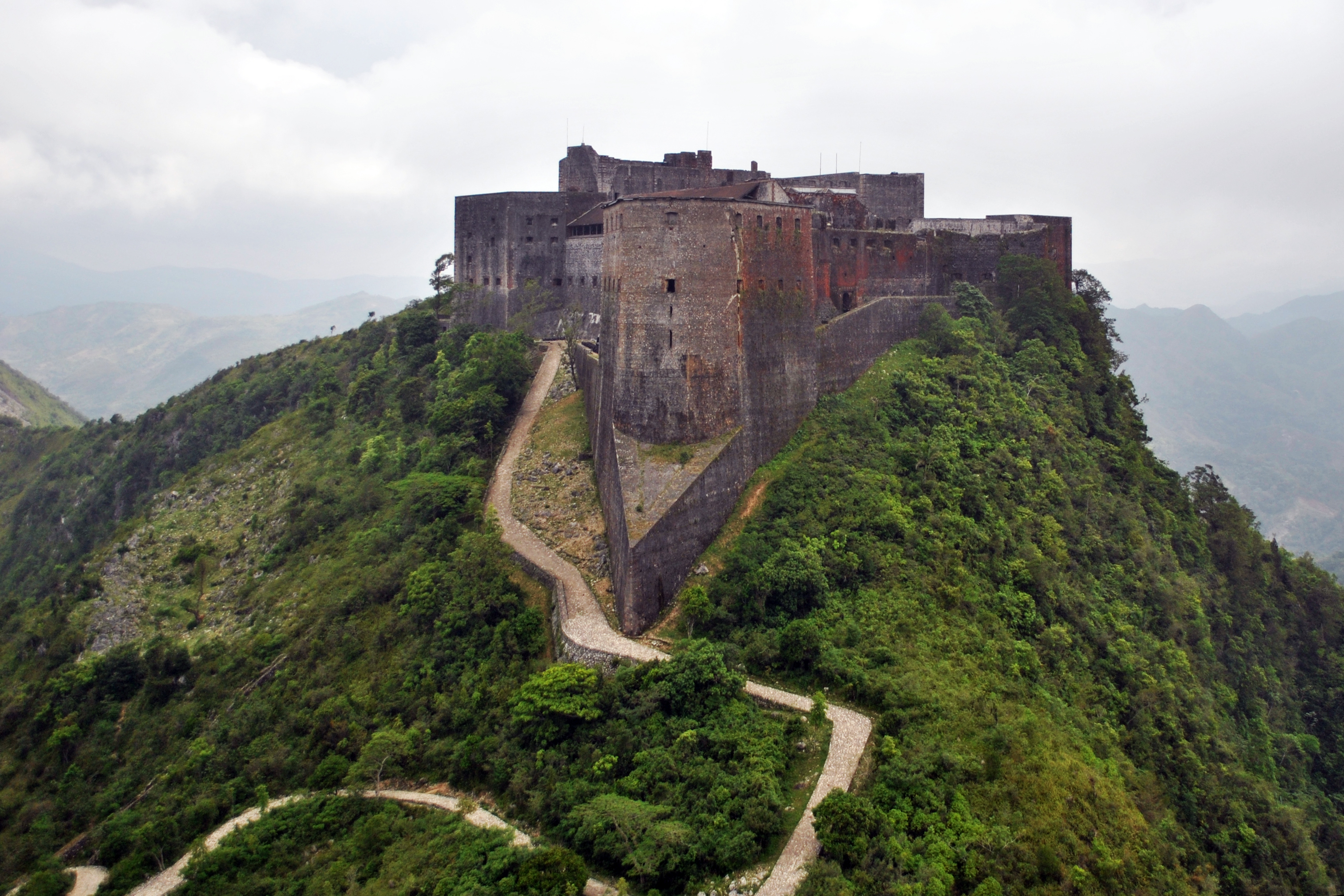
Haiti sits in the Caribbean Sea, sharein the island o Hispaniola wi the Dominican Republic. It is ane o the poorest kintras in the Wastren Hemisphere an haes endured owerlappin shocks o poleetical turmoil, gang violence, an naitural disasters in recent years. Maist kintras' 2025 traivel advice for Haiti byles doon tae the same sentence: Dae no traivel. But Haiti is forby the warld's first independent republic foondit by a sclave rebellion. This kintra declared its existence ahent the stane waws o the Citadelle Laferrière in 1804 — an ower twa hunner year later, the fortress is still staundin.
Arrival in Port-au-Prince wisnae bonnie. Kompa music explodit frae the worn-oot PA system in the arrivals haw — that rhythm twistin African drums an Caribbean melodies thegither, makkin yer shouders muive wi'oot thinkin. Twa bairns skoozed throu the crood at baggage claim tae help me wi ma bag — no oot o kindness, but hopin for a tip. The humidity wis mair smoorin than the tarmac ootside. The honest truith: Haiti's first impression isnae romantic. But Ah decidit Ah wad neither glamorise nor waur — juist record.
Heidin north alang the coastal heichwey, throu scroggie laund an whiles roadside mercats, Cap-Haïtien raise on the horizon. The Citadelle Laferrière — the mucklest fortress in the Wastren Hemisphere — scoots at nine hunner metre abuin sea level lik a stane beast. The muntain path leadin tae it is sae steep that the horses' pynein is looder than thair bells. At the summit, Ah lent agin the twa-hunner-year-auld stane waw, kirnin, an a local guide aside me said: 'Ye ken, this fortress haes nivver been attackit. It's sae muckle naebody ivver dared.' At the fit o the muntain, bairns wur playin fitbaw on a patch o bare grun. The pitch lines wur pentit in the rid an blue o the Haitian flag — compressin a naitional monument an an ivryday fitbaw match intae a single frame. This is the truest rhythm o the Haitian narrative.
Jacmel is a ceity made o papier-mâché an pigment — its carnival masks are the maist intricate airtwirks in the hail Caribbean, an the artisans wha mak them maistly bid in hooses withoot reliable electricity. A mask-makker crouched in his doorwey. The mask in his hauns wis hauf smile, hauf roar — a lion's mane morphin intae human teeth, bird feathers meltin intae African patterns. 'Durin carnival, ilkane weirs a mask,' he said. 'But ahent the mask is the real Haiti. Thaur's fear thaur, an anger, an a rhythm that maks ye dance till sunrise. Haitians nivver wear juist the ae mask.' Ah thocht o Wilde-Donald Guerrier — the Haitian naitional team winger wha jurneyed frae the soothren coast o Port-à-Piment tae European fitbaw pitches. His life trajectory is lik a Jacmel mask: hauf haurdship, hauf a brilliance that forces the warld tae leuk.
Griot — fried pork chunks served wi pikliz, a fiery pickled slaw — annoonced itsel frae three blocks awa. The wumman rinnin the staund wis aroon saxty, a fadit apron tied aroon her weist, an whan she saw me takin photaes she grinned an addit twa extra pieces o meat tae ma plate: 'Eat mair. Ye need it.' The heat o pikliz rivals ony Asian chili sauce — Haitians uise spice tae confront the heat, the poverty, ivrythin that cannae be solved by complainin. In the hissin ile o the griot, in the Kompa leakin frae street corners, in the speed o the mercat weemen's hauns shellin beans, Ah saw somethin Ah can ainly descrive wi the wird resilience.
On ma last nicht in Haiti, Ah stuid on the balcony o a hotel in Port-au-Prince watchin the scaittert lichts on the hills — no streetlichts, but caunles an paraffin lamps, the daily merkers o neeburheids withoot power. Ah thocht aboot the cauld leid o traivel advisories — 'heich crime rate,' 'inadequate infrastructure,' 'dae no traivel.' Thae statements are no factually wrang. But gin ye ainly read thae statements, ye wadnae ken hou Haitians mak the hottest pickled slaw in the Caribbean. Ye wadnae ken why the stanes o the Citadelle still staund efter twa hunner year. Ye wadnae ken why Pierrot's mither selt banana breid ootside the airport terminal, an why twinty year later her son wad kick Haiti's name intae the warld's line o sicht frae an internaitional pitch.
Back tae whit Pierrot said at the end o the interview: 'Haiti's flag says L'Union Fait La Force — unity maks strenth. As a bairn Ah didnae unnerstaund. The noo, ilka time Ah pit on the naitional team jersey, Ah think o ma mither sellin breid on the street. That's no giein up. That's the Haitian wey — whan the bus disnae come, ye set up yer ain staund.'
Explair kintras
Warld Cup kintra traivel guides
Cape Verde
Enterin an Atlantic airchipelago throu its music
Curacao
Ae island, twa warlds
Uzbekistan
Searchin for modren answers on an auncient troke route
Jordan
Tracin the hail journey backwards frae the Treasury's licht
DR Congo
Ceity → River → Rainforest → Lava loch
Iraq
Atween Mesopotamian ruins an teahouses
Qatar
The real bill for 24 oors in Doha
Netherlands
Frae Amsterdam Canals tae Breda's Pitch—Watterweys an Landweys thegither
Switzerland
Frae Zurich Loch Mist tae the Jungfrau Whustle
Morocco
Frae the Spice Soaks tae the Sweet o Mint Tea
South Africa
Frae the Silence o Robben Island tae the Street Fitba o Soweto—seein hoo Bafana Bafana kicks the naition back intae ae team
Japan
Frae Shibuya Live Screens tae Yokohama Sea Winds
Senegal
Frae Dakar Street Fitba, Gorée Island Silence tae Lac Rose's Saut-licht—Readin the Lions o Teranga
Korea
Frae Hongdae Street Fitba tae Chuncheon's Gloamin
Ivory Coast
Lagoons, cocoa, and orange shirts.
Norway
Frae the Edge o the North Sea tae the Depths o the Fjords
Uganda
Fae Kampala Street Fitba tae Bwindi's Sillerback Gorillas
← Stories · Warld Cup kintra traivel guides · Browse all downloadable travel maps