Country travel snapshot
Haiti travel basics: entry, season, budget and transport
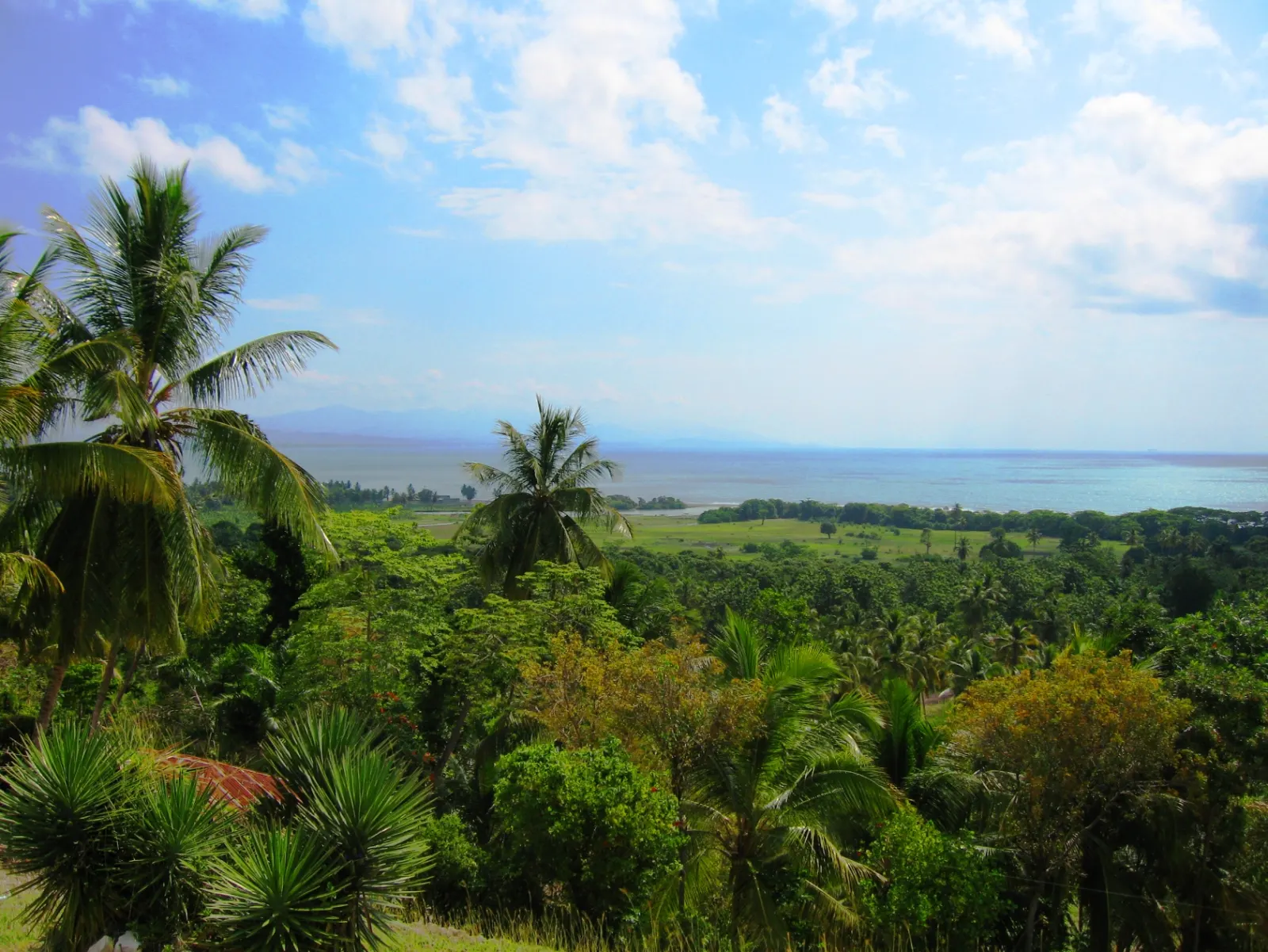
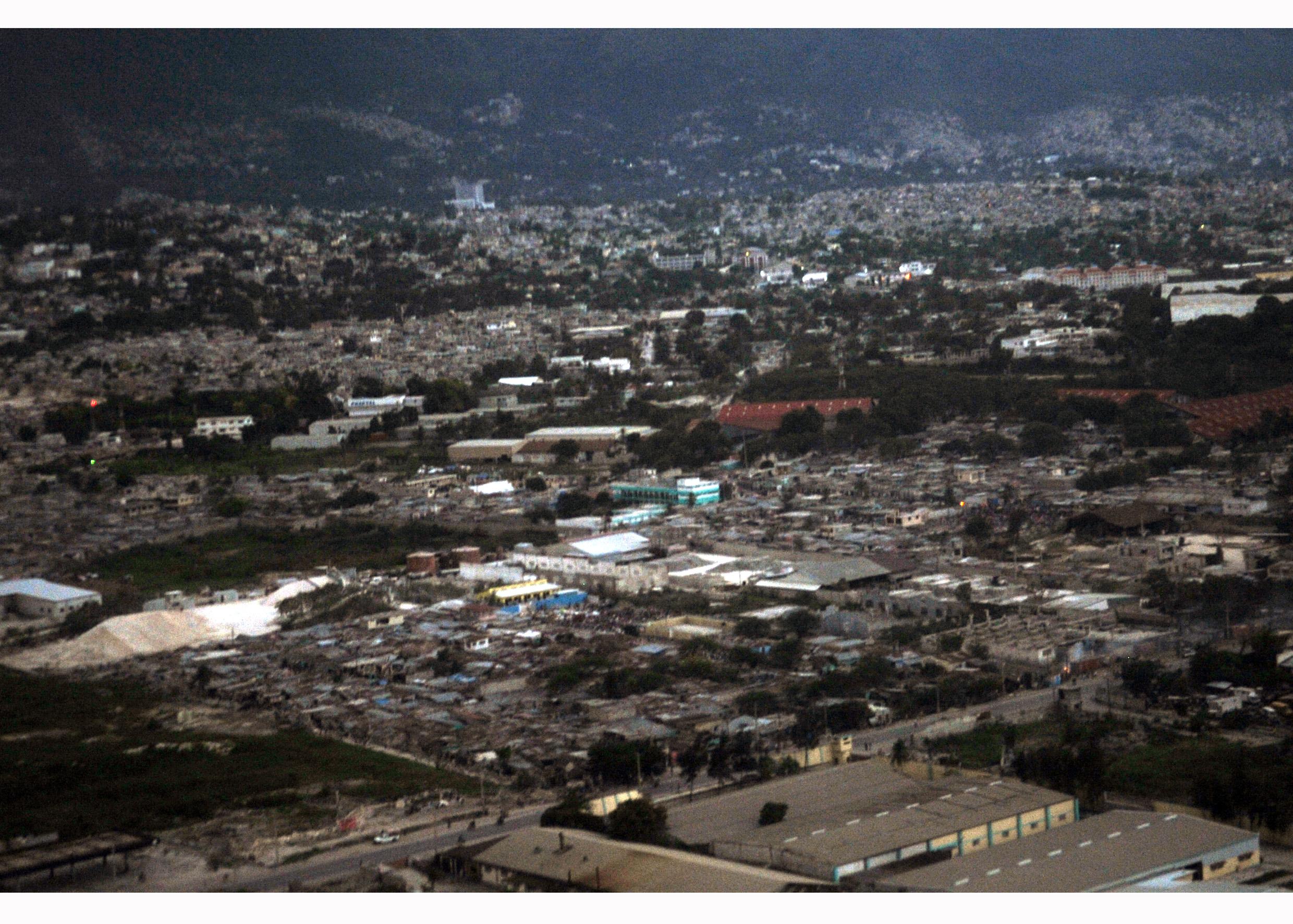
Western part of Hispaniola in the Caribbean, sharing the island with the Dominican Republic. Start here for the practical checks that decide whether a Haiti trip works: entry rules, weather, costs and local movement.
- Population
- About 11-12 million people.
- Time zone
- Eastern Time, UTC-5/UTC-4 seasonally.
- People
- Mostly Haitian Creole/Afro-Caribbean population, with strong French and African cultural roots.
- Local languages
- Haitian Creole and French are both official. Haitian Creole is a French-based Creole with strong West African influence and is the language of everyday life for nearly everyone; French, a Romance language, is more common in administration, education, formal writing, and some business settings. English is spoken by some people in tourism, hotels, NGOs, and diaspora-linked services, while Spanish may appear near Dominican Republic connections, but travelers should not assume either is widely available.
- Currency and exchange
- Haitian gourde (HTG).
Planning snapshot: 1 USD about 130-140 HTG; 1 EUR about 140-155 HTG; 1 CNY about 18-20 HTG.Loading live reference rates HTG...
Visa / arrival rules
Most tourists do not need a visa for Haiti for short stays and instead pay the US$10 tourist fee on arrival with a passport valid at least 6 months. The listed visa-required passports are Dominican Republic, Panama, Colombia, Cuba, Syria, Libya, Iran, Vietnam, and Yemen; those travelers should apply at least 1 month before departure. Security conditions matter more than the stamp, so flights, hotel transfers, and local guides should be confirmed before buying nonrefundable tickets. Before booking flights, recheck the official rule against passport nationality, arrival point, and transit plan.
Visa/entry information last reviewed: 2026-07-08. Rules can change by passport, arrival point and transit plan; recheck official rules before booking.Best local transport
In Haiti, treat transport as safety logistics: use hotel transfers, vetted private drivers, and local guides rather than random street taxis or self-driving. Budget about $80-$180 per day for a reliable driver/vehicle in safer operating windows and extra for a guide or security-aware fixer; airport or cross-city transfers can be quoted separately. Domestic flights between Port-au-Prince and Cap-Haitien can make sense for Citadelle Laferriere and Sans-Souci when road security is poor, but schedules are limited and must be reconfirmed. Ferries are not a dependable sightseeing backbone for the routes here. Within Cap-Haitien or Jacmel, short trusted taxi/driver hops are better than bicycles unless a hotel or guide gives a very local, low-risk route.
Best season
December to March is usually the driest travel window. Tropical Caribbean climate with rainy seasons and hurricane risk. In the drier season, outdoor days are usually about 27-31°C (81-88°F), with nights around 19-24°C (66-75°F); mountain areas can be cooler than the coast. Read season and climate together with the outdoor workload: beach days, desert drives, old-city walking, hiking, and inter-island movement all have different weather tolerance.
Cost level
Mixed: local goods can be cheap, secure transport and reliable hotels cost more. A simple local plate can be about 250-500 HTG, while a safer sit-down restaurant meal is often 800-1,500 HTG per person and hotel restaurants cost more. In Port-au-Prince, do not budget around random street taxis: use hotel transfers or vetted drivers; short secure rides may cost about $10-25, and airport transfers can be higher. Tips are useful in cash: 5-10% in restaurants when service is good, and small USD/HTG tips for drivers, porters, and guides. Plan about $1,200-$2,700 per person for a short, guide-supported heritage trip; security costs matter.
Before you book
Haiti practical checks
Use these extra notes after the travel basics to check safety, entry friction, money, transport, routing and the easiest first meal.
Haiti Local customs?
Check current safety guidance before publishing or booking. Use local fixers/guides for heritage sites and transfers.
Haiti Visa / arrival rules?
Most tourists do not need a visa for Haiti for short stays and instead pay the US$10 tourist fee on arrival with a passport valid at least 6 months. The listed visa-required passports are Dominican Republic, Panama, Colombia, Cuba, Syria, Libya, Iran, Vietnam, and Yemen; those travelers should apply at least 1 month before departure. Security conditions matter more than the stamp, so flights, hotel transfers, and local guides should be confirmed before buying nonrefundable tickets. Ask before photographing ceremonies, markets, or private groups.
Haiti Currency and exchange?
Haitian gourde (HTG). Planning snapshot: 1 USD about 130-140 HTG; 1 EUR about 140-155 HTG; 1 CNY about 18-20 HTG. Mixed: local goods can be cheap, secure transport and reliable hotels cost more. A simple local plate can be about 250-500 HTG, while a safer sit-down restaurant meal is often 800-1,500 HTG per person and hotel restaurants cost more. In Port-au-Prince, do not budget around random street taxis: use hotel transfers or vetted drivers; short secure rides may cost about $10-25, and airport transfers can be higher. Tips are useful in cash: 5-10% in restaurants when service is good, and small USD/HTG tips for drivers, porters, and guides. Plan about $1,200-$2,700 per person for a short, guide-supported heritage trip; security costs matter.
Real route reference
7-day Haiti itinerary for World Cup travelers
A practical route that turns interest in Les Grenadiers into cities, landscapes, food stops and match-night culture. Haiti should not be presented as a simple beach trip. A responsible first route centers Cap-Haitien, Citadelle Laferriere, Sans-Souci Palace, and conditional branches to Labadee or Jacmel, with guides, transport, and security checked in real time.

Day 1 · Arrival
Arrive and confirm transfers
airport -> vetted hotel
The first day is about airport pickup, hotel confidence, and local guide confirmation.
Base everything on current safety advice.
Day 2 · Milot
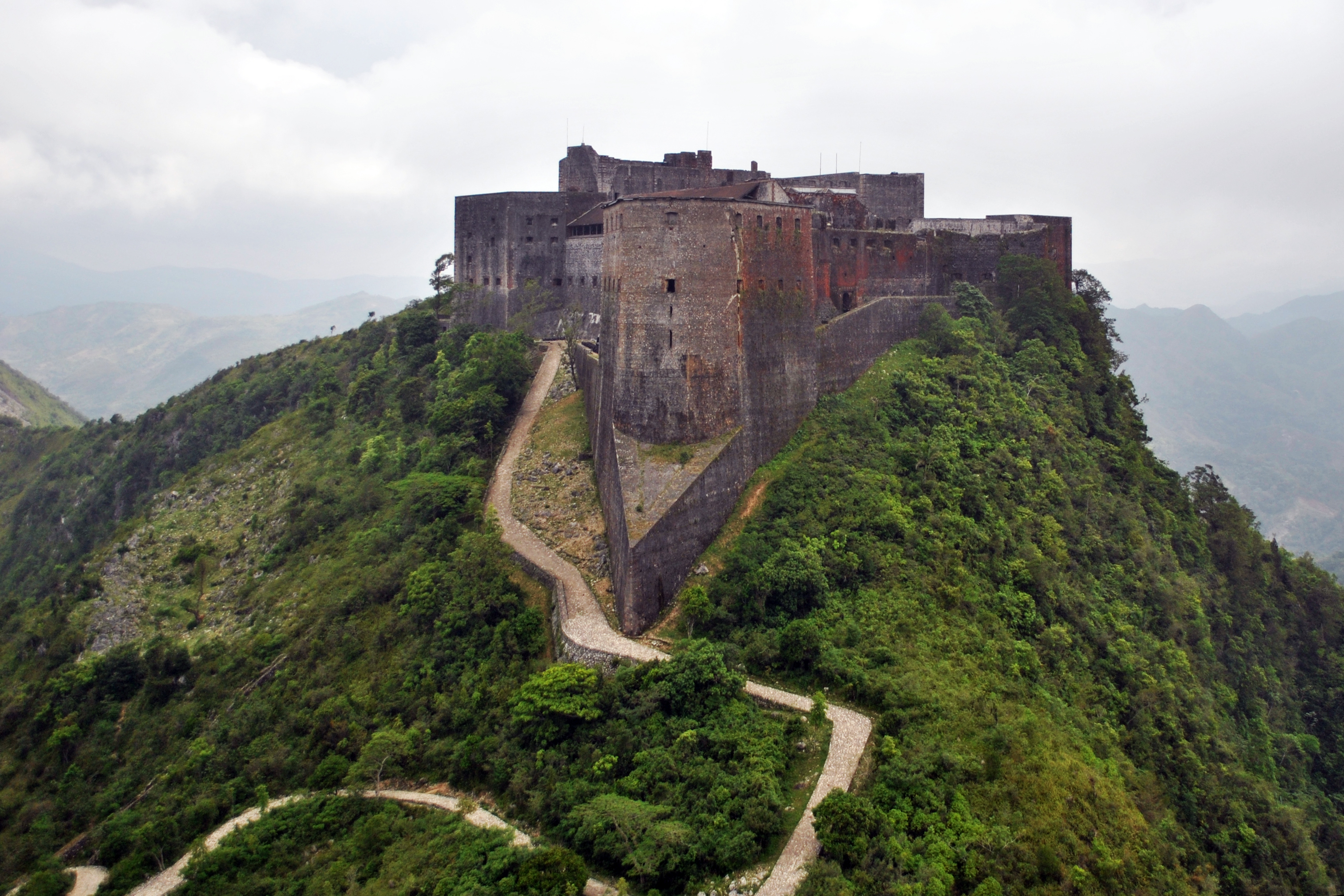
Citadelle Laferriere
Cap-Haitien -> Milot -> Citadelle
Citadelle is the strongest visual chapter: mountain road, walls, cannons, and green distance.
Use guide, vehicle, and realistic timing.
Day 3 · Milot
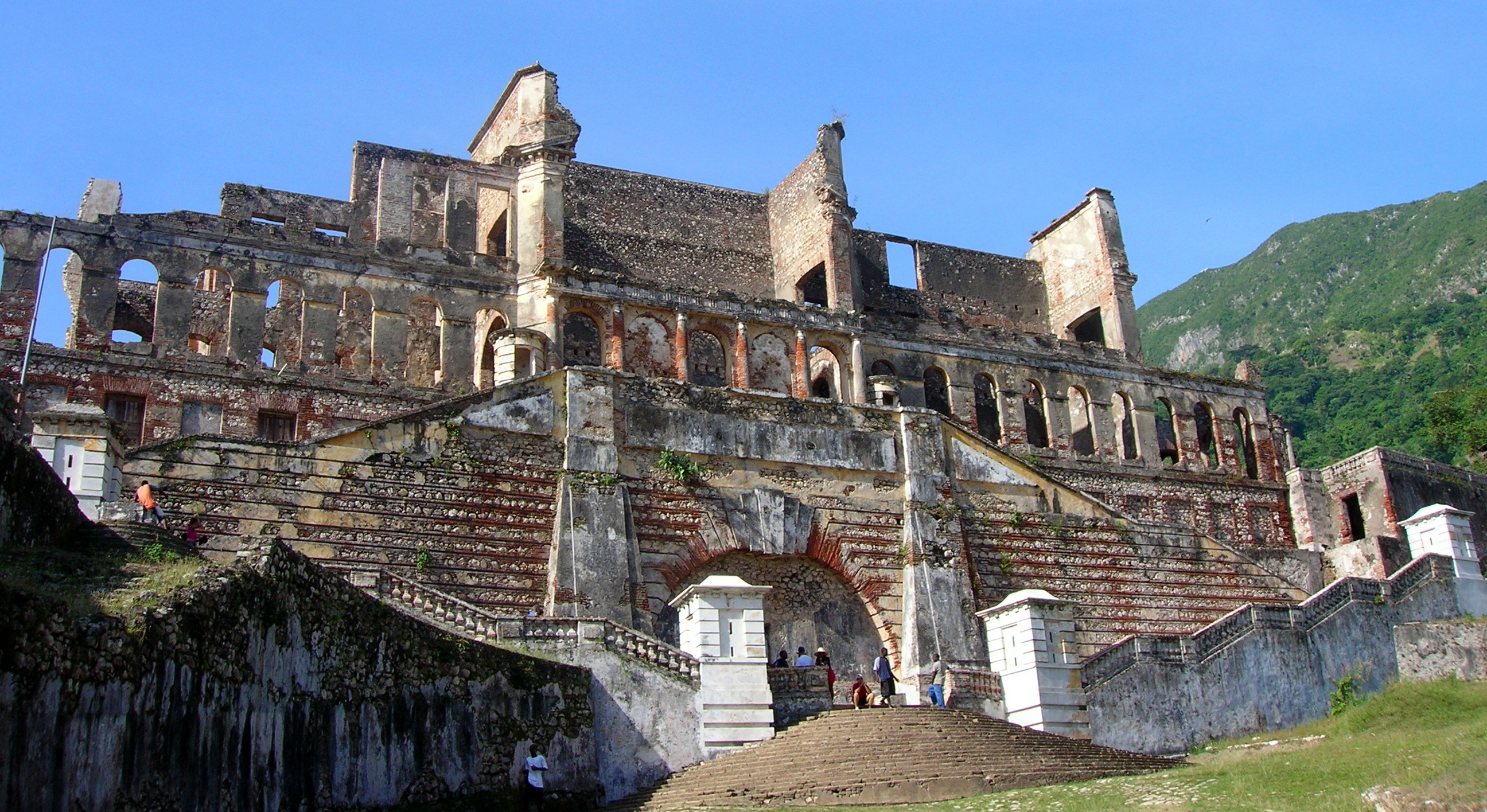
Sans-Souci Palace
Milot -> Sans-Souci Palace -> Cap-Haitien
Sans-Souci pairs naturally with Citadelle as a history route, not a separate checklist item.
Can pair with Citadelle depending on conditions.
Day 4 · Cap-Haitien
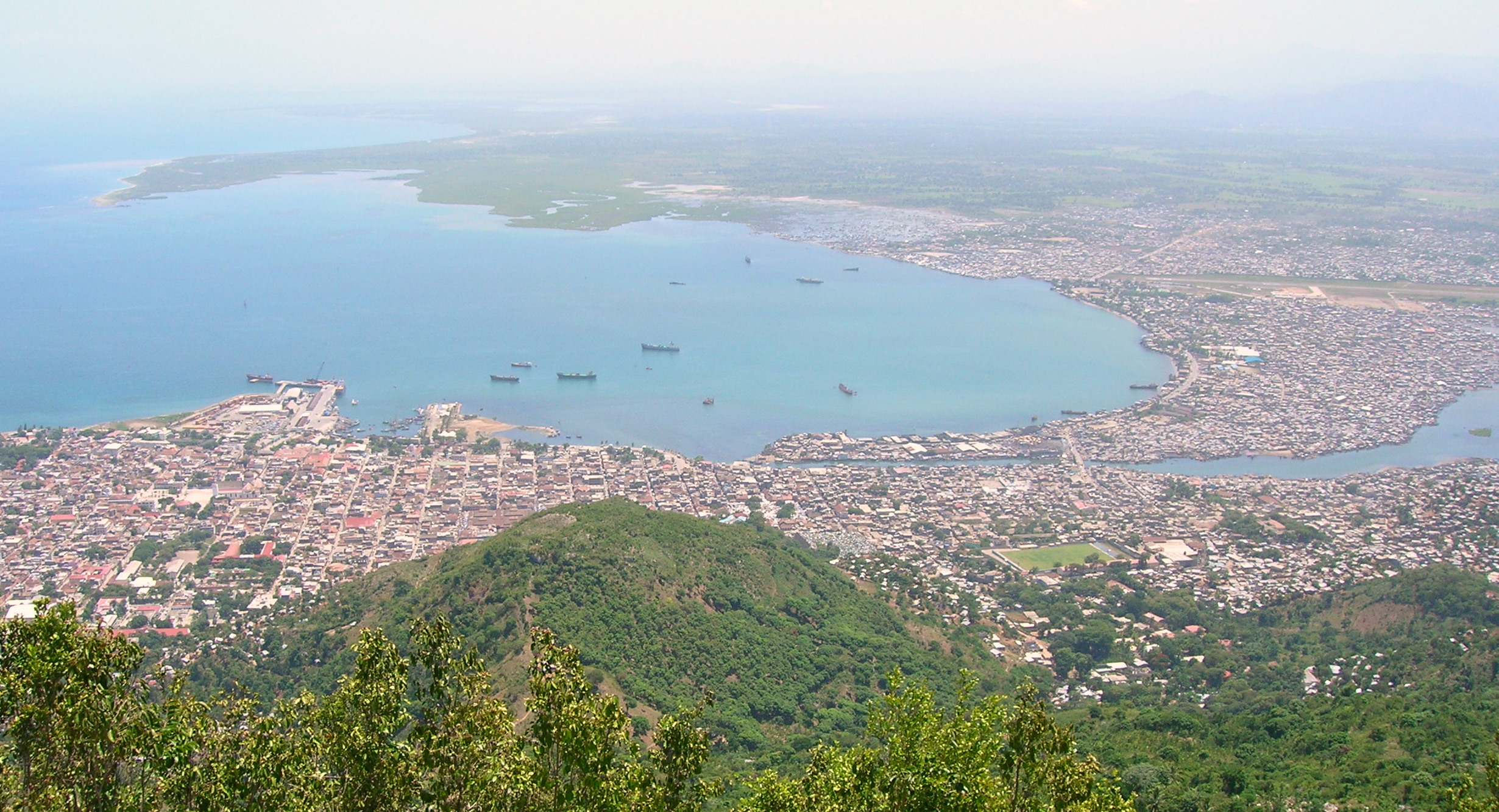
Cap-Haitien city and football context
Cap-Haitien city -> local food -> waterfront
Cap-Haitien lets the Frantzdy Pierrot hometown thread enter the city rather than remain player trivia.
Do not recommend casual solo movement.
Day 5 · Labadee
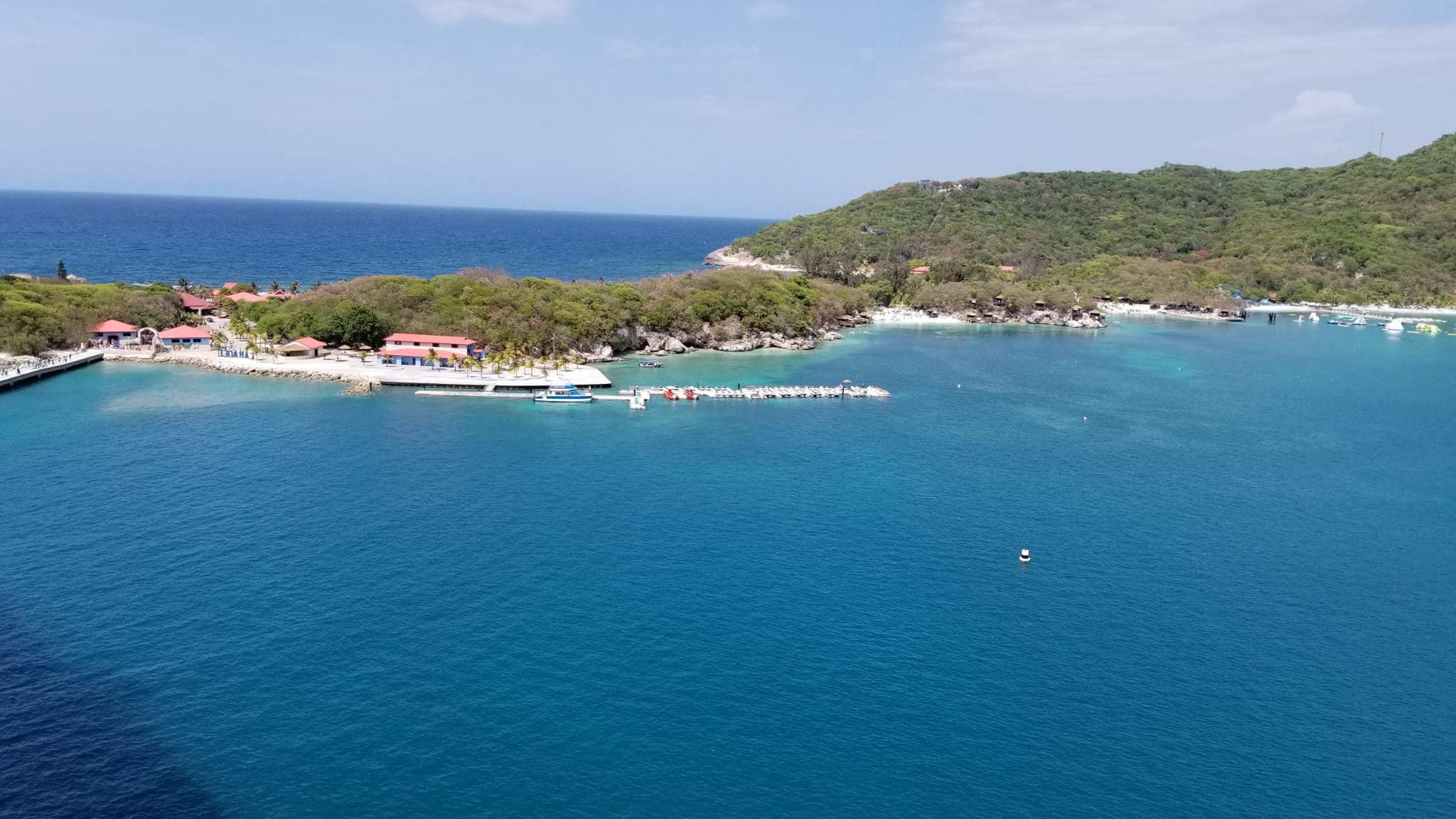
Labadee as a conditional coast day
Cap-Haitien -> Labadee
Labadee can close the northern coast route, but it should not represent all of Haiti.
Verify opening and transport.
Day 6 · Jacmel
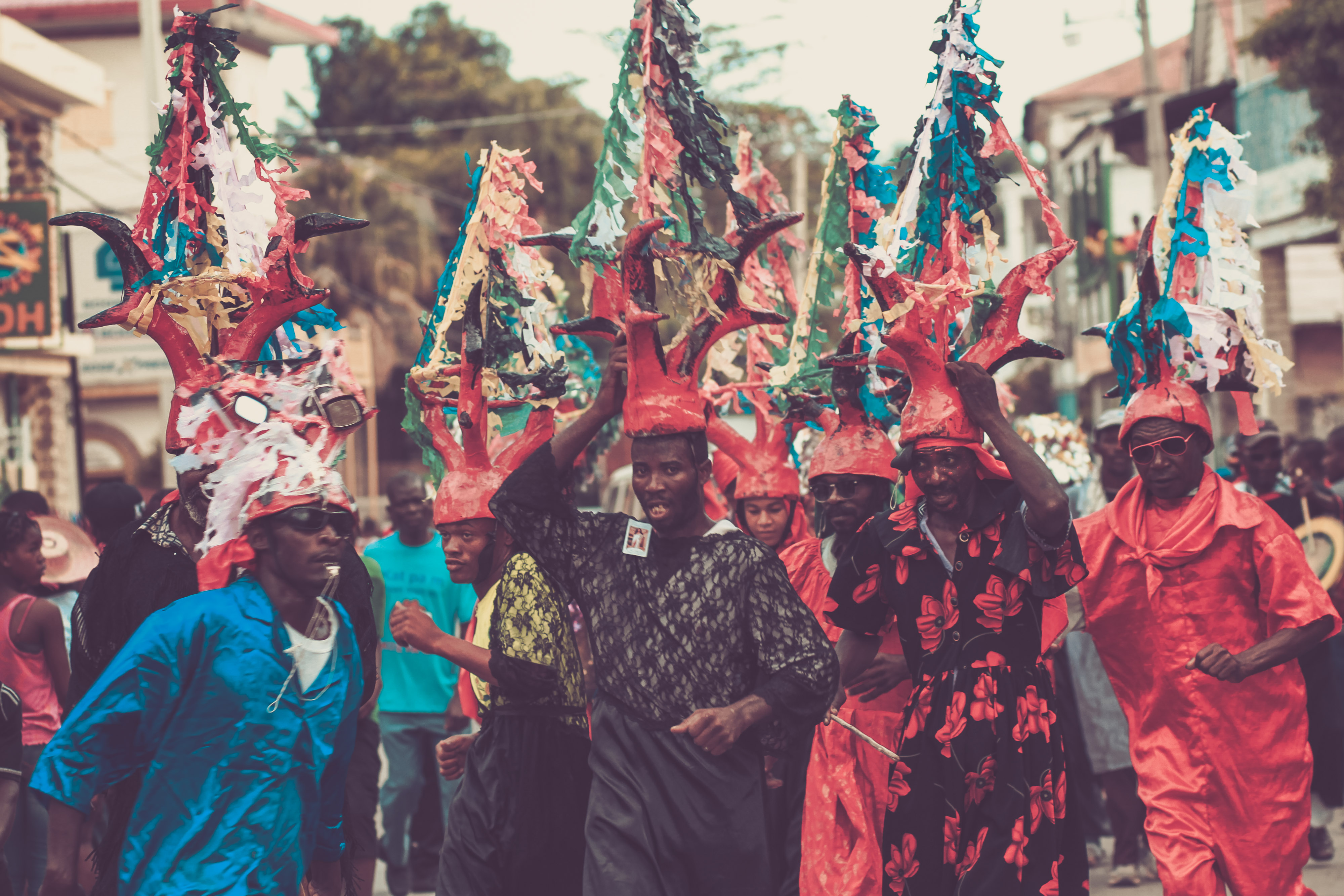
Jacmel as a conditional arts branch
Port-au-Prince -> Jacmel
Jacmel adds art, carnival, coast, and old streets only when conditions make the transfer sensible.
Recheck roads and security before suggesting it.
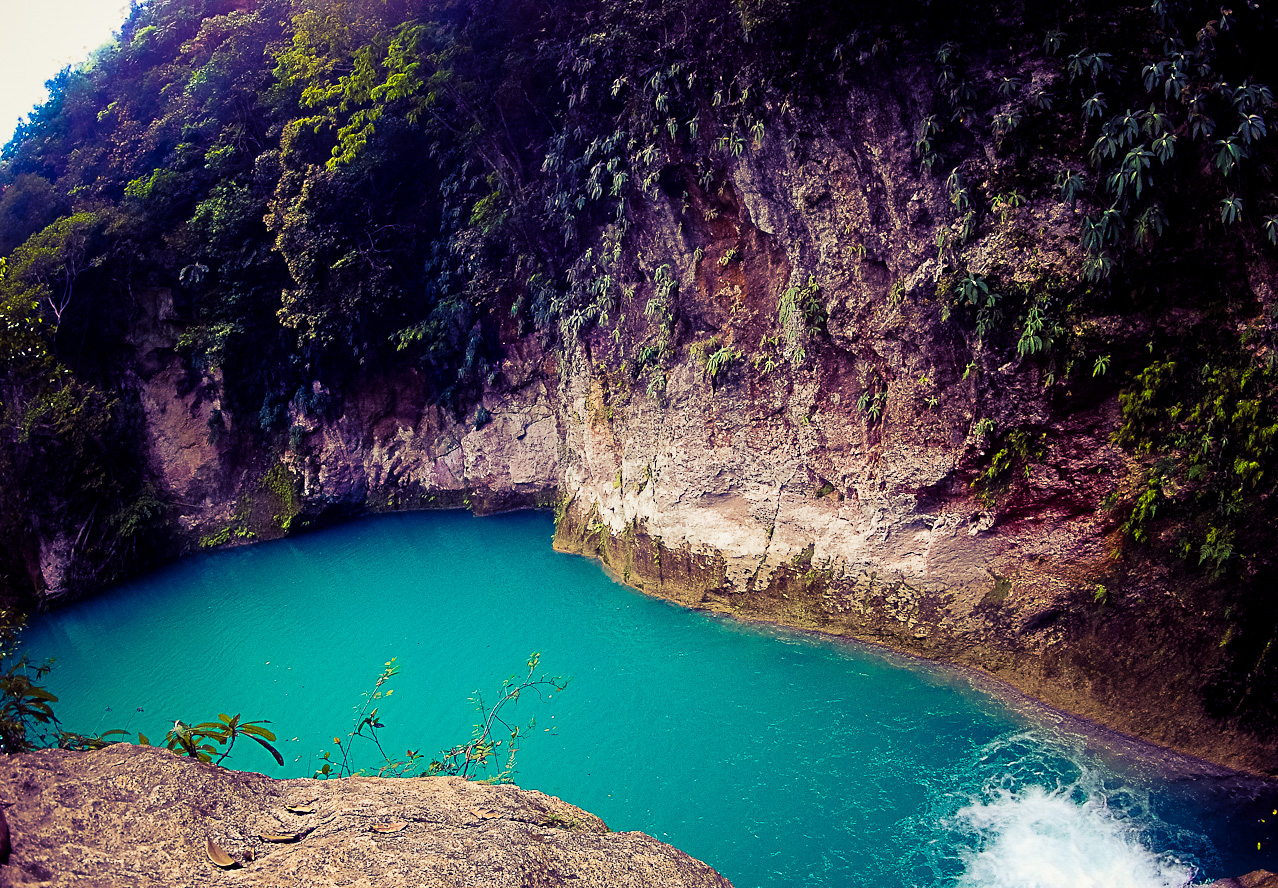
Day 7 · Return
Return with Les Grenadiers
hotel -> airport
Close with Duckens Nazon, Frantzdy Pierrot, diaspora fans, and Les Grenadiers.
Keep departure day light.
🇭🇹 Haiti travelogue
Before I Went to Haiti, Everyone Asked Me the Same Question
Read the narrative side of Haiti: how arrival, football curiosity and local rhythm connect beyond a checklist.
Frantzdy Pierrot said something after training. It wasn't about football — although he's a forward for the Haitian national team, plays for a club in France, and is one of the few people who represent Haiti on an international stage. He said: 'Every time I go back to Haiti, the customs officers at Port-au-Prince airport know my mother. Not because of football — because she used to sell banana bread on the street outside the terminal.'
I built the entire journey from that sentence. Not because it's about football, but because it instantly opens an alternative entrance into Haiti: a country defined not by travel advisories but by homecoming memories and everyday resilience.
Read the full Haiti World Cup travel storyFamous player match photos
Haiti players and football faces
Player context helps connect Les Grenadiers with hometowns, clubs, diaspora stories and routes a traveler can actually follow.


Recommended arrival airports and flight budget
Haiti airports and flight routes
Use this section to compare arrival airports, likely connections and where each route places you inside Haiti. Flight prices are seasonal planning ranges; check live fares before booking.
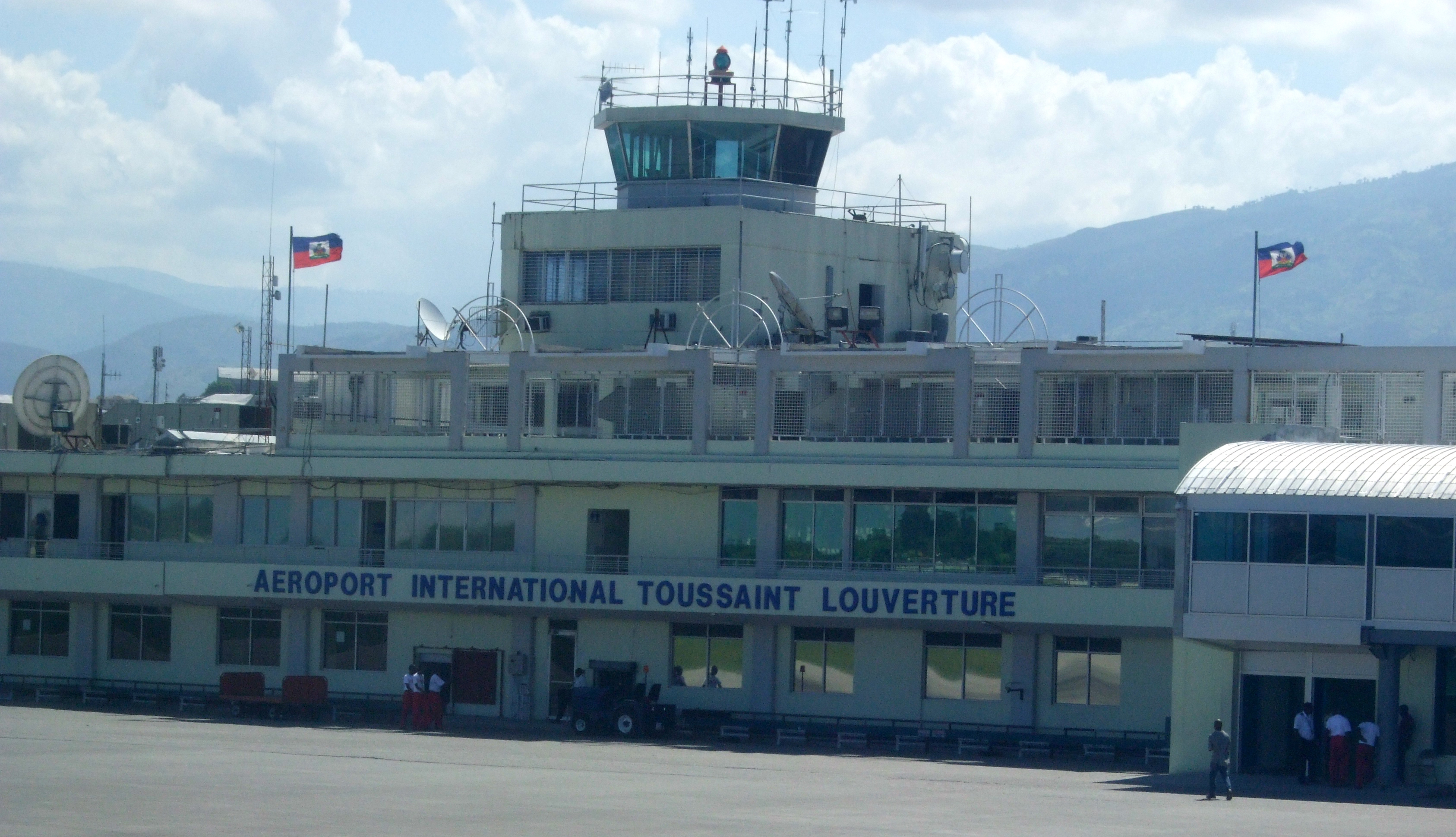
PAP
Toussaint Louverture International Airport
Main gateway for Port-au-Prince and most international services.
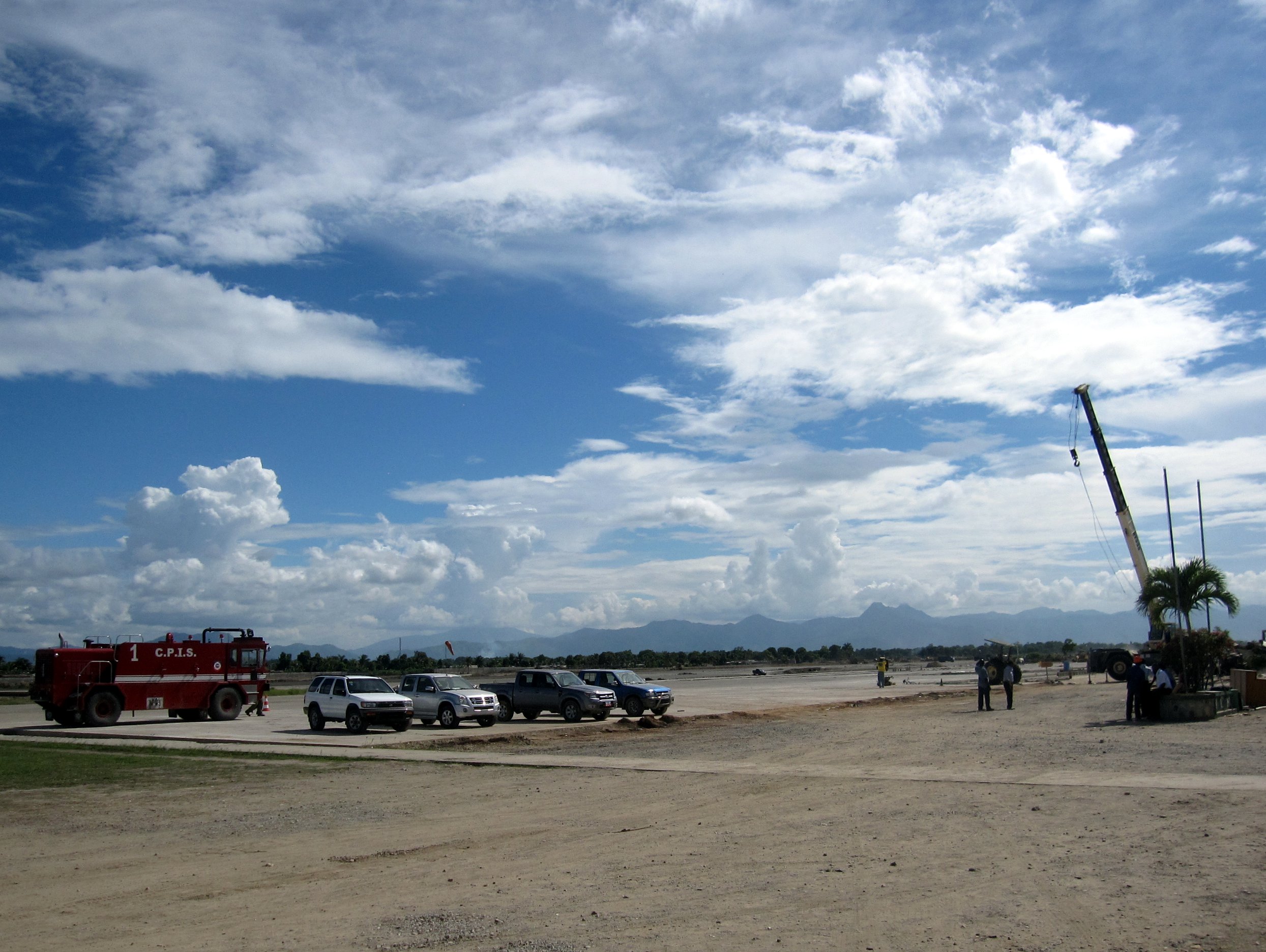
CAP
Cap-Haitien International Airport
Best for Citadelle Laferriere, Sans-Souci Palace, and north-coast heritage trips.
Local customs
- Check current safety guidance before publishing or booking.
- Use local fixers/guides for heritage sites and transfers.
- Ask before photographing ceremonies, markets, or private groups.
Haiti Best local transport?
In Haiti, treat transport as safety logistics: use hotel transfers, vetted private drivers, and local guides rather than random street taxis or self-driving. Budget about $80-$180 per day for a reliable driver/vehicle in safer operating windows and extra for a guide or security-aware fixer; airport or cross-city transfers can be quoted separately. Domestic flights between Port-au-Prince and Cap-Haitien can make sense for Citadelle Laferriere and Sans-Souci when road security is poor, but schedules are limited and must be reconfirmed. Ferries are not a dependable sightseeing backbone for the routes here. Within Cap-Haitien or Jacmel, short trusted taxi/driver hops are better than bicycles unless a hotel or guide gives a very local, low-risk route.
Haiti Route reference?
Haiti should not be presented as a simple beach trip. A responsible first route centers Cap-Haitien, Citadelle Laferriere, Sans-Souci Palace, and conditional branches to Labadee or Jacmel, with guides, transport, and security checked in real time. Arrive and confirm transfers airport -> vetted hotel Base everything on current safety advice. Citadelle Laferriere Cap-Haitien -> Milot -> Citadelle Use guide, vehicle, and realistic timing. Sans-Souci Palace Milot -> Sans-Souci Palace -> Cap-Haitien Can pair with Citadelle depending on conditions.
Hotels after landing
Where to stay in Haiti
Hotel choices are grouped by route logic, airport access, neighborhood feel and match-day convenience.
Marriott Port-au-Prince Hotel
Price range: $160-$280/night
Reliable business-style base in the capital.
Karibe Hotel
Price range: $150-$280/night
Established Port-au-Prince stay with event spaces.
Satama Hotel
Price range: $120-$230/night
Cap-Haitien base for north-coast heritage.
Cormier Plage Resort
Price range: $100-$220/night
Beach-oriented stay near Cap-Haitien.
Local food and restaurants
What to eat in Haiti
Food notes focus on local dishes, realistic restaurant types, prices and the easiest first meals after arrival.
Griot
Fried pork often served with pikliz.
Restaurants: Kokoye Bar & Grill, local Haitian kitchens
Budget: $8-$18
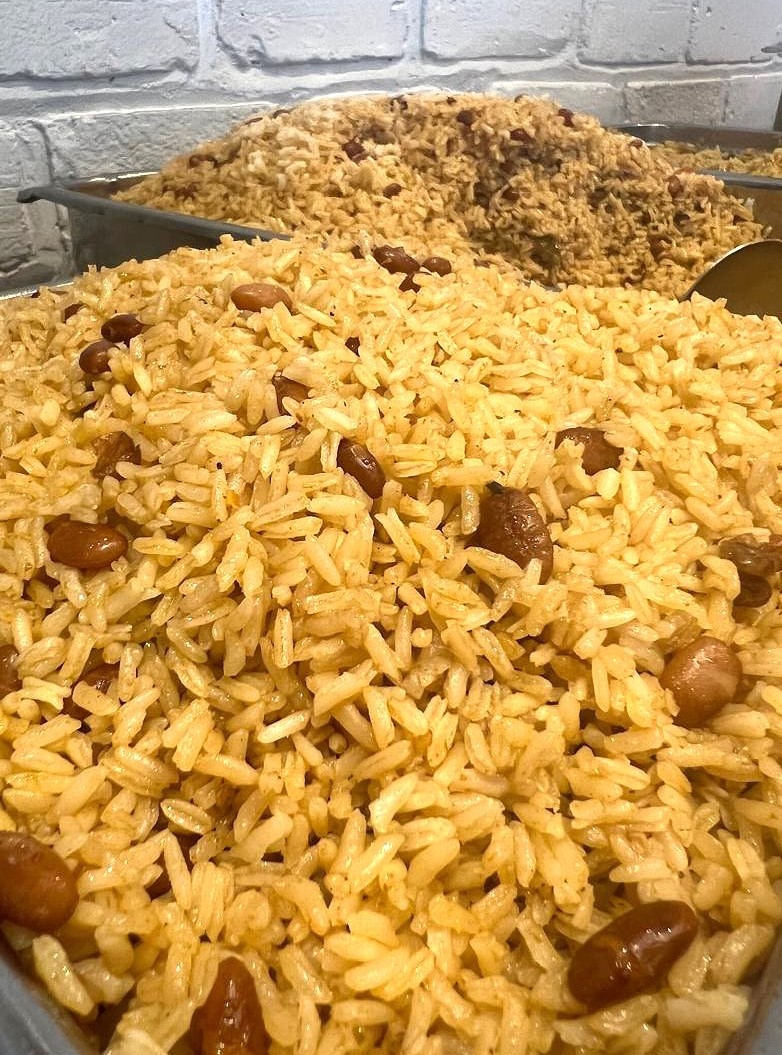
Diri ak djon djon
Black mushroom rice, deeply tied to Haitian cuisine.
Restaurants: Traditional restaurants in Port-au-Prince/Cap-Haitien
Budget: $8-$20
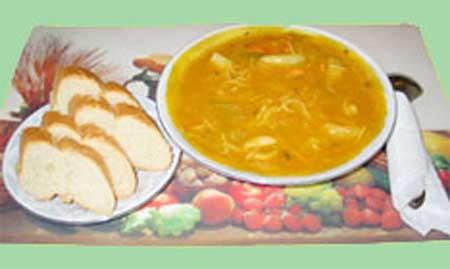
Soup joumou
Pumpkin soup with national symbolism.
Restaurants: Family restaurants, holiday menus
Budget: $6-$15
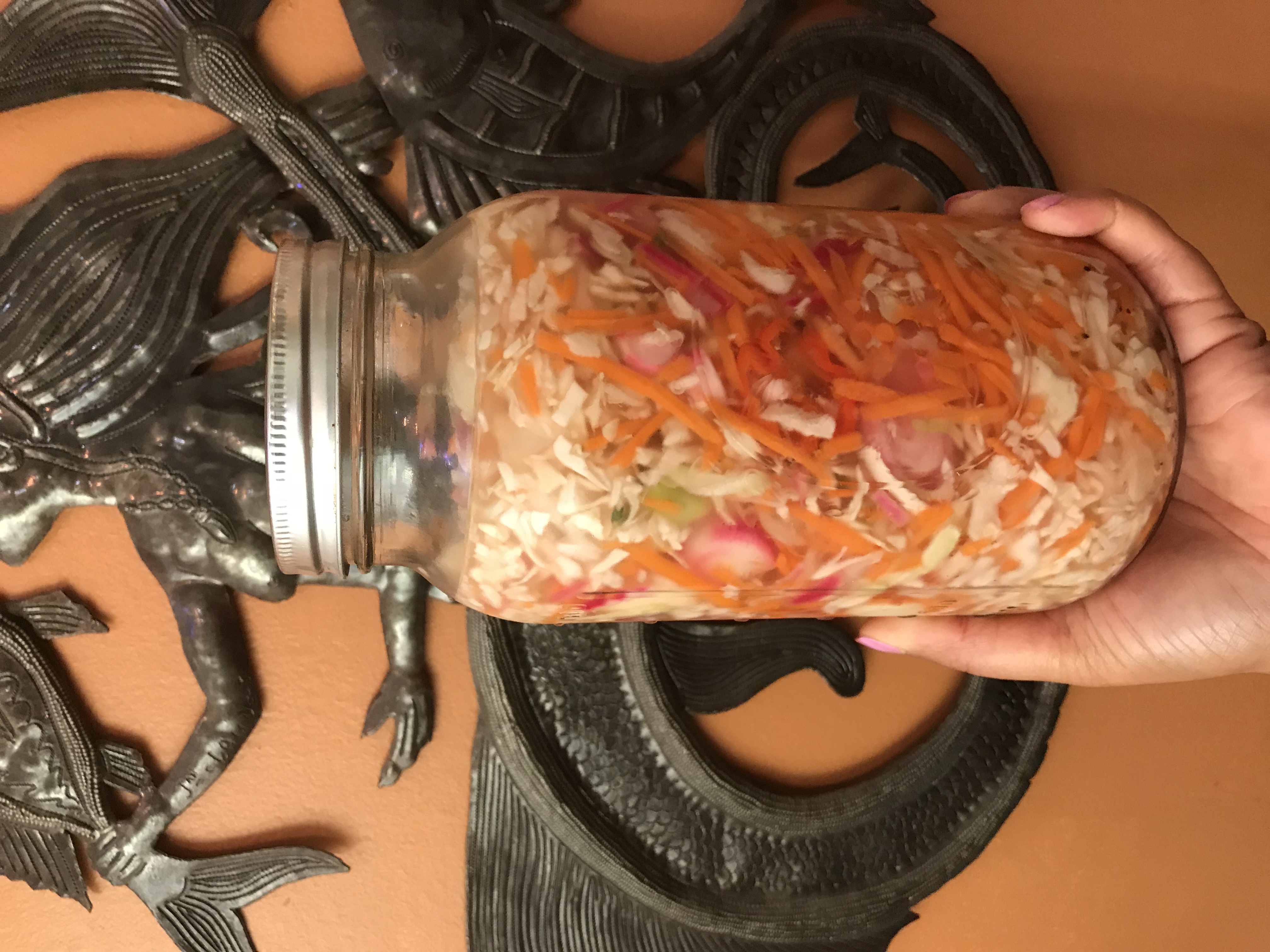
Akra and pikliz
Crisp fritters and spicy slaw.
Restaurants: Street-food counters and hotel restaurants
Budget: $3-$10
Haiti Local food and restaurants?
Griot Fried pork often served with pikliz. Kokoye Bar & Grill, local Haitian kitchens $8-$18
Shows, bars, and entertainment
Haiti after dark and local nights
Evening ideas link music, waterfronts, markets and football screens without forcing every night into a match plan.
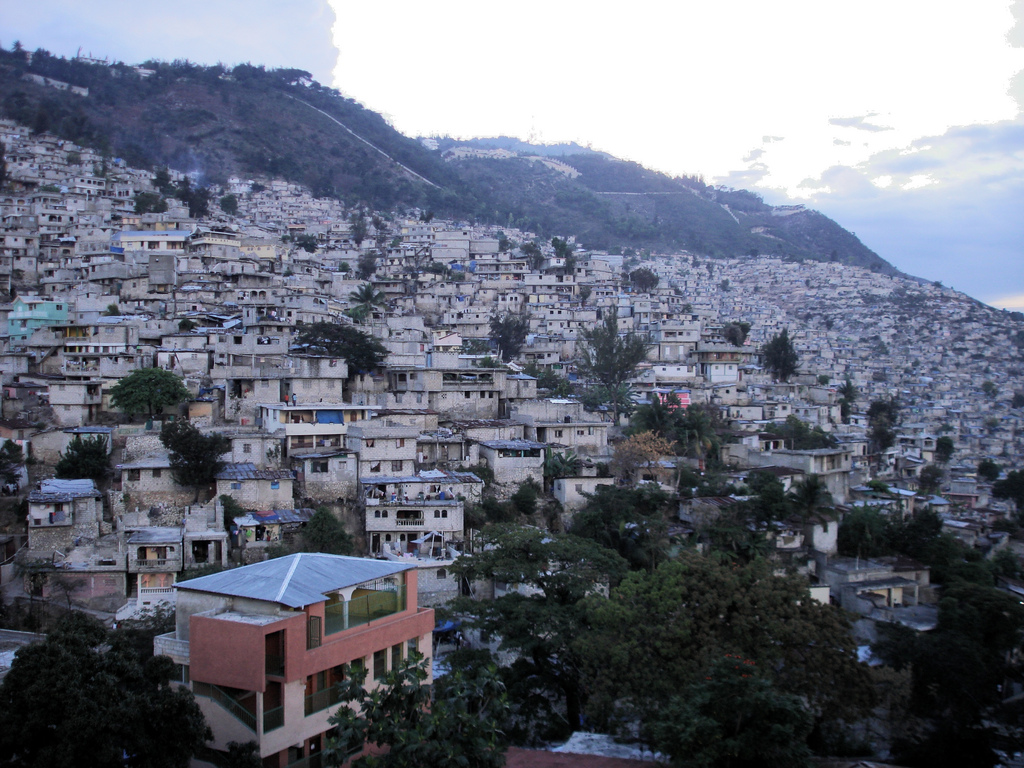
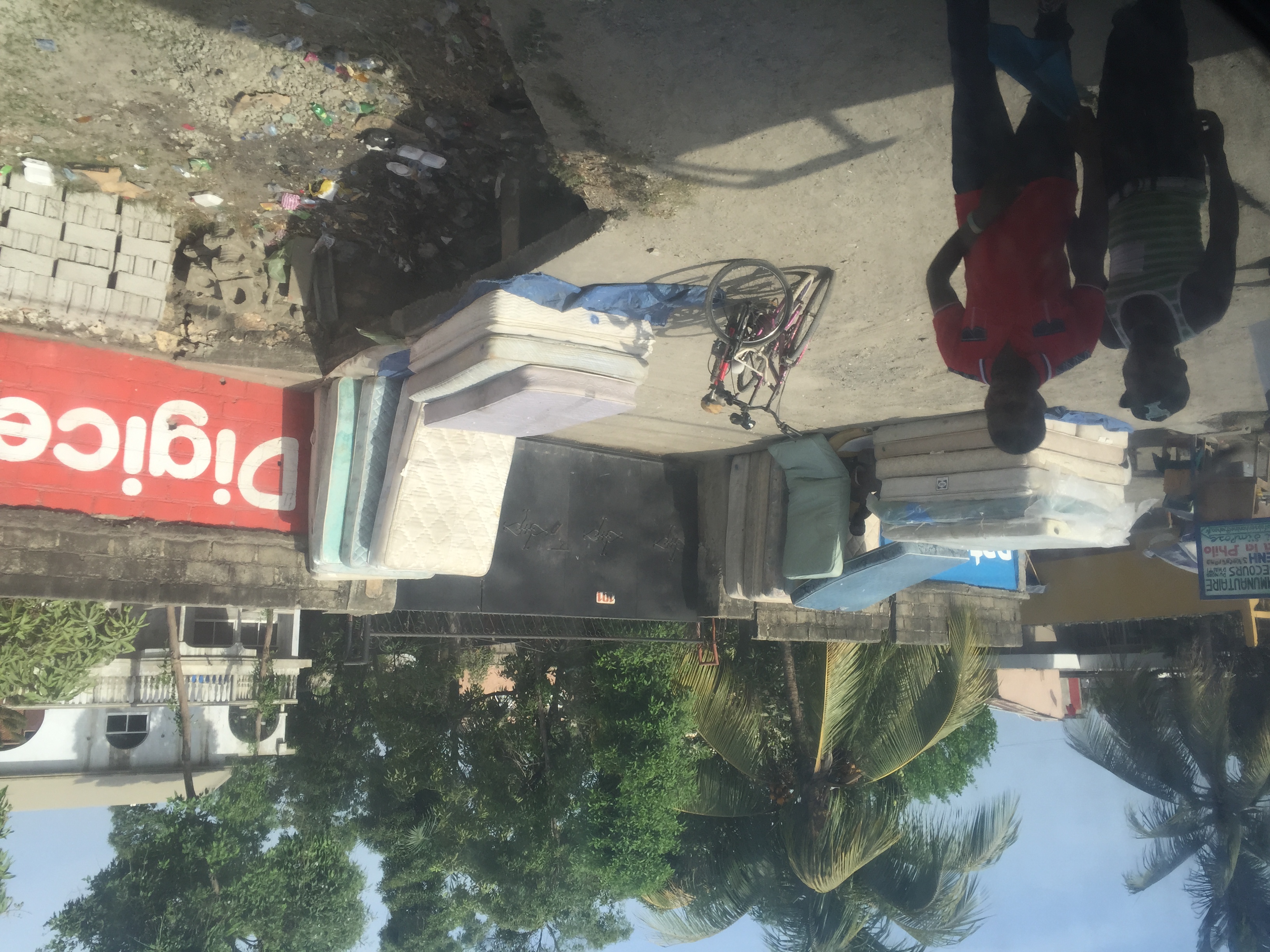
Petion-Ville lounges
Best-known nightlife district when security conditions allow.
Jacmel carnival arts
Colorful masks, dance, and art-led street atmosphere.
Cap-Haitien music nights
Kompa and local bands for cultural night content.
Domestic football clubs
Haiti football clubs and match culture
Club context adds the local football layer behind Les Grenadiers, from stadium neighborhoods to supporter routines. Club sections should begin as football-culture context, with stadium and image details verified later.
Port-au-Prince
Violette AC
One of Haiti's best-known clubs, with purple-and-white identity and a strong bridge to Port-au-Prince football history and Caribbean competition memory.
Port-au-Prince
Racing Club Haitien
A historic Port-au-Prince club whose black-and-white identity supports older Haitian football tradition and city-fan context.
Petion-Ville
Don Bosco FC
A Petion-Ville club that can connect the Port-au-Prince metro area, youth development, and local league life.
Cap-Haitien
Real Hope FA
A Cap-Haitien academy-club anchor, useful for the northern Haiti route and younger-player development stories.
Landscape anchors
Haiti attractions that match the Les Grenadiers story
These landscapes and city stops give the football-led route a stronger sense of place. A football search can open a Caribbean story of mountain citadels, music, art, and diaspora routes.
Citadelle Laferriere
The strongest northern heritage image, combining mountain roads, independence history, and big landscape scale.
Sans-Souci Palace
Pairs naturally with the Citadelle, turning a castle visit into a fuller historical route around Milot.
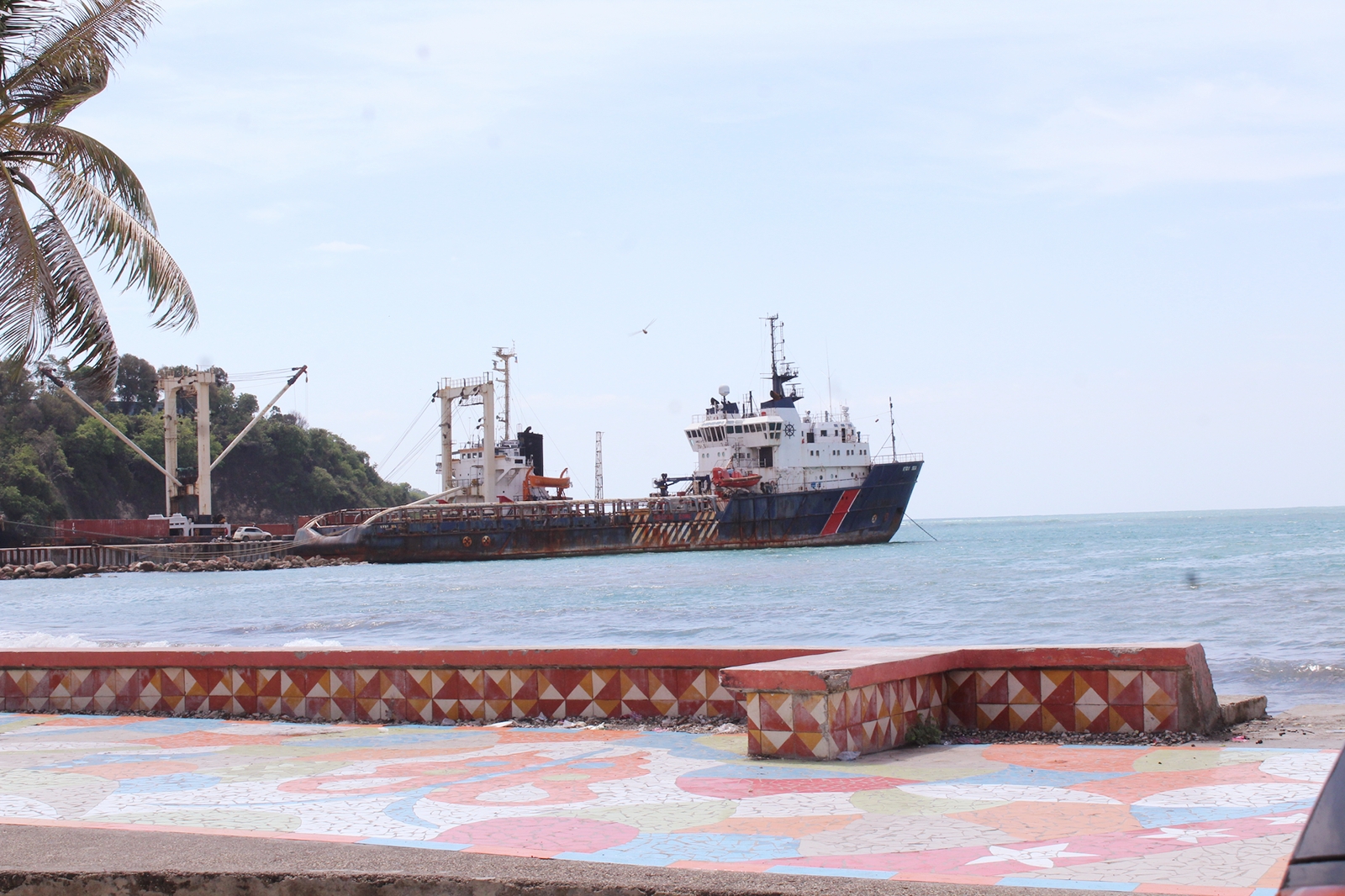
Jacmel
A culture branch for art, seaside streets, carnival color, and a slower coastal chapter when conditions allow.
Labadee
A conditional north-coast beach stop, useful as a rest day after heritage travel when access is practical.
Country travel map
Haiti travel map for planning
Save the map to compare airports, hotels, restaurants, clubs and attractions before building the route. The map should make Cap-Haitien, Citadelle, and Sans-Souci the main line, with Jacmel and Labadee clearly marked as conditional branches.
Download travel mapBrowse all downloadable travel maps →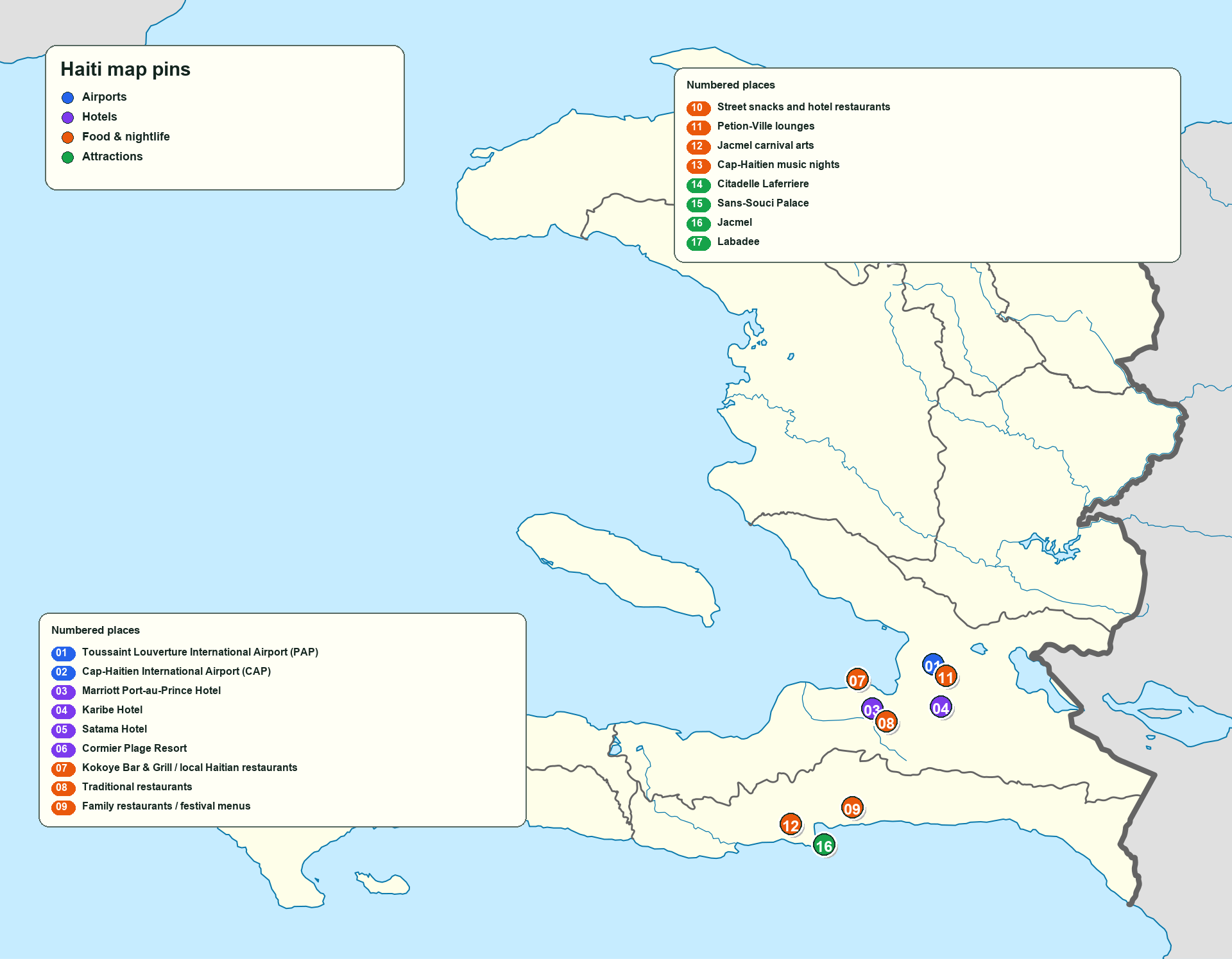
How much money to prepare
Haiti trip budget
A quick cost frame for flights, hotels, food, transport and paid activities before you book. Plan about $1,200-$2,700 per person for a short, guide-supported heritage trip; security costs matter.
Best from Miami, Fort Lauderdale, New York, Panama.
Reliable hotels cost more than local averages.
Local food is affordable; hotel dining costs more.
Guides, site visits, safety logistics.
Vetted private transport is strongly recommended.
Travel rules, prices, transport schedules and safety conditions can change. Recheck official entry rules, local advisories and current prices before booking.
Route reference
Haiti itinerary sources
External route references used to check pacing, logistics and travel assumptions.
- UNESCO National History Park — UNESCO reference for Citadelle, Sans-Souci, and Ramiers.
- Lonely Planet Haiti — Background reference for major cities and travel basics.
- Haiti Tourism — Cultural, city, and nature travel leads.
- U.S. Travel Advisory Haiti — Security status changes quickly and must be checked before any commercial planning.
Related route
Compare another World Cup travel route




Editorial notes
How this Haiti guide is maintained
Researched and edited by the Travel the Teams editorial team. This guide combines route-planning context, cultural background and the sources linked above; it is not a substitute for official entry, safety, health or transport advice.
Travel requirements and prices change. Confirm current information with the relevant official authorities and providers before booking.