🇨🇼 Curaçao · Curacao naitional team
Curaçao Stories: In Curaçao, the Netherlands Nivver Left—It Juist Learnt tae Wear Shorts
Ae island, twa warlds
Whan the pastel-coloured hooses o Willemstad reflect in the watters o St. Anna Bay, ye experience a kind o optical illusion — as gin somebody haed draggit Amsterdam tae the equator by a rape, forgotten tae tak back the gabled canal hooses, an syne left them tae bake unner the Caribbean sun for fower hunner year. This is whit thay leuk lik the noo.
The biggins follae Dutch proportions an decorative gables wi precision, but the colours — lemon yellae, coral pink, mint green, cobalt blue — belang entirely ootside northren Europe. A local guide lent agin the railin o the Queen Emma pontoon brig, speakin Papiamentu intae his phone. He saw me staurin at the biggins, hung up, an said in Dutch-accentit English: 'Ye ken why the colours are sae bricht? Legend says the auld governor foond white reflections ower harsh on the een an ordered ivry biggin pentit in colour. But locals prefer a different story — we juist wantit tae remind the Dutch that this isnae Europe.'
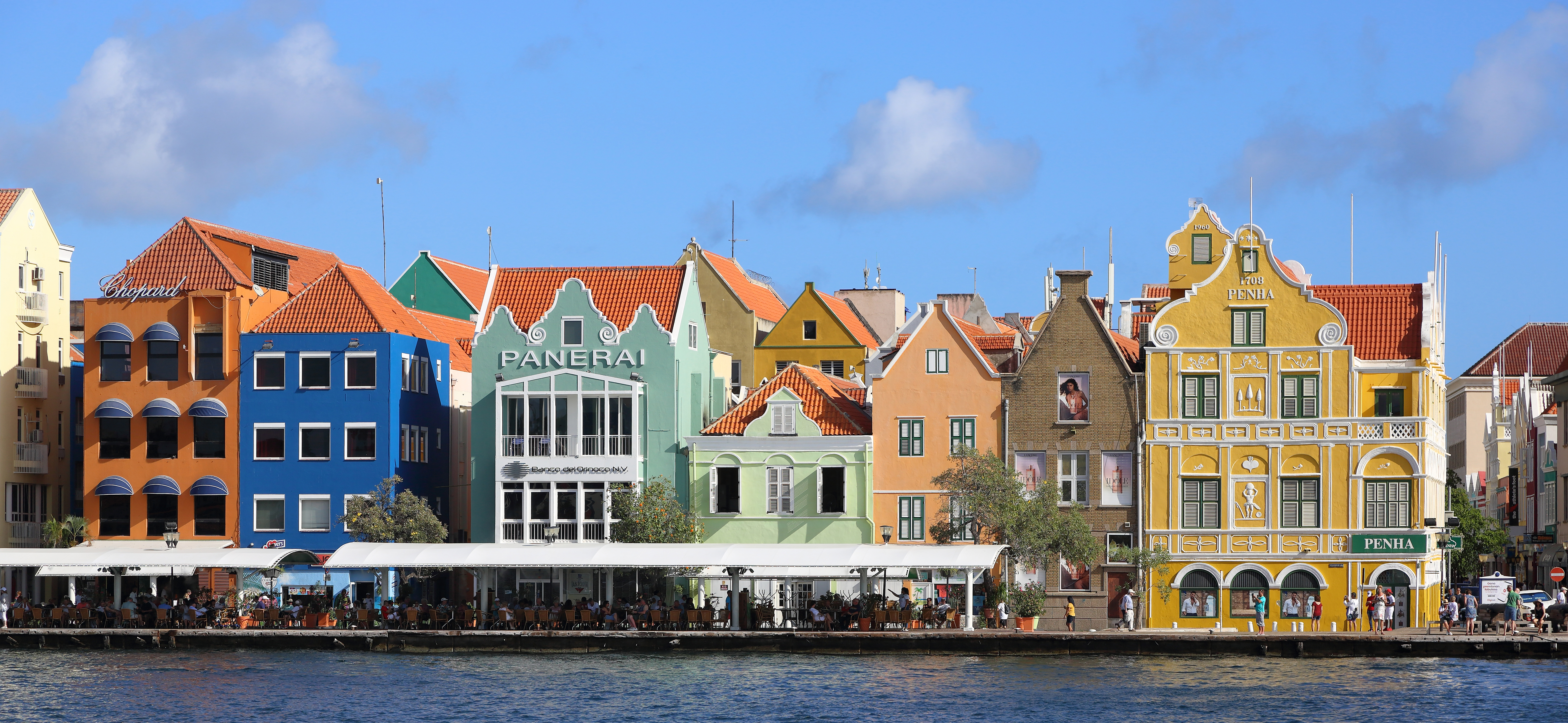
Curaçao is a constituent kintra o the Kinrick o the Netherlands, tuckit intae the soothren Caribbean barely 65 kilometre aff the Venezuelan coast. Population: rochly 160,000. Its geography dictated its fate: a European legal jurisdiction floatin in the Caribbean Sea, whaur ile refinery lum-reiks an colonial-era fortresses share the same skyline.
Walkin throu the Otrobanda destrict, Ah owerheard a conversation that nae tourist could unnerstaund — twa elderly weemen on a porch speakin Papiamentu, ivry sentence soondin lik Spanish syntax packit intae Dutch skin, pouered by African rhythm. Papiamentu is Curaçao's mirror: the Dutch vocabular is colonial history, the Spanish base is geography, the African-soorced cadence is the scar o the sclave troke. A local writer wance pit it: 'Whan we speak Papiamentu, we re-confirm oor identity ivry time — Caribbean fowk, Dutch jurisdiction, African ruits.'
The fuid reveals the same layered logic. A dish cried Keshi Yena — an Edam cheese shell howkit oot, stuffit wi chicken, peppers, olives, an raisins, syne bakit till the cheese melts — reads lik an edible archive o colonial history. The restaurant awner telt me: 'Dutch sailors brocht the cheese tae the island. African cooks fillt it thair ain wey. Fower hunner year ago this wis a sairvant's dish — the maisters ett the cheese centre, the sairvants stuffit the howe rin wi orrals. The noo? It's served as the first coorse at waddins.'
Curaçao's naitional team jersey is deep blue wi orange stripes — deep blue for the Caribbean Sea, orange for the Dutch ryal hoose. In a sportin-guid shop windae in Willemstad, this jersey hung in the place o honour, aside a wee Curaçao banner an an auld photae: the day Curaçao won the 2017 Caribbean Cup, whan the streets o Willemstad floodit wi fowk. The shopkeeper, a man in his fifties, said: 'Fitbaw is the ainly wey Curaçao can mak the Netherlands notice us. We dinnae produce ile. We dinnae hae a financial centre. But we hae players — Leandro Bacuna played in the Premier League, Cuco Martina wis at Everton. Whan Dutch fowk see them, thay say: och, that's Curaçao.' He paused, syne addit: 'Afore that, a lot o Dutch fowk didnae even ken Curaçao wis a kintra raither than a beach resort.'
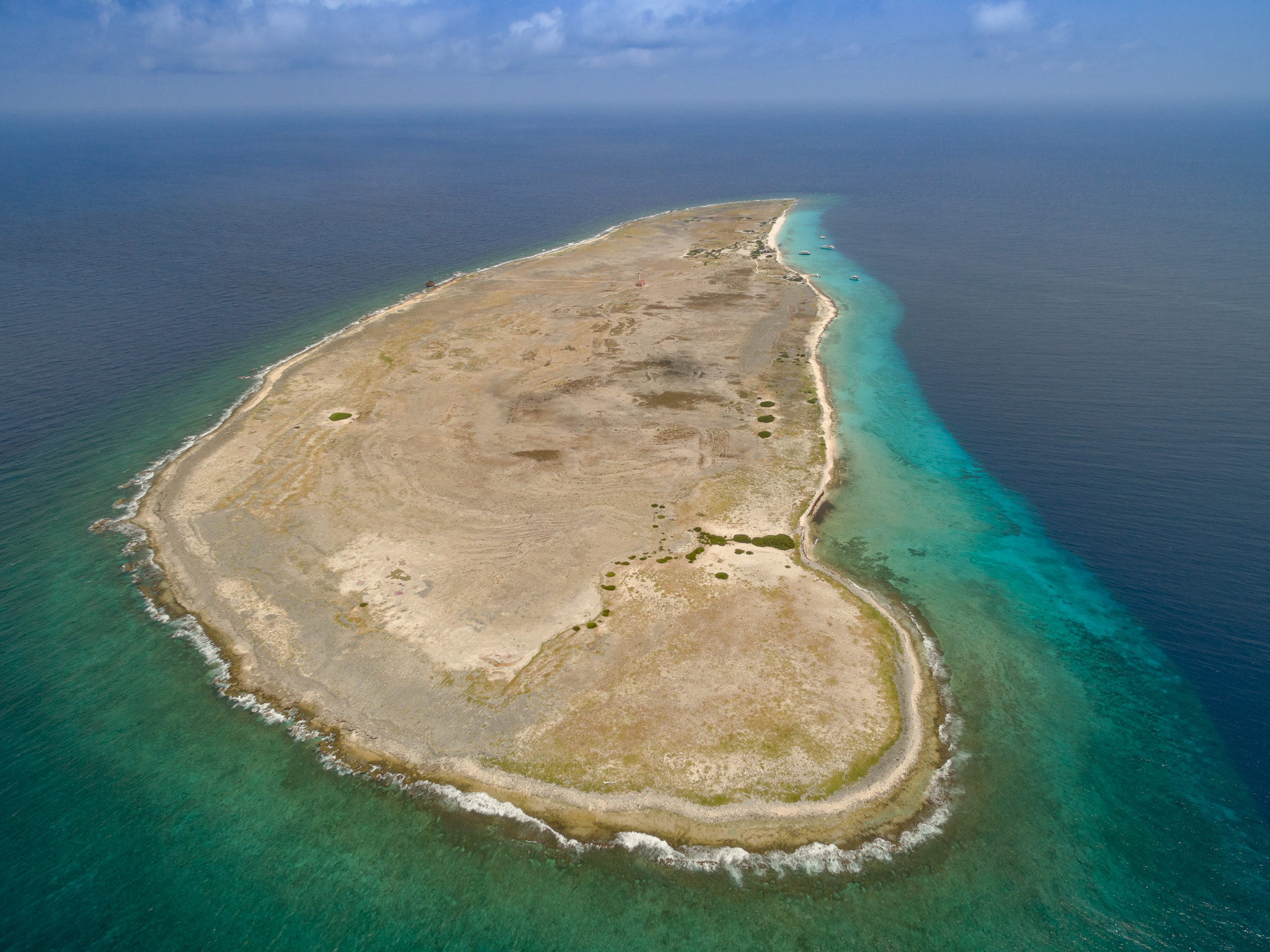
Klein Curaçao — 'Wee Curaçao' — is an uninhabited speck o an island wi naethin but an abandoned lichthoose an a beach sae white it disnae leuk lik it belangs on Yird. The boat skipper haundit the wheel tae his twal-year-auld son, tuned the radio tae a Dutch auldies station, syne switchit it tae reggae. 'In Curaçao,' he said, 'the radio nivver plays juist the ae leid. The speed at which ye switch frequencies — that's the speed at which this island switches identities.'
At sundoun Ah walked back tae the Queen Emma Brig. The lichts wur on. The reflections o the twa rows o pastel hooses fracturt in the watter as a passin ferry sliced throu them. On the brig: a local crossin hame frae wark, a tourist pausin tae photae the skyline, a teenager on a bicycle speedin past in a Curaçao naitional team orange trainin tap. The three shaddas briefly overlappit in the shattert watter. Syne the pontoon brig slawly closed again. Ivry day in Curaçao is lik this brig: constantly interruptit by boats, but nivver truly broken — it juist waits for the boat tae pass, syne reconnects.
Explair kintras
Warld Cup kintra traivel guides
Cape Verde
Enterin an Atlantic airchipelago throu its music
Uzbekistan
Searchin for modren answers on an auncient troke route
Jordan
Tracin the hail journey backwards frae the Treasury's licht
Haiti
Returnin hame throu the een o a diaspora fitbawer
DR Congo
Ceity → River → Rainforest → Lava loch
Iraq
Atween Mesopotamian ruins an teahouses
Qatar
The real bill for 24 oors in Doha
Netherlands
Frae Amsterdam Canals tae Breda's Pitch—Watterweys an Landweys thegither
Switzerland
Frae Zurich Loch Mist tae the Jungfrau Whustle
Morocco
Frae the Spice Soaks tae the Sweet o Mint Tea
South Africa
Frae the Silence o Robben Island tae the Street Fitba o Soweto—seein hoo Bafana Bafana kicks the naition back intae ae team
Japan
Frae Shibuya Live Screens tae Yokohama Sea Winds
Senegal
Frae Dakar Street Fitba, Gorée Island Silence tae Lac Rose's Saut-licht—Readin the Lions o Teranga
Korea
Frae Hongdae Street Fitba tae Chuncheon's Gloamin
Ivory Coast
Lagoons, cocoa, and orange shirts.
Norway
Frae the Edge o the North Sea tae the Depths o the Fjords
Uganda
Fae Kampala Street Fitba tae Bwindi's Sillerback Gorillas
← Stories · Warld Cup kintra traivel guides · Browse all downloadable travel maps