🇨🇼 Curacao · Curacao national team
Curacao travelogue: routes, football and local culture
One island, two worlds
The travel story
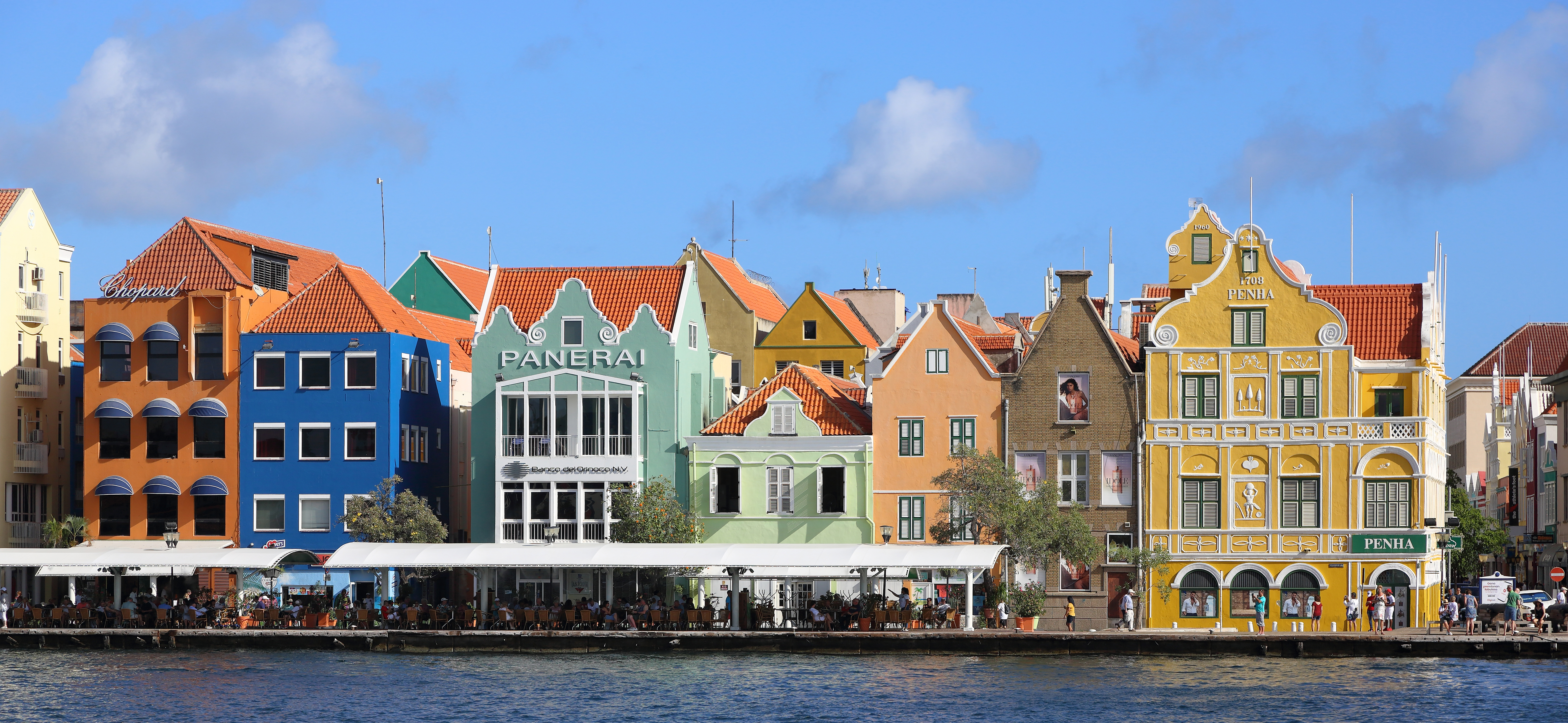
When the pastel-colored houses of Willemstad reflect in the waters of St. Anna Bay, you experience a kind of optical illusion — as if someone had dragged Amsterdam to the equator by a rope, forgotten to take back the gabled canal houses, and then left them to bake under the Caribbean sun for four hundred years. This is what they look like now.
The buildings follow Dutch proportions and decorative gables with precision, but the colors — lemon yellow, coral pink, mint green, cobalt blue — belong entirely outside northern Europe. A local guide leaned against the railing of the Queen Emma pontoon bridge, speaking Papiamentu into his phone. He saw me staring at the buildings, hung up, and said in Dutch-accented English: 'You know why the colors are so bright? Legend says the old governor found white reflections too harsh on the eyes and ordered every building painted in color. But locals prefer a different story — we just wanted to remind the Dutch that this is not Europe.'
Curaçao is a constituent country of the Kingdom of the Netherlands, tucked into the southern Caribbean barely 65 kilometers off the Venezuelan coast. Population: roughly 160,000. Its geography dictated its fate: a European legal jurisdiction floating in the Caribbean Sea, where oil refinery smokestacks and colonial-era fortresses share the same skyline.
Walking through the Otrobanda district, I overheard a conversation that no tourist could understand — two elderly women on a porch speaking Papiamentu, every sentence sounding like Spanish syntax packed into Dutch skin, powered by African rhythm. Papiamentu is Curaçao's mirror: the Dutch vocabulary is colonial history, the Spanish base is geography, the African-sourced cadence is the scar of the slave trade. A local writer once put it: 'When we speak Papiamentu, we re-confirm our identity every time — Caribbean people, Dutch jurisdiction, African roots.'
Places, routes and match-day culture
The food reveals the same layered logic. A dish called Keshi Yena — an Edam cheese shell hollowed out, stuffed with chicken, peppers, olives, and raisins, then baked until the cheese melts — reads like an edible archive of colonial history. The restaurant owner told me: 'Dutch sailors brought the cheese to the island. African cooks filled it their own way. Four hundred years ago this was a servant's dish — the masters ate the cheese center, the servants stuffed the hollowed rind with leftovers. Now? It's served as the first course at weddings.'
Curaçao's national team jersey is deep blue with orange stripes — deep blue for the Caribbean Sea, orange for the Dutch royal house. In a sporting-goods shop window in Willemstad, this jersey hung in the place of honor, beside a small Curaçao flag and an old photograph: the day Curaçao won the 2017 Caribbean Cup, when the streets of Willemstad flooded with people. The shopkeeper, a man in his fifties, said: 'Football is the only way Curaçao can make the Netherlands notice us. We don't produce oil. We don't have a financial center. But we have players — Leandro Bacuna played in the Premier League, Cuco Martina was at Everton. When Dutch people see them, they say: oh, that's Curaçao.' He paused, then added: 'Before that, a lot of Dutch people didn't even know Curaçao was a country rather than a beach resort.'
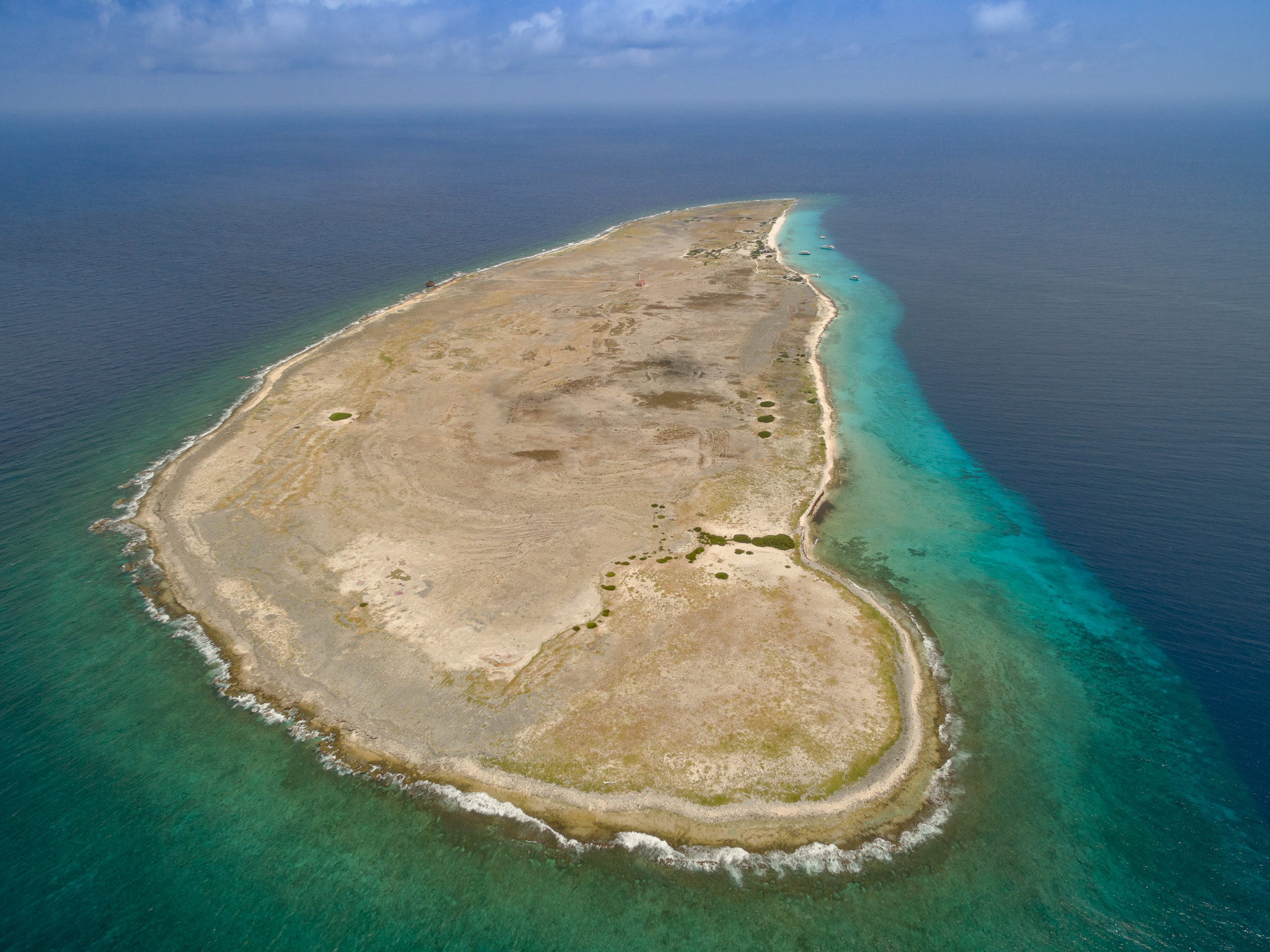
Klein Curaçao — 'Little Curaçao' — is an uninhabited speck of an island with nothing but an abandoned lighthouse and a beach so white it doesn't look like it belongs on Earth. The boat captain handed the wheel to his twelve-year-old son, tuned the radio to a Dutch oldies station, then switched it to reggae. 'In Curaçao,' he said, 'the radio never plays just one language. The speed at which you switch frequencies — that's the speed at which this island switches identities.'
At sunset I walked back to the Queen Emma Bridge. The lights were on. The reflections of the two rows of pastel houses fractured in the water as a passing ferry sliced through them. On the bridge: a local crossing home from work, a tourist pausing to photograph the skyline, a teenager on a bicycle speeding past in a Curaçao national team orange training top. The three shadows briefly overlapped in the shattered water. Then the pontoon bridge slowly closed again. Every day in Curaçao is like this bridge: constantly interrupted by boats, but never truly broken — it just waits for the boat to pass, then reconnects.
Discover more countries
Travel stories from other countries
Cape Verde
Entering an Atlantic archipelago through its music
Uzbekistan
Searching for modern answers on an ancient trade route
Jordan
Tracing the entire journey backward from the Treasury's light
Haiti
Returning home through the eyes of a diaspora footballer
DR Congo
City → River → Rainforest → Lava lake
Iraq
Between Mesopotamian ruins and teahouses
Qatar
The real bill for 24 hours in Doha
Netherlands
From Amsterdam's canals to Breda's football ground, water routes and land routes unfold together
Switzerland
A geographical-acoustic travelogue, from Zurich lake mist to the whistle of Jungfrau trains
Morocco
An olfactory-map travelogue, from spice markets to the sweetness of mint tea
South Africa
From the silence of Robben Island to street football in Soweto, seeing how Bafana Bafana kicks the country back into one team
Japan
An immersive five-senses travelogue, from Shibuya's live screens to the sea breeze of Yokohama
Senegal
From Dakar street football and the silence of Goree Island to the salt light of Lac Rose, understanding the Lions of Teranga
Korea
An immersive five-senses travelogue, from street football in Hongdae to dusk in Chuncheon
Ivory Coast
Lagoons, cocoa, and orange shirts.
Norway
A landscape-contrast travelogue, from the edge of the North Sea to the depths of the fjords
Uganda
An immersive five-senses travelogue, from Kampala street football to Bwindi's silverback gorillas
← View all stories · Country travel guide · Browse all downloadable travel maps
Plan with confidence
Curacao travelogue FAQ
What does this Curacao travelogue cover?
It connects Curacao's routes, landscapes, food and football culture with practical next steps in the country guide.
Where can I find practical Curacao travel information?
Use the Curacao travel guide for entry planning, transport, budgets and route ideas, then confirm time-sensitive requirements with official sources.
Is this page a substitute for official travel advice?
No. Entry rules, safety guidance and transport conditions can change; confirm them with official sources before booking.