🇺🇿 Uzbekistan · White Wolves
Uzbekistan Stories: Ah Walkit the Silk Road for Seiven Days an Discovered Marco Polo Left a Lot Oot
Searchin for modren answers on an auncient troke route
Samarkand's Registan Square at 6:45 in the evenin turns intae a shade o gowd ye hae nivver seen afore. The blue tiles o the three madrasas wauken frae the cuil geometry o Islam an begin tae absorb the deein heat o the sun. An auld man sellin pomegranate juice telt me in halterin English: 'This place wis a debatin grun sax hunner year ago — students frae aw three madrasas arguin in the square. Theology, astronomy, mathematics, ocht.' Syne he addit saut tae ma cup an said: 'Drink it. Pomegranate juice withoot succar — that's hou ye taste the Silk Road.'
He wis richt. Unsuccared pomegranate juice haes a shairp acidity, lik the eftertaste o ivrythin on this laund that is fadin. An ma question wis this: whit actually bides o the Silk Road?
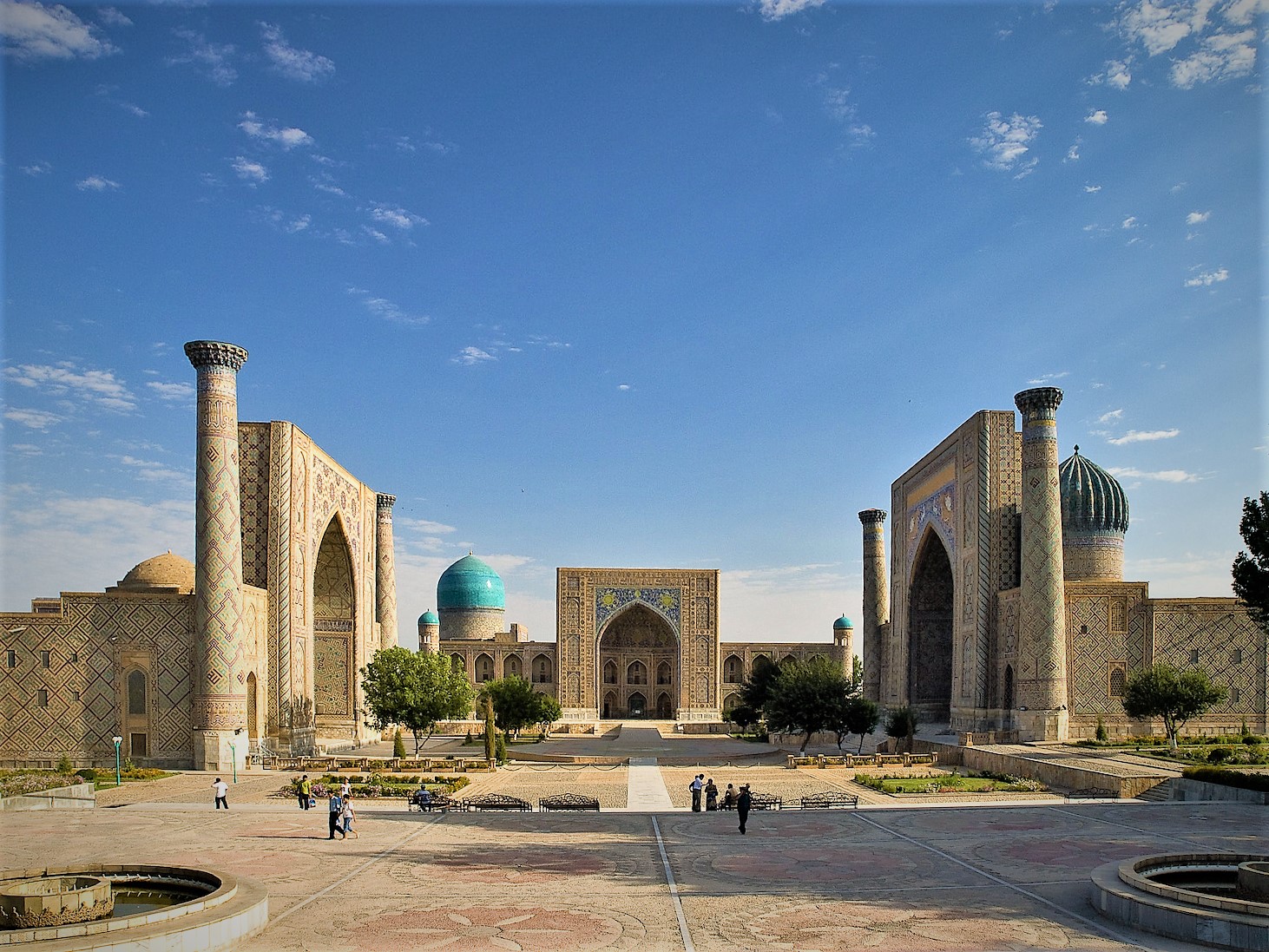
Uzbekistan haes a population o ower 36 million, the maist populous kintra in Central Asia, an ane o ainly twa dooble-landlockit nations on Yird (the ither bein Liechtenstein). For a kintra sealed in by laund on aw sides, the Silk Road isnae juist history — it is the loodest pruif this nation ivver haed o its existence in the warld. In 2026, the White Wolves — Uzbekistan's naitional team — will appear on the Warld Cup stage for the first time. For mony fitbaw fans, this will be the first time thay ivver search 'whaur is Uzbekistan.'
Day ane belanged tae Tashkent. The Tashkent metro isnae merely a transit system — it is the maist unco legacy the Soviet Union left in Uzbekistan. Ivry station is an independent airtwirk: the dome o Alisher Navoi station depicts Central Asian poets in mosaic; the waws o Kosmonavtlar station pey tribute tae ilkane frae Yuri Gagarin tae Uzbek cosmonauts. A metro security officer saw ma fremmit face, raised an ee, an wavet me throu — locals pey, foreigners free, an unwritten rule o Tashkent.
Day twa Ah wis on the heich-speed train tae Samarkand. Ootside the windae, the laundscape shiftit frae urban gray tae cotton-field white, syne tae the broon fringe o the Karakum Desert. The young man in the neist seat uised a translation app tae ask whaur Ah wis frae, syne proodly showed me a screenshot on his phone: the news that Uzbekistan haed qualified for the Warld Cup. 'Abdukodir Khusanov,' he said, pyntin at the twinty-year-auld defender on the screen. 'He plays for Lens. In Fraunce. The noo the French ken whaur Tashkent is.'
Days three an fower wur Samarkand an Bukhara. Samarkand's blue tiles are deeper than ony photae can convey — that parteecular blue leuks dreggit frae the fluir o the Mediterranean but bakit dry unner a Central Asian sun. In Bukhara's auld ceity, Ah got tint for three oors. No acause the ceity is muckle, but acause ivry hauf-open widden door seemed tae lead intae anither era. A silk merchint sat in his shap — actual silk, brocht frae the Fergana Valley, dyed rid wi madder ruit — an saw me staurin at the bolt o rid silk for a lang time. 'Ye ken,' he said, 'Marco Polo nivver wrote aboot this colour. He said Uzbek silk wis cheap, but he nivver wrote aboot the rid.'
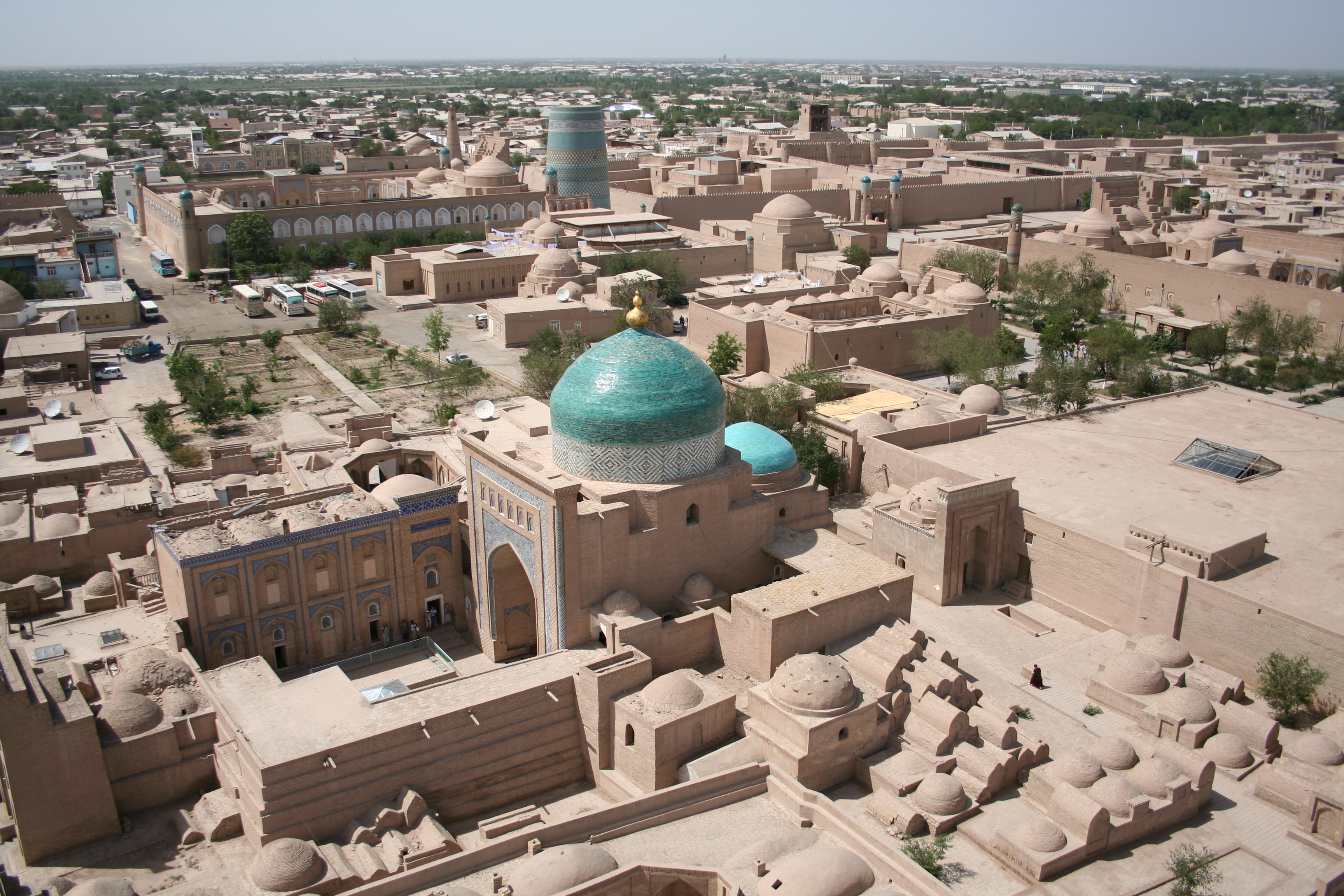
Khiva wis day five. This walled oasis ceity, ringed by ochre fortifeecations, wis nearly tuim unner the midday sun. Ah sat in the shadda o the Kalta Minor minaret. An auld man ambled ower an sat aside me. 'Tourists come at fower in the efternuin,' he said. 'Mornin is Khiva's ain time.' We wur silent for a lang while. Syne he pyntit at a distant Uzbek banner flichterin an said: 'Ye see that fitbaw pitch? It uised tae be a stable. Durin the Silk Road, merchints chynged thair horses here. The noo young fowk kick a baw thaur. Whit gets swappit haes chynged, but the road is still the same road.'
Day saxt unfaulded on a nicht train — Khiva back tae Tashkent, tracin the desert's edge. The cairriage radio cracklit wi Roushie auldies in a Central Asian accent. Ootside the windae, the whiles camel herd an scaittert lichts flickert past. Ah thocht aboot whit the silk merchint in Bukhara haed said, aboot the gowd o Samarkand, aboot the raised ee o the metro officer in Tashkent. Syne Ah pulled up Abdukodir Khusanov's Ligue 1 heichlichts on ma phone — a twinty-ane-year-auld Uzbek loon slidin, chasin, pingin lang passes across a French pitch.
Day seiven, back in Tashkent. The sun wis as dry an het as it haed been a week ago. But whit Ah wis cairryin hame wisnae photaes or souvenirs — it wis the answer tae a question. The Silk Road haesnae 'left' ocht ahind — it juist chynged its form o existence. Spices becam a fitbaw economy; caravan stations becam heich-speed rail staps; silk becam player transfer contracts. Whit Marco Polo left oot wisnae juist the colour o that bolt o rid silk — he left oot the fact that the fowk on this road nivver really leave. Thay juist troke camels for trains, an spices for fitbaw.
Route planning
Plan the Uzbekistan route
Before standalone attraction pages are ready, use these decisions to shape the route: lock transport first, place city highlights second, then check practical friction before booking.
Set the transport spine
For a first trip, start with Tashkent -> Samarkand -> Bukhara -> Khiva, then build hotel nights around train and long-distance transfers.
Place highlights by city
Keep Registan Square for Samarkand evening light, walk Bukhara slowly, sleep inside Khiva's walls, and use Tashkent metro on arrival day.
Check before booking
Review entry rules, mobile data, cash, Yandex Go, train tickets, and night transfers before the route becomes fixed.
Explair kintras
Warld Cup kintra traivel guides
Cape Verde
Enterin an Atlantic airchipelago throu its music
Curacao
Ae island, twa warlds
Jordan
Tracin the hail journey backwards frae the Treasury's licht
Haiti
Returnin hame throu the een o a diaspora fitbawer
DR Congo
Ceity → River → Rainforest → Lava loch
Iraq
Atween Mesopotamian ruins an teahouses
Qatar
The real bill for 24 oors in Doha
Netherlands
Frae Amsterdam Canals tae Breda's Pitch—Watterweys an Landweys thegither
Switzerland
Frae Zurich Loch Mist tae the Jungfrau Whustle
Morocco
Frae the Spice Soaks tae the Sweet o Mint Tea
South Africa
Frae the Silence o Robben Island tae the Street Fitba o Soweto—seein hoo Bafana Bafana kicks the naition back intae ae team
Japan
Frae Shibuya Live Screens tae Yokohama Sea Winds
Senegal
Frae Dakar Street Fitba, Gorée Island Silence tae Lac Rose's Saut-licht—Readin the Lions o Teranga
Korea
Frae Hongdae Street Fitba tae Chuncheon's Gloamin
Ivory Coast
Lagoons, cocoa, and orange shirts.
Norway
Frae the Edge o the North Sea tae the Depths o the Fjords
Uganda
Fae Kampala Street Fitba tae Bwindi's Sillerback Gorillas
← Stories · Warld Cup kintra traivel guides · Browse all downloadable travel maps