🇯🇴 Jordan · The Chivalrous
Jordan travelogue: routes, football and local culture
Tracing the entire journey backward from the Treasury's light
The travel story
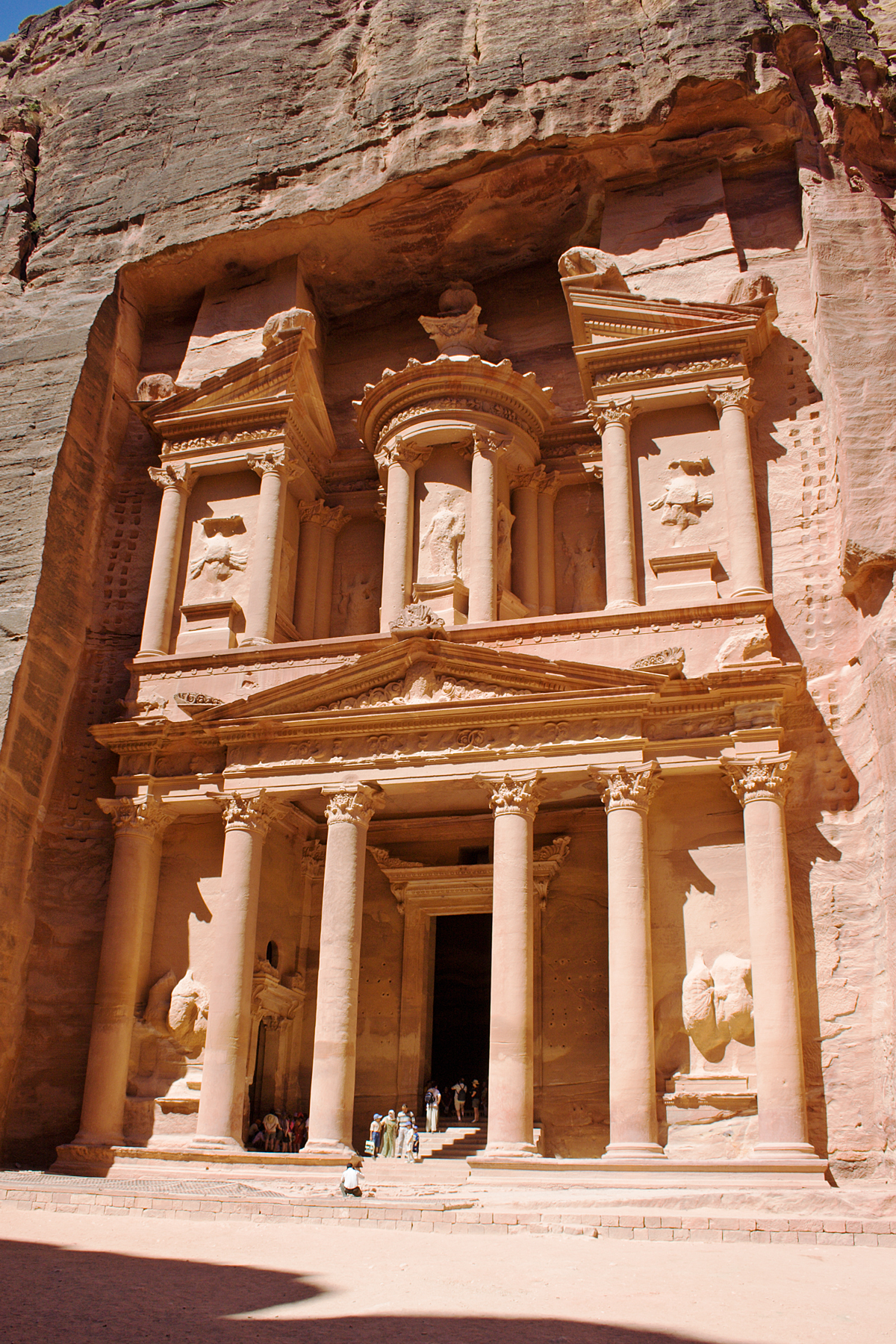
The final meter of the Siq. The narrow rock corridor, after a full 1.2 kilometers, suddenly splits open — and there it is. The Treasury. Not in a photograph, not on a National Geographic cover, not in an Indiana Jones movie — it is actually there, cut in half by a blade of morning light slashing through a crack in the rock, one half rose-gold, the other half still hidden in shadow. Behind me, someone whispered in Arabic under their breath: Alhamdulillah. I stood there, caught between catching my breath and holding it, for several seconds.
Then I looked back at the Siq — the rock passage I had just walked through, its floor polished smooth by two thousand years of hooves and camel pads — and started to retrace how I'd gotten here.
Three weeks earlier, I was sitting on a chair in Beijing watching a World Cup qualifier. Jordan versus an opponent whose name I can't remember. A banner flashed across the screen — 'The Chivalrous' — above a flag I didn't recognize. I didn't know where Jordan was, didn't know what language they spoke there, didn't know why the team called themselves 'The Chivalrous.' The camera cut to a Jordan supporter, his face painted in the red, white, and black of the national flag, his eyes holding something that I assumed only appeared after a victory. I don't remember the match result. But I remember opening my browser and typing 'jordan travel.'
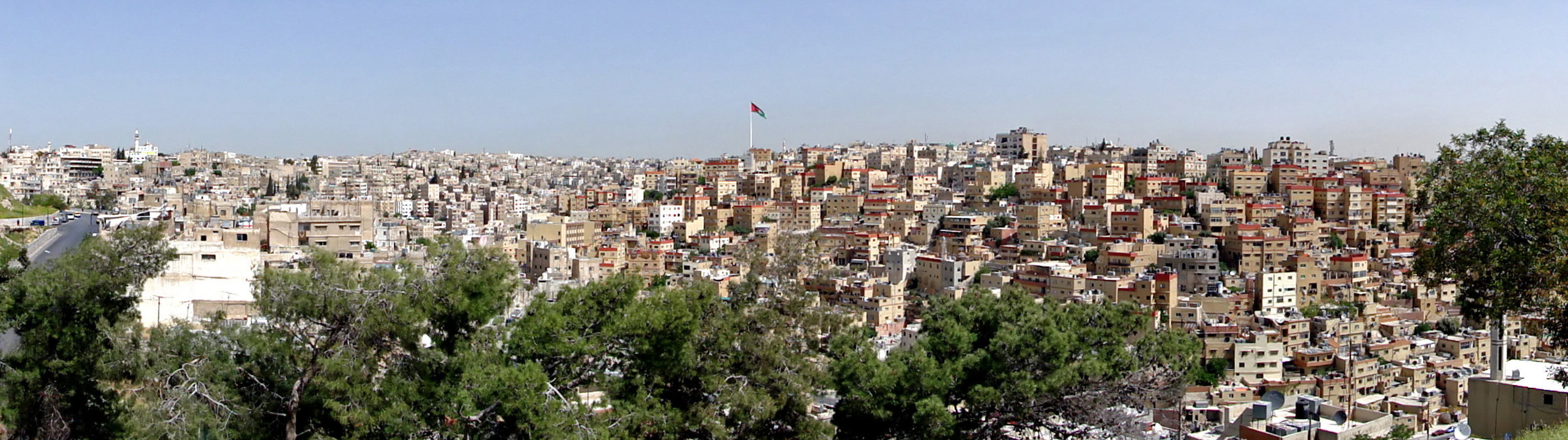
Amman is a city built across seven hills. The taxi wound its way up from the airport, the driver tuning the radio to a Lebanese station playing old Fairuz songs, then typing into a translation app: 'Amman's roads and Jordanian patience are the same thing — they go around and around, but they always get there.' He dropped me at a restaurant called Hashem — open for over sixty years, never closed, with a menu of exactly three items: hummus, falafel, flatbread. The waiter slapped a stack of bread onto the plastic tablecloth and fired off a string of rapid Arabic. I didn't understand, but the diner next to me translated with a grin: 'He said — eat first, talk later.'
At six the next morning, I was standing at the entrance to Petra. If you only have one day in Jordan, give all of it to Petra. Every hundred meters of the Siq is a different microclimate — tourist chatter at the entrance, then deeper in, nothing but wind and your own footsteps. Ancient shrines and water channels appear on the rock walls, stone carved by wind and water into the shape of muscle. At around the eight-hundred-meter mark, a Bedouin boy on a donkey passed me and turned his head: 'Almost there.'
Places, routes and match-day culture
After the climax at the Siq's end, I sat on a stone step directly facing the Treasury. Tourists were busy taking photos, posting to Instagram, checking page numbers in their guidebooks. Only one person wasn't moving — a Bedouin boy, maybe thirteen or fourteen, a red-and-white-checkered keffiyeh wrapped around his head, leaning against a column. He glanced at me, then poured hot tea from a thermos and handed it over. 'Mint tea,' he said. 'You've been walking a long time. Your water's gone.' The tea was sweet, loaded with sugar. I asked how long he'd lived in Petra. He said: 'I've always been here. My grandfather too. He said he met Lawrence.' He set down his cup and pointed into the distance — the eight hundred steps up to the Monastery — 'If you want to go there, go now. Too hot in the afternoon.'
Wadi Rum's night sky requires no rhetoric. The Bedouin guide traced the next morning's jeep route into the sand with his foot, then told me a story: his family had lived here for seven generations, and each generation had given the desert new names. 'The desert doesn't change,' he said, 'but the people looking at the desert do. So the names have to change too.' He lit a kerosene lamp and hung it outside the tent — the only artificial light within a fifty-kilometer radius — then pointed toward the Milky Way. 'You see that band of stars? We call it the camel's eyelashes.' I looked at it for a long time and decided this name was far more accurate than 'the Milky Way.'
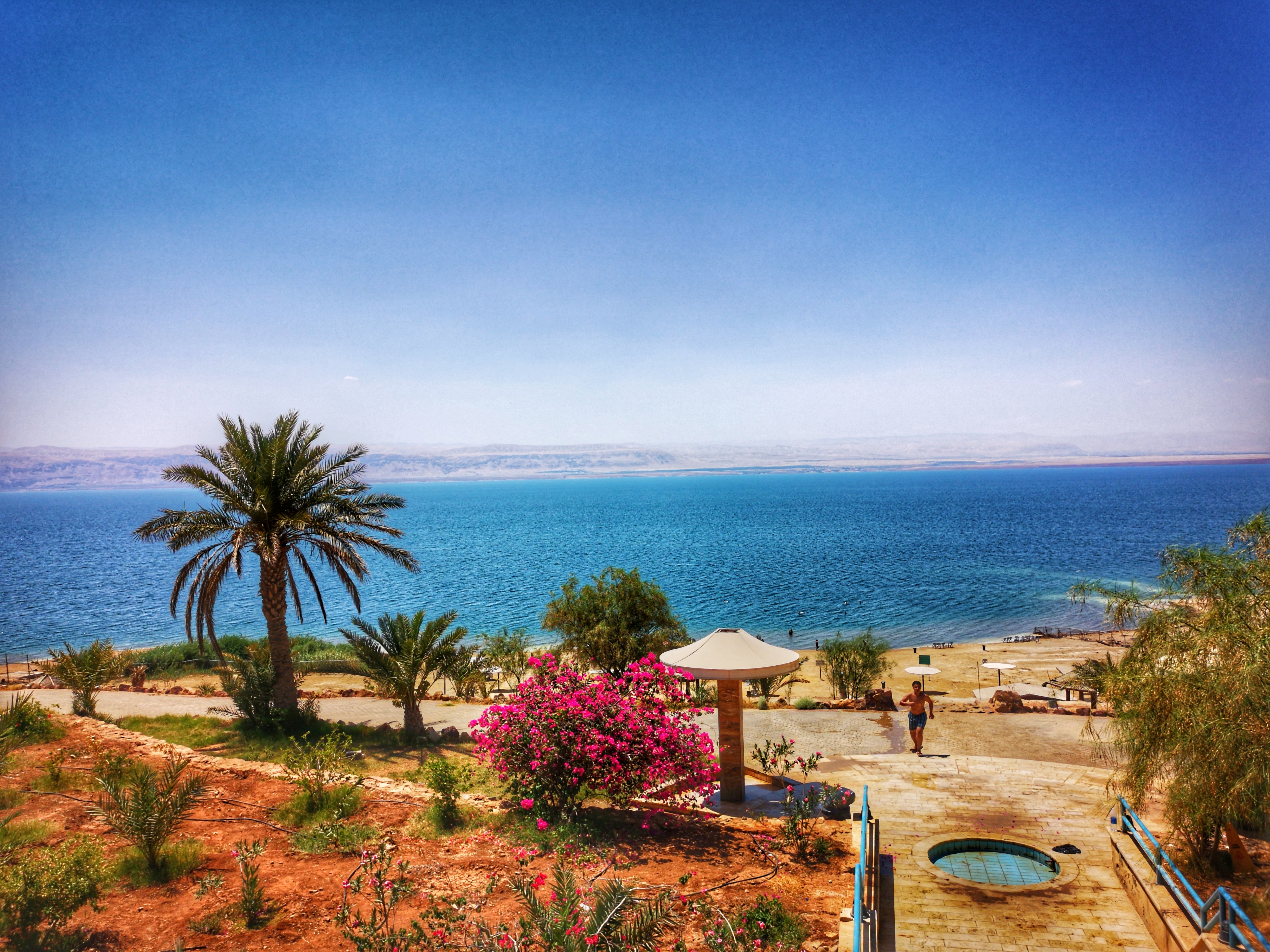
The Dead Sea has no waves. You walk in, the water pushes you up, but when you try to stand, you feel heavier than before — as if the entire planet's gravity has concentrated in your ankles. I floated for fifteen minutes, looking across at Israel, looking back at Jordan's desert highway behind me, trying to assemble all the fragments of this trip. Jordan is a country with no oil that opened its borders to over three million refugees. Its business card is Petra, but its bones are patience. The kind of patience that grinds stone into temples, turns desert into home, and treats guests as honor.
On the day I left, I went back to that same café in Amman. The owner recognized me and brought me Arabic coffee — unsweetened, thick coffee grounds at the bottom. He dipped his finger in the coffee that had spilled over the rim of the cup and drew a small circle on the tabletop. 'This is Petra,' he said. 'You'll come back.' I asked why. He pointed at the Jordan national team schedule pinned to the wall. 'Because next time Jordan plays, you'll watch.'
Discover more countries
Travel stories from other countries
Cape Verde
Entering an Atlantic archipelago through its music
Curacao
One island, two worlds
Uzbekistan
Searching for modern answers on an ancient trade route
Haiti
Returning home through the eyes of a diaspora footballer
DR Congo
City → River → Rainforest → Lava lake
Iraq
Between Mesopotamian ruins and teahouses
Qatar
The real bill for 24 hours in Doha
Netherlands
From Amsterdam's canals to Breda's football ground, water routes and land routes unfold together
Switzerland
A geographical-acoustic travelogue, from Zurich lake mist to the whistle of Jungfrau trains
Morocco
An olfactory-map travelogue, from spice markets to the sweetness of mint tea
South Africa
From the silence of Robben Island to street football in Soweto, seeing how Bafana Bafana kicks the country back into one team
Japan
An immersive five-senses travelogue, from Shibuya's live screens to the sea breeze of Yokohama
Senegal
From Dakar street football and the silence of Goree Island to the salt light of Lac Rose, understanding the Lions of Teranga
Korea
An immersive five-senses travelogue, from street football in Hongdae to dusk in Chuncheon
Ivory Coast
Lagoons, cocoa, and orange shirts.
Norway
A landscape-contrast travelogue, from the edge of the North Sea to the depths of the fjords
Uganda
An immersive five-senses travelogue, from Kampala street football to Bwindi's silverback gorillas
← View all stories · Country travel guide · Browse all downloadable travel maps
Plan with confidence
Jordan travelogue FAQ
What does this Jordan travelogue cover?
It connects Jordan's routes, landscapes, food and football culture with practical next steps in the country guide.
Where can I find practical Jordan travel information?
Use the Jordan travel guide for entry planning, transport, budgets and route ideas, then confirm time-sensitive requirements with official sources.
Is this page a substitute for official travel advice?
No. Entry rules, safety guidance and transport conditions can change; confirm them with official sources before booking.