Country travel snapshot
Ivory Coast travel basics: entry, season, budget and transport
"Located on the Gulf of Guinea in West Africa, it is one of the world's most important cocoa producers; Abidjan is the economic and cultural center." Start here for the practical checks that decide whether a Ivory Coast trip works: entry rules, weather, costs and local movement.
- Population
- "Approximately 29 million people."
- Time zone
- "GMT, UTC+0, 8 hours behind Beijing."
- People
- Groups such as Akan, Krou, Mande, and Gur collectively form the social structure, with Abidjan also having a large population of regional immigrants and international business people.
- Local languages
- French is the official language; local languages such as Baoulé, Dioula, and Bété are also commonly heard in daily life.
- Currency and exchange
- "West African CFA franc (XOF / CFA)."
"Planning reference: 1 USD is approximately 600-620 XOF, 1 CNY is approximately 85-90 XOF; check real-time exchange rates before actual payment."
Visa / arrival rules
"Most foreign visitors to Côte d'Ivoire require a visa; the common practice is to apply online and pay, print the confirmation documents, and complete the biometric visa at Abidjan airport. Official/airport information suggests applying at least 48 hours in advance, but in practice, it's recommended to apply 1-2 weeks early to avoid issues with emails, payments, or airline check-in. Yellow fever vaccine certificate is usually one of the key documents. Prepare hotel address, return ticket, cash/bank cards, and French itinerary upon entry; do not treat the e-visa as automatic entry upon arrival."
Visa/entry information last reviewed: 2026-07-08. Rules can change by passport, arrival point and transit plan; recheck official rules before booking.Best local transport
"For getting around Abidjan, prioritize Yango/Heetch, hotel cars, or trusted drivers. From airport to city, use official taxis/pre-booked transfers, don't follow touts inside the terminal. Urban gbaka, woro-woro are very local but not friendly to first-time visitors, especially with luggage. For intercity travel to Grand-Bassam, you can charter a car or take regular station minibuses; for Yamoussoukro/Sassandra, it's recommended to confirm driver and route in advance. Don't temporarily cross too many districts at night; call a car before leaving maquis at night."
Best season
November to March is more suitable for the Abidjan, Grand-Bassam, and Yamoussoukro routes; the coast is more humid during the rainy season, and more buffer time is needed for road travel.
Cost level
"Abidjan is more expensive than many people imagine. Plateau, Cocody, seaside hotels, international restaurants, and private car prices are close to those of business cities; local maquis, street food, and short taxi rides are manageable. The real budget items are cross-city traffic jams, airport transfers, Grand-Bassam/Yamoussoukro private cars, and high-end hotels. First-time visitors should prioritize safety and driver reliability over saving money." "A meal at a local maquis costs about XOF 3,000-10,000, mid-range restaurants XOF 10,000-25,000, with higher prices at hotel/high-end restaurants. Short taxi rides in Abidjan can be as low as XOF 1,000-3,000, but cross-district, traffic jams, nighttime, and airport transfers are much more expensive; Yango/Heetch are useful in Abidjan with better price transparency than roadside bargaining. Grand-Bassam private car or taxi round trips commonly cost XOF 12,000-25,000+, Yamoussoukro day/overnight trips should be budgeted as private car hires." 6-7 day Abidjan + Grand-Bassam + Yamoussoukro trip, it's recommended to prepare approximately $1,200-$2,800 per person.
Before you book
Ivory Coast practical checks
Use these extra notes after the travel basics to check safety, entry friction, money, transport, routing and the easiest first meal.
Ivory Coast Local customs?
Abidjan is a city mixing business, nightlife, markets, and coastline, not a single resort destination. French greetings are very important; adding Bonjour/Bonsoir with a merci will significantly reduce friction. Always ask before photographing markets, religious sites, military police, ports, and portraits; do not argue or secretly photograph when encountering security personnel. Maquis is a good entry point to understand Ivorian urban life: grilled fish, attieke, alloco, football TV, music, and friends dining at the same table. But visitors should get recommendations from hotels or locals, and ask clearly if fish is priced by piece, weight, or set meal before ordering; use point-to-point transportation when leaving at night.
Ivory Coast Visa / arrival rules?
"Most foreign visitors to Côte d'Ivoire require a visa; the common practice is to apply online and pay, print the confirmation documents, and complete the biometric visa at Abidjan airport. Official/airport information suggests applying at least 48 hours in advance, but in practice, it's recommended to apply 1-2 weeks early to avoid issues with emails, payments, or airline check-in. Yellow fever vaccine certificate is usually one of the key documents. Prepare hotel address, return ticket, cash/bank cards, and French itinerary upon entry; do not treat the e-visa as automatic entry upon arrival." Safety writing should be realistic but not create panic. Most tourist routes in Abidjan are feasible, but northern border areas and political gatherings should be avoided; in the city, pay attention to mobile phones, bags, nighttime walking, and opening windows during traffic jams. Listen to local advice for swimming at the beach; Atlantic waves and rip currents cannot be treated as ordinary resort beaches.
Ivory Coast Currency and exchange?
"West African CFA franc (XOF / CFA)." "Planning reference: 1 USD is approximately 600-620 XOF, 1 CNY is approximately 85-90 XOF; check real-time exchange rates before actual payment." "Abidjan is more expensive than many people imagine. Plateau, Cocody, seaside hotels, international restaurants, and private car prices are close to those of business cities; local maquis, street food, and short taxi rides are manageable. The real budget items are cross-city traffic jams, airport transfers, Grand-Bassam/Yamoussoukro private cars, and high-end hotels. First-time visitors should prioritize safety and driver reliability over saving money." "A meal at a local maquis costs about XOF 3,000-10,000, mid-range restaurants XOF 10,000-25,000, with higher prices at hotel/high-end restaurants. Short taxi rides in Abidjan can be as low as XOF 1,000-3,000, but cross-district, traffic jams, nighttime, and airport transfers are much more expensive; Yango/Heetch are useful in Abidjan with better price transparency than roadside bargaining. Grand-Bassam private car or taxi round trips commonly cost XOF 12,000-25,000+, Yamoussoukro day/overnight trips should be budgeted as private car hires." 6-7 day Abidjan + Grand-Bassam + Yamoussoukro trip, it's recommended to prepare approximately $1,200-$2,800 per person.
Real route reference
7-day Ivory Coast itinerary for World Cup travelers
A practical route that turns interest in Les Elephants into cities, landscapes, food stops and match-night culture. For your first visit to Côte d'Ivoire, do not limit the content to 'Abidjan + beaches'. Day 1 handles the airport and Plateau District, Day 2 covers Cocody/Banco/4th District, Day 3 is for Grand-Bassam, Day 4 for Yamoussoukro, Day 5/6 choose Sassandra or the coastline based on time, and finally return to Abidjan to wrap up. The football thread enters through Drogba, Haller, and Kessié, but the real focus lies in maquis TVs, orange jerseys, and memories of Abidjan clubs.
Day 1 · Abidjan(Abidjan)
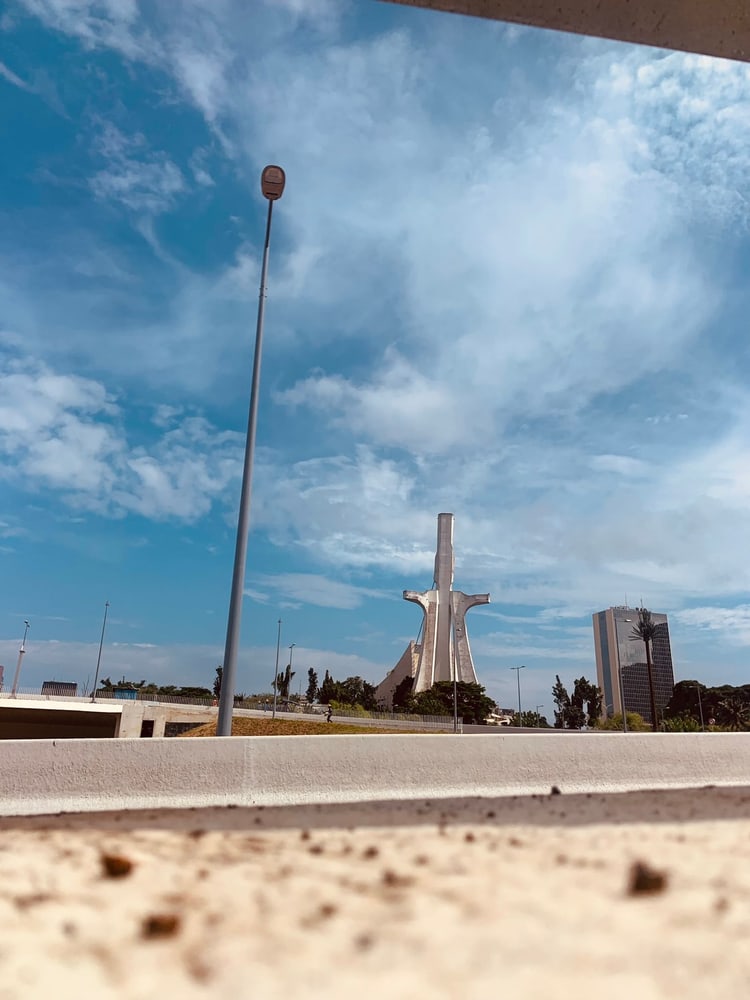
Arrival in Abidjan: Plateau, St. Paul's Cathedral and maquis
ABJ → Plateau(Plateau)→ St. Paul's Cathedral → Treichville
On the first day, handle airport procedures, visa, cash, SIM card, and transfers first. The business towers, lagoon, and St. Paul's Cathedral in the Plateau district quickly establish the scale of Abidjan; for your first maquis dinner in the evening, you can have attieke with grilled fish, but ask the hotel to recommend a spot and call a car in advance. Do not cross too many neighborhoods right after landing.
Book airport transfers in advance; arrange point-to-point transportation for the evening. Ask about the price and size of fish before ordering; have the spicy sauce served on the side.
Day 2 · Abidjan(Abidjan)
A Deeper Look at Abidjan: Banco, Cocody, and the 4th District
Banco National Park → Cocody → Marcory/4th District
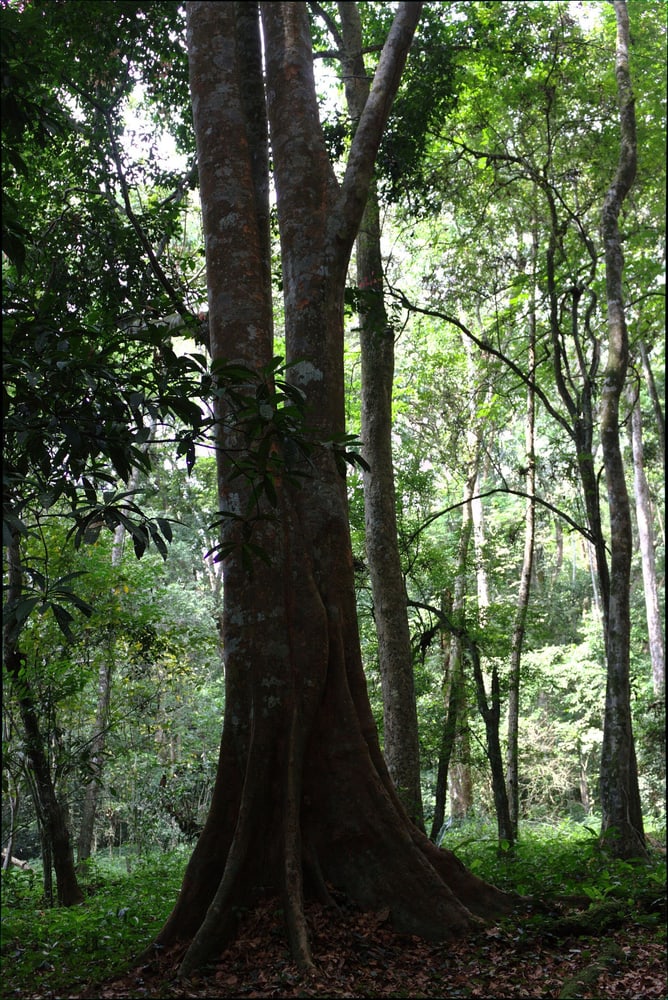
Abidjan does not have a single city center. Banco National Park makes the city suddenly turn green, Cocody showcases residential and business aspects, while Marcory/4th District features restaurants, nightlife, and expatriate communities. What really needs to be written about is cross-district transport and timing: traffic jams can change the course of a day.
Arrange activities by district during the day; avoid crossing too many neighborhoods spontaneously. In the evening, only go to restaurants or maquis confirmed in advance.
Day 3 · Grand-Bassam(Grand-Bassam)
Grand-Bassam: Old Town and Sea Breeze
Abidjan → Grand-Bassam → Seaside
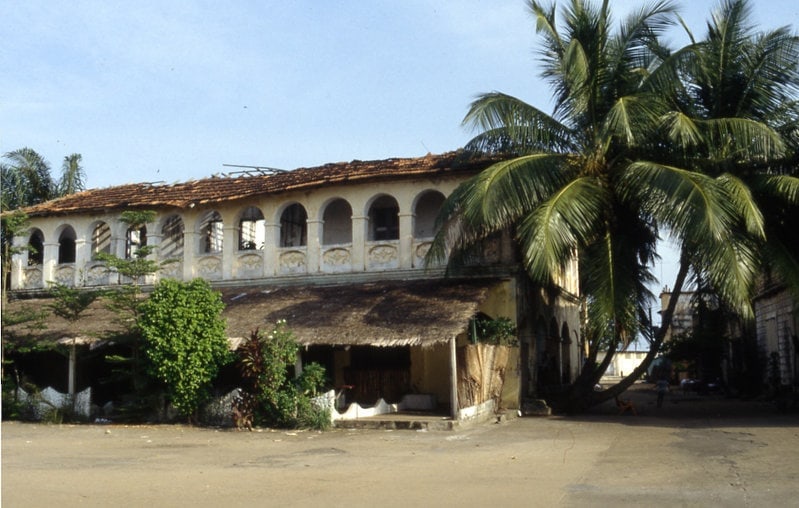
Grand-Bassam is both a seaside weekend getaway and a World Heritage old town. Visit the old town, museums, and colonial architecture in the morning, and have a seaside meal in the afternoon. The Atlantic waves are not always suitable for swimming; tourists should follow local advice and not portray this as an ordinary calm beach.
Suitable for a chartered day trip or staying one night. Swim with caution; keep your phone and cash safe.
Day 4 · Yamoussoukro(Yamoussoukro)
Yamoussoukro: Political Capital and Giant Cathedral
Abidjan → Yamoussoukro → Cathedral
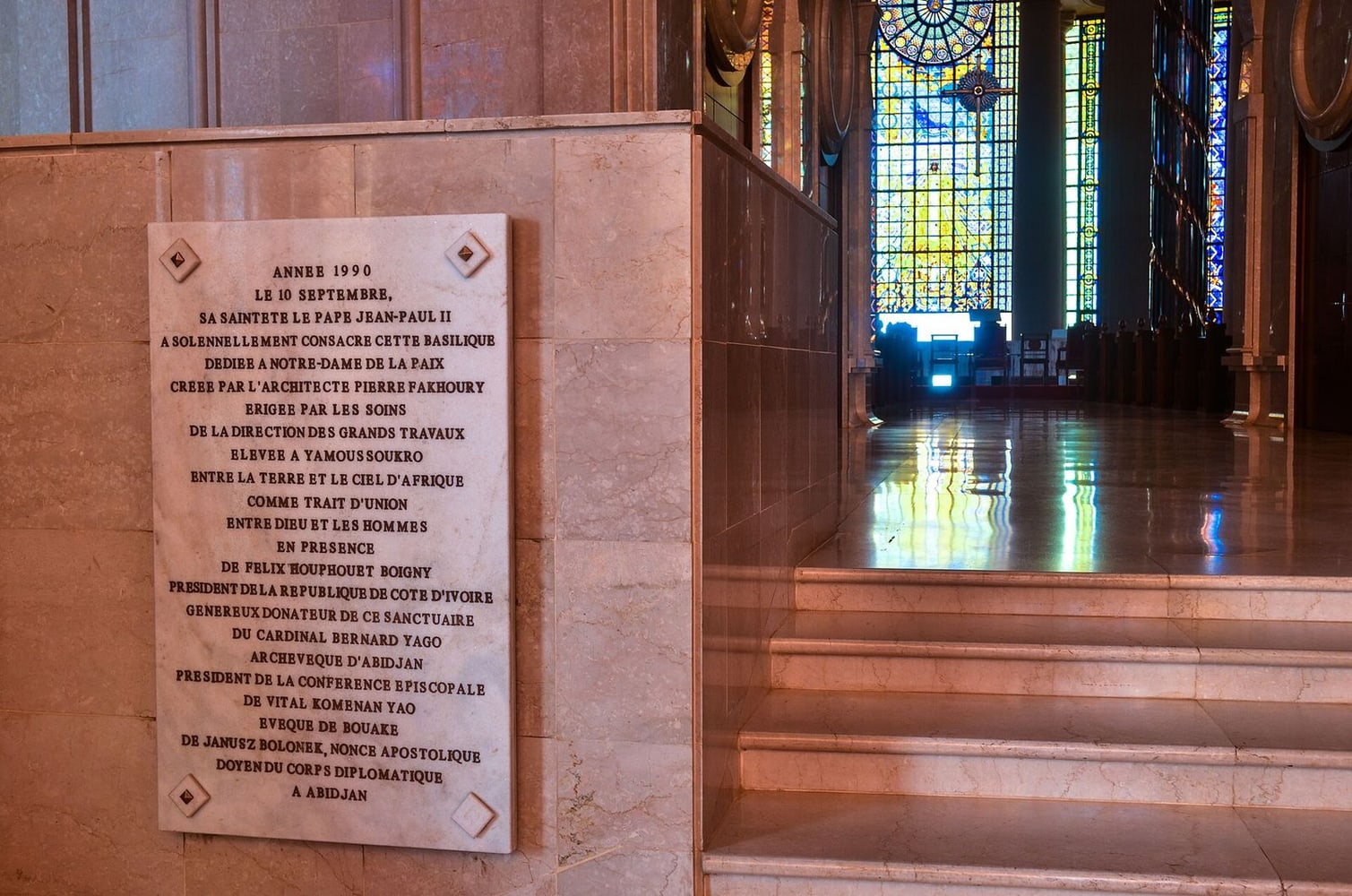
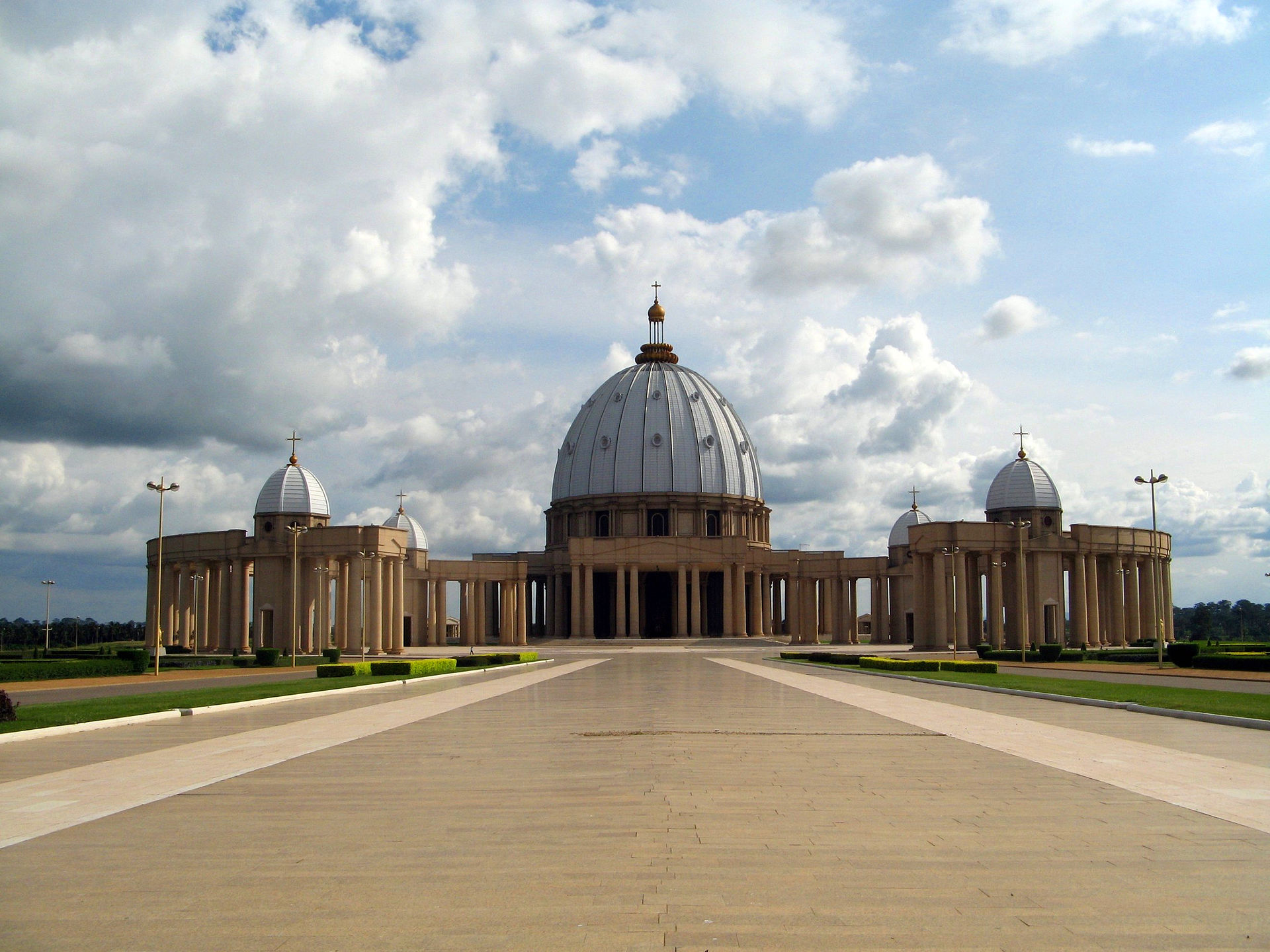
Yamoussoukro shifts Côte d'Ivoire from its economic capital to a political symbol. The cathedral, wide roads, and urban scale make one understand the country's ambitions. It is not a short excursion from Abidjan; the journey is long, so the driver, refueling, lunch, and return time must all be clearly written down.
Depart early or stay overnight; confirm the vehicle, driver, and return time. Do not rush back fatigued at night.
Day 5 · Sassandra(Sassandra)
Sassandra or Cocoa Coast
Yamoussoukro/Abidjan → Sassandra
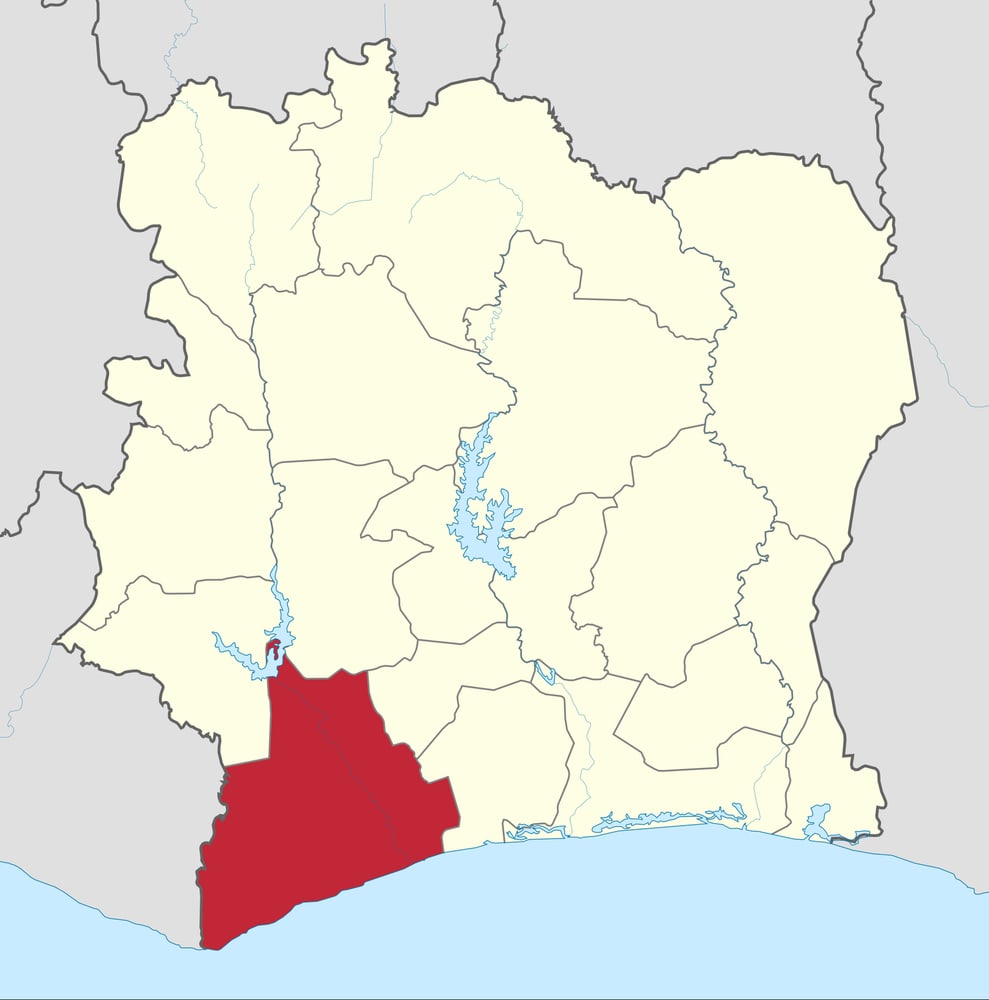
Sassandra and the Cocoa Coast pull Côte d'Ivoire from Abidjan towards the Atlantic, fishing ports, and cocoa production areas. This area is better suited for slow travel, not a checklist of attractions. If time is tight, this day can be skipped to focus more on an overnight stay in Grand-Bassam.
Roads, accommodation, and drivers need to be confirmed in advance; be more conservative during the rainy season. Do not schedule remote coastal areas for the day before returning.
Day 6 · Coastline
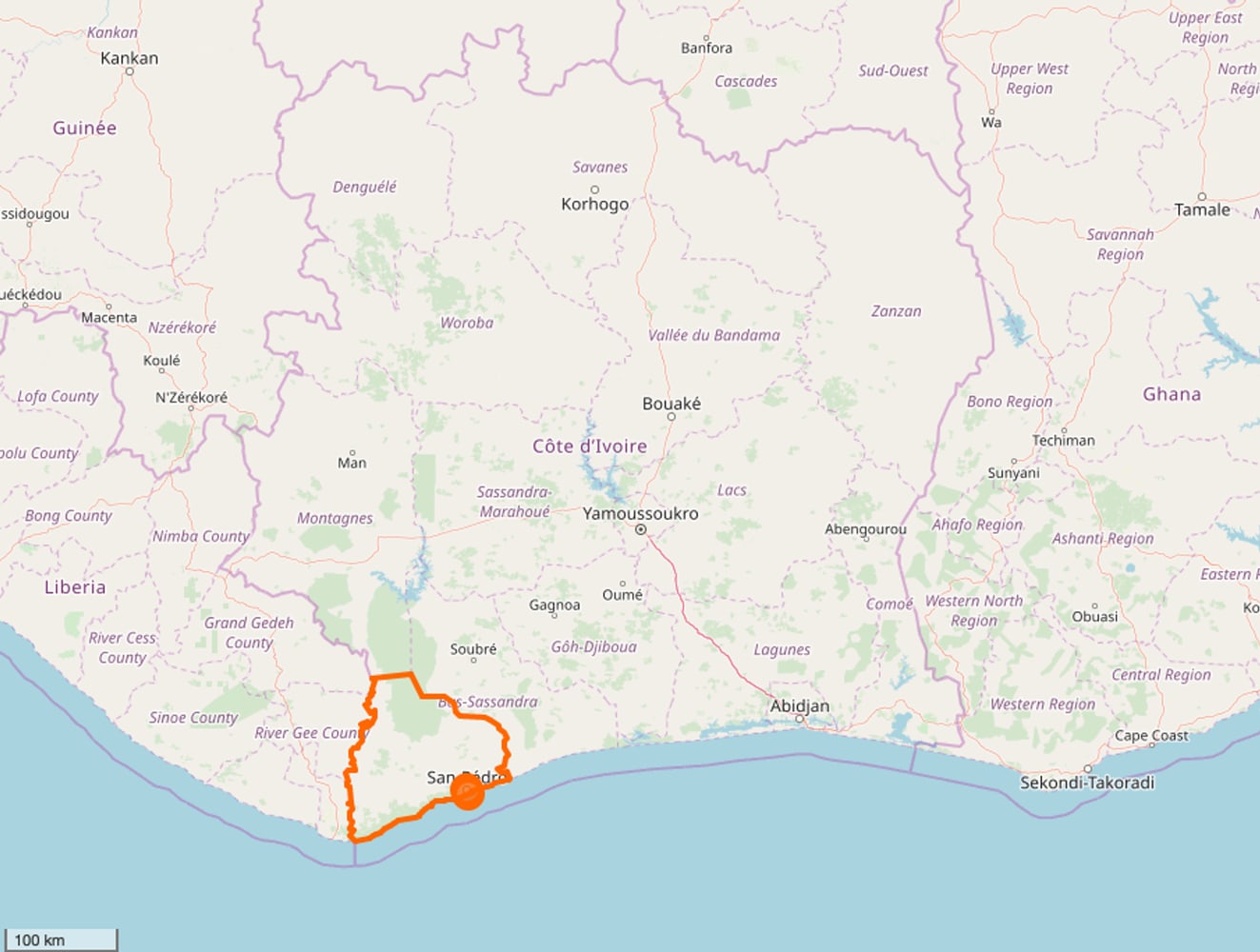
San Pedro/Grand-Lahou: Slowly Returning to Abidjan
Sassandra → Coastal Route → Abidjan
This day is suitable for writing about the road, the sea, villages, and cocoa production areas, rather than forcing a search for famous attractions. For most first-time visitors, this is a deep route; if budget or time is insufficient, honestly suggest shortening the trip—returning to Abidjan to rest is more useful than rushing.
Only use trusted drivers and clear routes. Prepare water, cash, and offline maps for remote road segments.
Day 7 · Abidjan(Abidjan)
Wrapping Up in Abidjan: Markets, Museums, and Orange Jerseys
Adjamé Market → Museum → ABJ
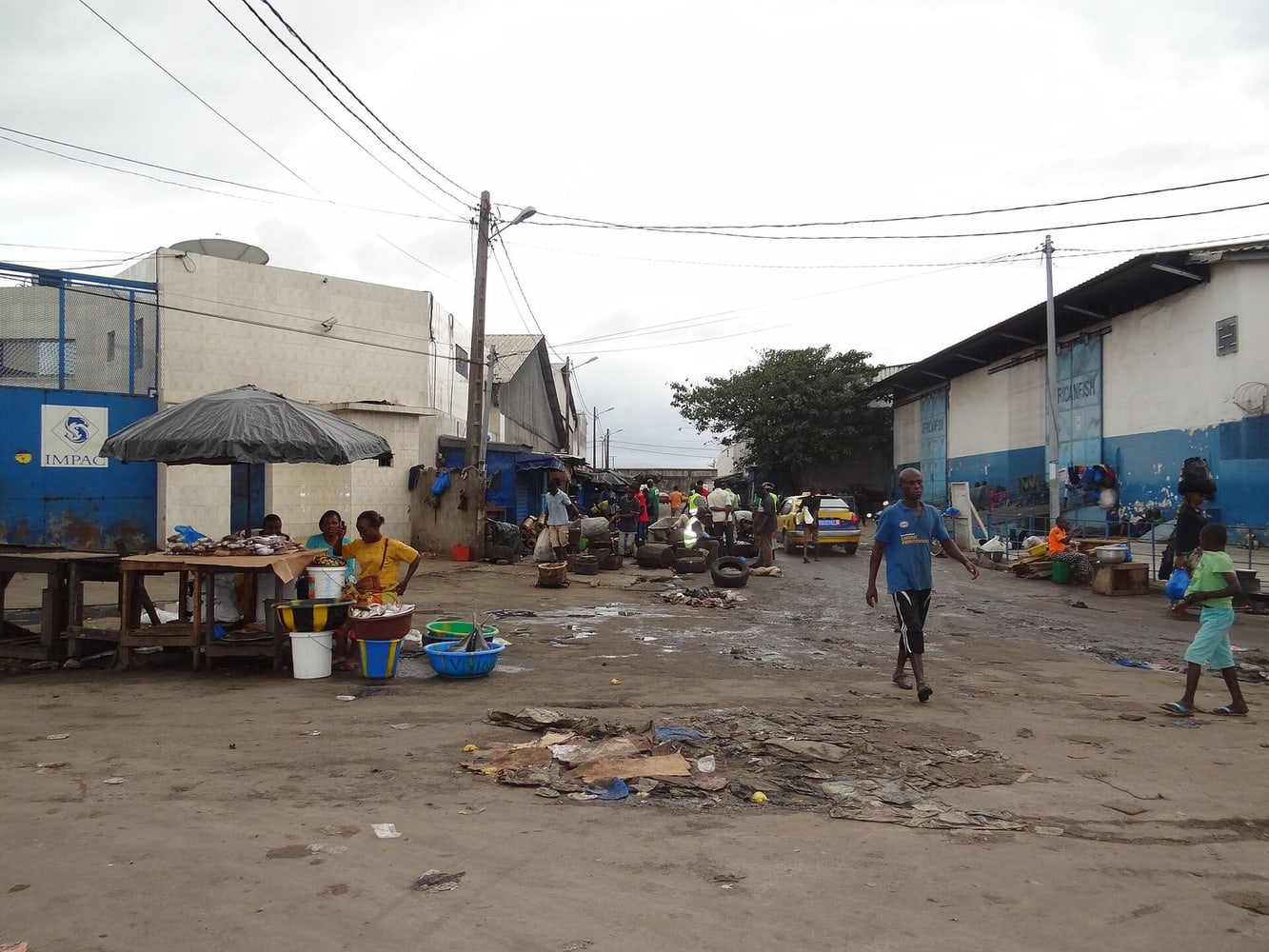
Finally, return to Abidjan to wrap up the trip with markets, museums, orange national team jerseys, and a maquis dinner. Markets can offer a strong sense of reality, but they also require the most boundaries: do not secretly photograph people, soldiers, police, or vendors, and do not leave your phone exposed for long periods.
It is recommended to have a local guide at the market; do not schedule distant suburbs on the return day. Allow enough buffer time for the airport route accounting for traffic.
🇨🇮 Ivory Coast travelogue
Ivory Coast Football Travel: From Abidjan to Grand-Bassam, Following the Ball That Made a Country Fall Quiet
Read the narrative side of Ivory Coast: how arrival, football curiosity and local rhythm connect beyond a checklist.
# Ivory Coast Football Travel: From Abidjan to Grand-Bassam, Following the Ball That Made a Country Fall Quiet
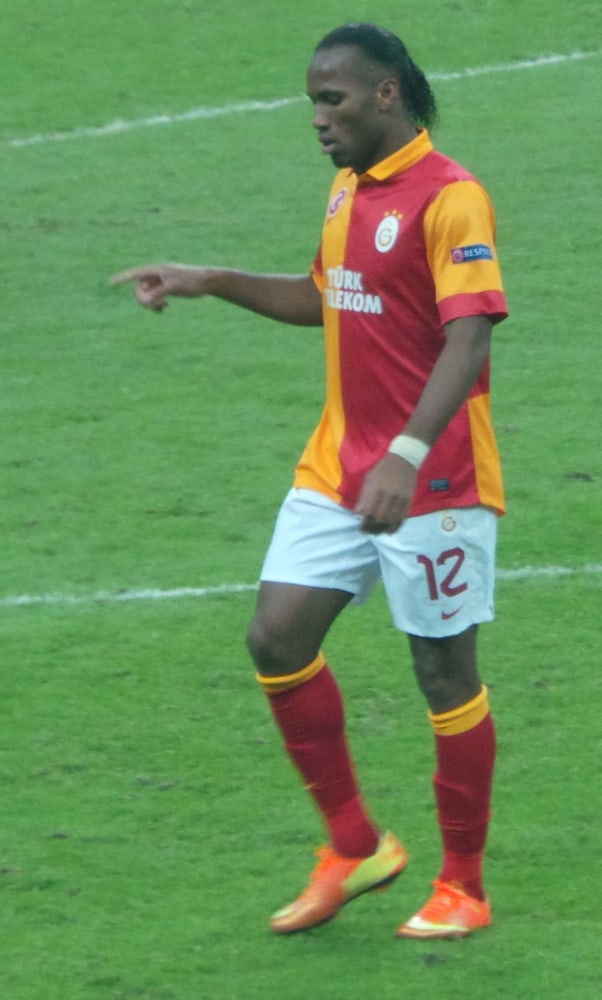
When I arrived in Abidjan, the air outside the airport felt soaked in seawater: humid, bright, and carrying a trace of grilled fish smoke. The taxi drove toward the city, and the driver tuned the radio to a sports channel where the host was rapidly reading players' names in French. When he heard Drogba, he did not turn around. He simply tapped the steering wheel with his finger and said, "Everyone here knows him."
Read the full Ivory Coast World Cup travel storyFamous player match photos
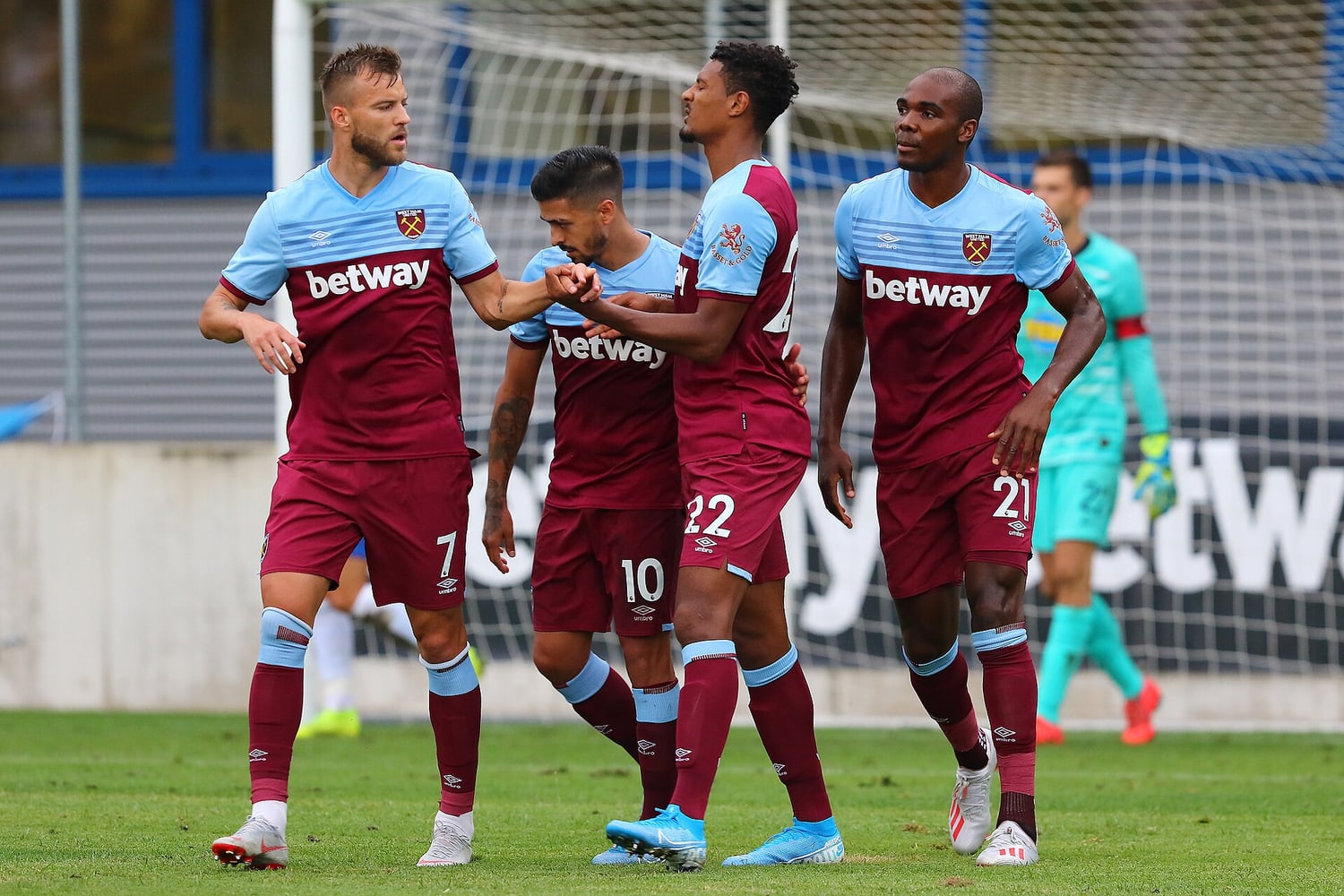
Ivory Coast players and football faces
Player context helps connect Les Elephants with hometowns, clubs, diaspora stories and routes a traveler can actually follow.

Recommended arrival airports and flight budget
Ivory Coast airports and flight routes
Use this section to compare arrival airports, likely connections and where each route places you inside Ivory Coast. Flight prices are seasonal planning ranges; check live fares before booking.
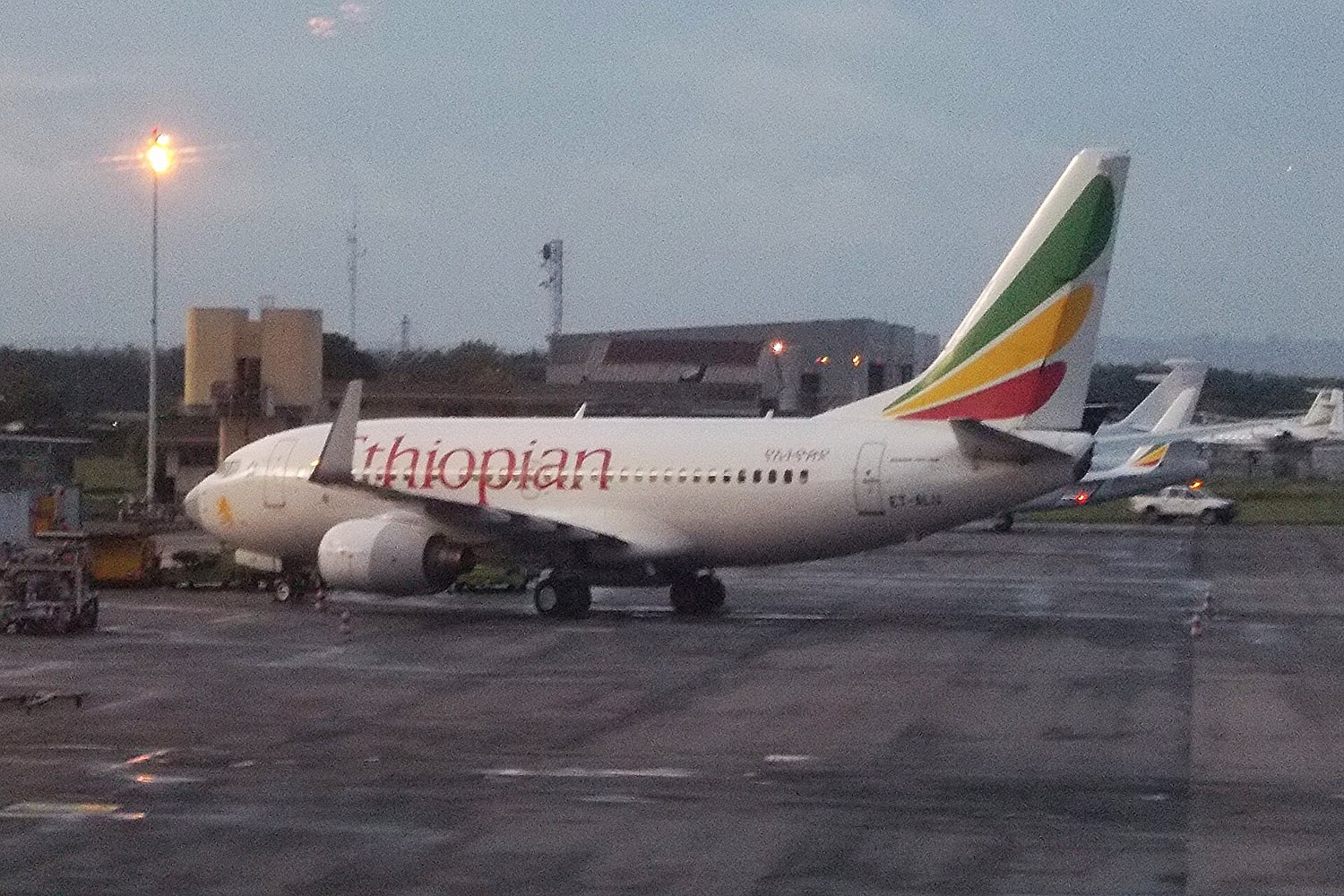
ABJ
Felix-Houphouet-Boigny International Airport(Felix-Houphouet-Boigny International Airport)
Côte d'Ivoire's main international gateway, travel time to Abidjan city center depends on traffic.
Local customs
- Abidjan is a city mixing business, nightlife, markets, and coastline, not a single resort destination. French greetings are very important; adding Bonjour/Bonsoir with a merci will significantly reduce friction. Always ask before photographing markets, religious sites, military police, ports, and portraits; do not argue or secretly photograph when encountering security personnel.
- Maquis is a good entry point to understand Ivorian urban life: grilled fish, attieke, alloco, football TV, music, and friends dining at the same table. But visitors should get recommendations from hotels or locals, and ask clearly if fish is priced by piece, weight, or set meal before ordering; use point-to-point transportation when leaving at night.
- Safety writing should be realistic but not create panic. Most tourist routes in Abidjan are feasible, but northern border areas and political gatherings should be avoided; in the city, pay attention to mobile phones, bags, nighttime walking, and opening windows during traffic jams. Listen to local advice for swimming at the beach; Atlantic waves and rip currents cannot be treated as ordinary resort beaches.
Ivory Coast Best local transport?
"For getting around Abidjan, prioritize Yango/Heetch, hotel cars, or trusted drivers. From airport to city, use official taxis/pre-booked transfers, don't follow touts inside the terminal. Urban gbaka, woro-woro are very local but not friendly to first-time visitors, especially with luggage. For intercity travel to Grand-Bassam, you can charter a car or take regular station minibuses; for Yamoussoukro/Sassandra, it's recommended to confirm driver and route in advance. Don't temporarily cross too many districts at night; call a car before leaving maquis at night."
Ivory Coast Route reference?
For your first visit to Côte d'Ivoire, do not limit the content to 'Abidjan + beaches'. Day 1 handles the airport and Plateau District, Day 2 covers Cocody/Banco/4th District, Day 3 is for Grand-Bassam, Day 4 for Yamoussoukro, Day 5/6 choose Sassandra or the coastline based on time, and finally return to Abidjan to wrap up. The football thread enters through Drogba, Haller, and Kessié, but the real focus lies in maquis TVs, orange jerseys, and memories of Abidjan clubs. Arrival in Abidjan: Plateau, St. Paul's Cathedral and maquis ABJ → Plateau(Plateau)→ St. Paul's Cathedral → Treichville Book airport transfers in advance; arrange point-to-point transportation for the evening. Ask about the price and size of fish before ordering; have the spicy sauce served on the side. A Deeper Look at Abidjan: Banco, Cocody, and the 4th District Banco National Park → Cocody → Marcory/4th District Arrange activities by district during the day; avoid crossing too many neighborhoods spontaneously. In the evening, only go to restaurants or maquis confirmed in advance. Grand-Bassam: Old Town and Sea Breeze Abidjan → Grand-Bassam → Seaside Suitable for a chartered day trip or staying one night. Swim with caution; keep your phone and cash safe.
Hotels after landing
Where to stay in Ivory Coast
Hotel choices are grouped by route logic, airport access, neighborhood feel and match-day convenience.
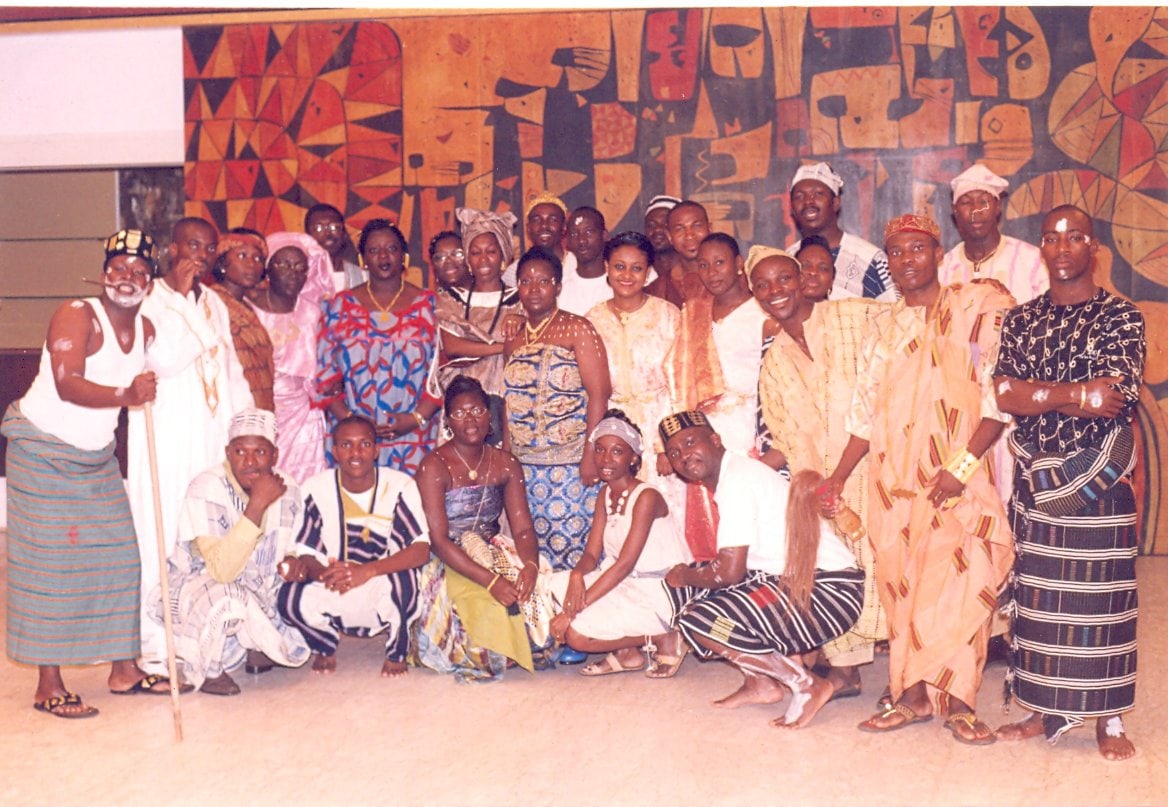
Sofitel Abidjan Hotel Ivoire(Sofitel Abidjan Hotel Ivoire)
Price range: $220-$500/night
A classic high-end hotel in Abidjan, suitable for first-time arrivals, business district meetings, and tourists looking to minimize urban uncertainty. Its advantages are security, fleet service, dining, and landmark status; disadvantages are high prices and less local atmosphere than maquis neighborhoods. Suitable as a base for the first two nights.
Pullman Abidjan(Pullman Abidjan)
Price range: $180-$380/night
The Plateau location is suitable for business, museums, downtown, and lagoon transit. For tourists, its value lies in reducing cross-district travel and the stress of returning at night. If the itinerary focuses on the seaside and nightlife, driver arrangements are still required.
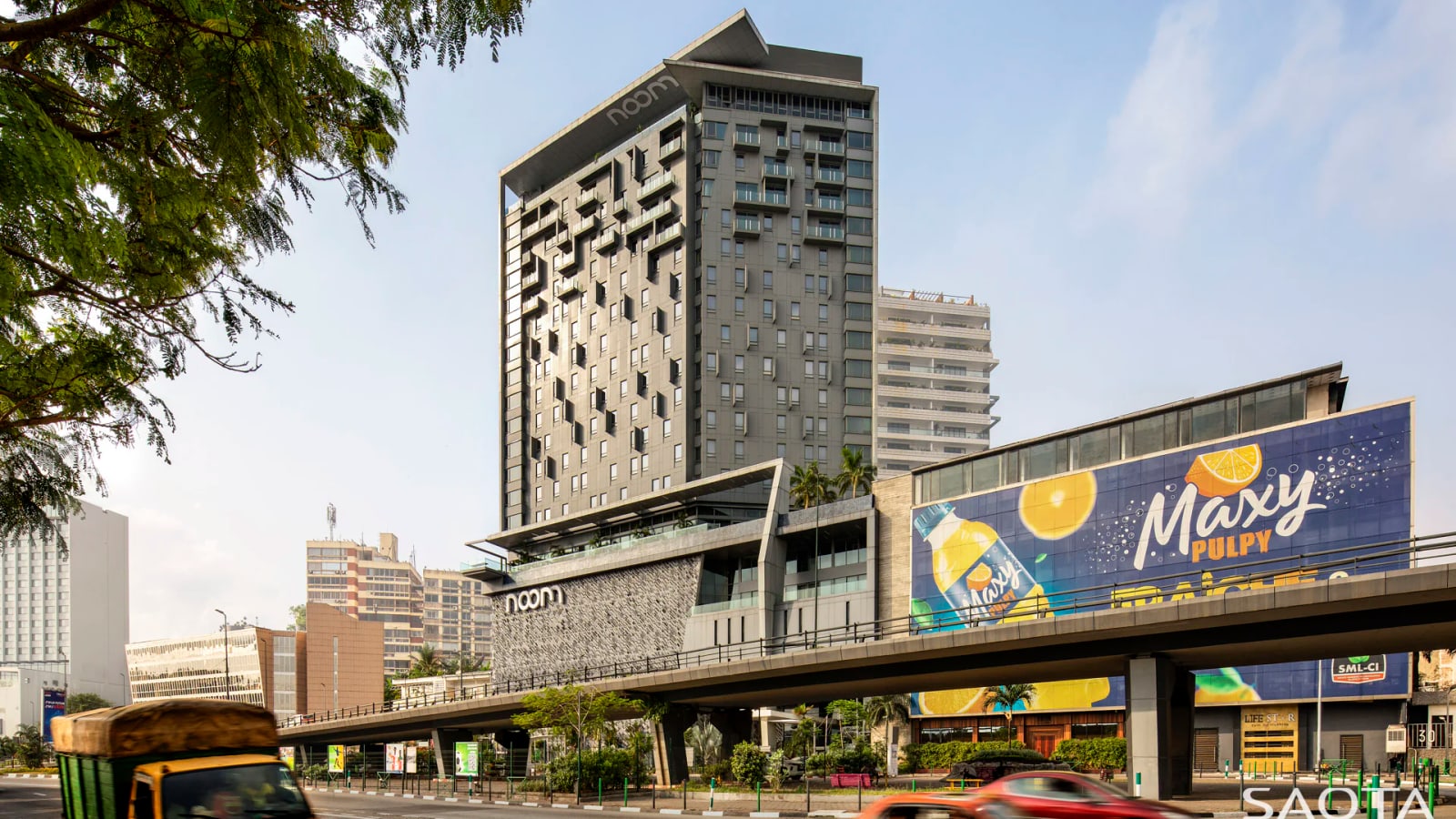
Noom Hotel Abidjan Plateau(Noom Hotel Abidjan Plateau)
Price range: $160-$340/night
A modern business option, suitable for those who want to stay in Plateau but do not necessarily seek traditional luxury. Restaurant, public spaces, and taxi convenience are advantages; first-time visitors should still confirm airport transfers and night outings through the hotel.
Local food and restaurants
What to eat in Ivory Coast
Food notes focus on local dishes, realistic restaurant types, prices and the easiest first meals after arrival.
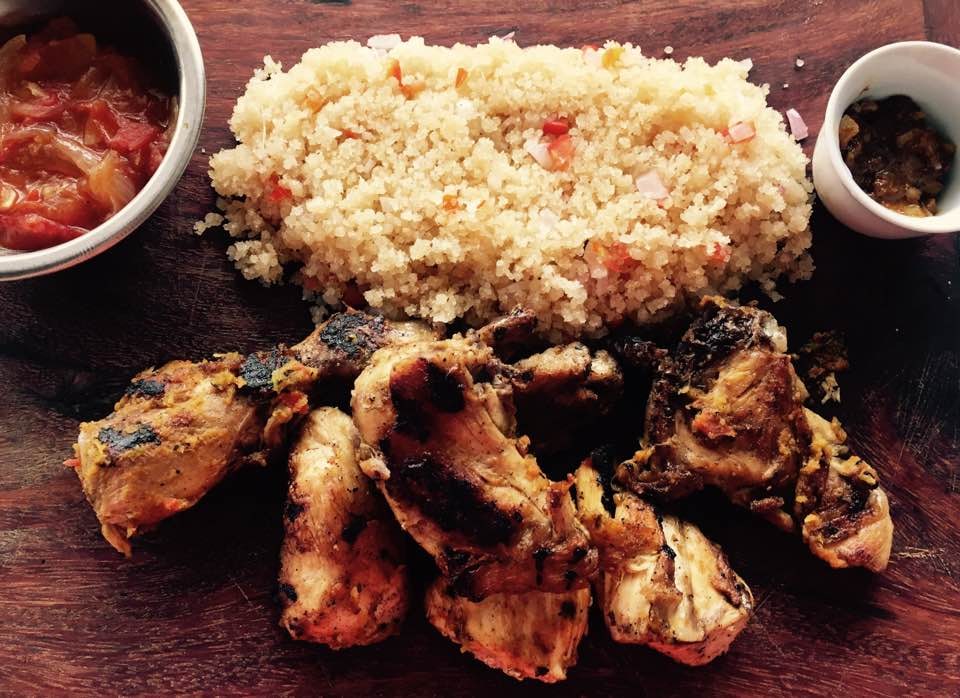
Attieke(Attieke)
Attieke is a staple at the Côte d'Ivoire table, often served with grilled fish, onions, tomatoes, chili, and oil. When ordering, ask about the price and size of the fish; it is safer to have the spicy sauce served on the side. It is best enjoyed in maquis or seaside restaurants in Grand-Bassam, combining food, soccer on TV, and urban socializing.
Restaurants: Maquis restaurants, Grand-Bassam seaside restaurants, hotel-recommended local restaurants
Budget: XOF 2,000-8,000
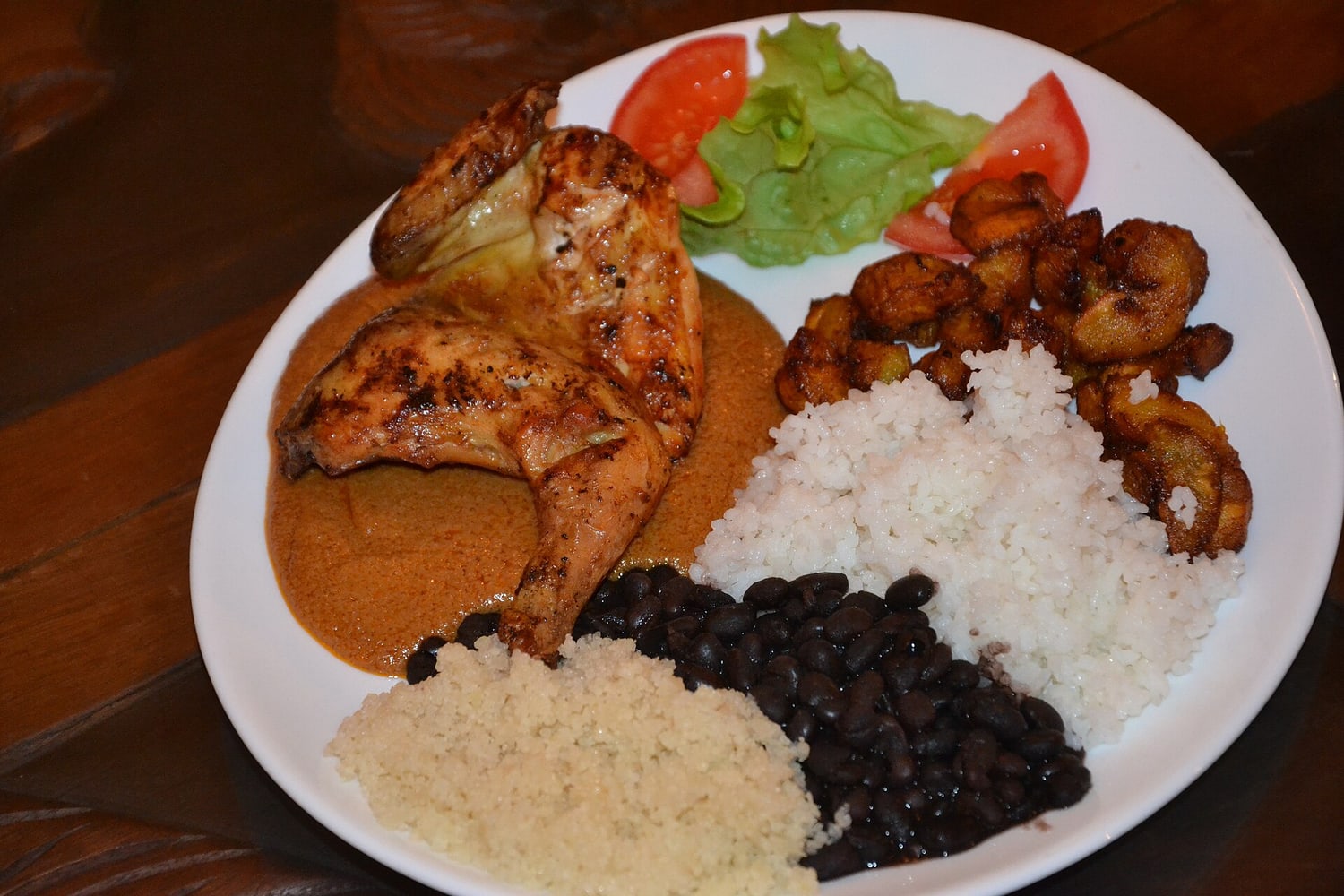
Alloco(Alloco)
Alloco is a frequent side dish on match nights and street meals, often appearing with grilled chicken, grilled fish, or spicy sauce. It is cheap but oily, suitable for sharing. For street stalls, check if the oil is fresh and if the stall is busy; do not go for cheap options in places with poor hygiene.
Restaurants: Street stalls, maquis restaurants, nighttime grilled fish shops
Budget: XOF 500-3,000
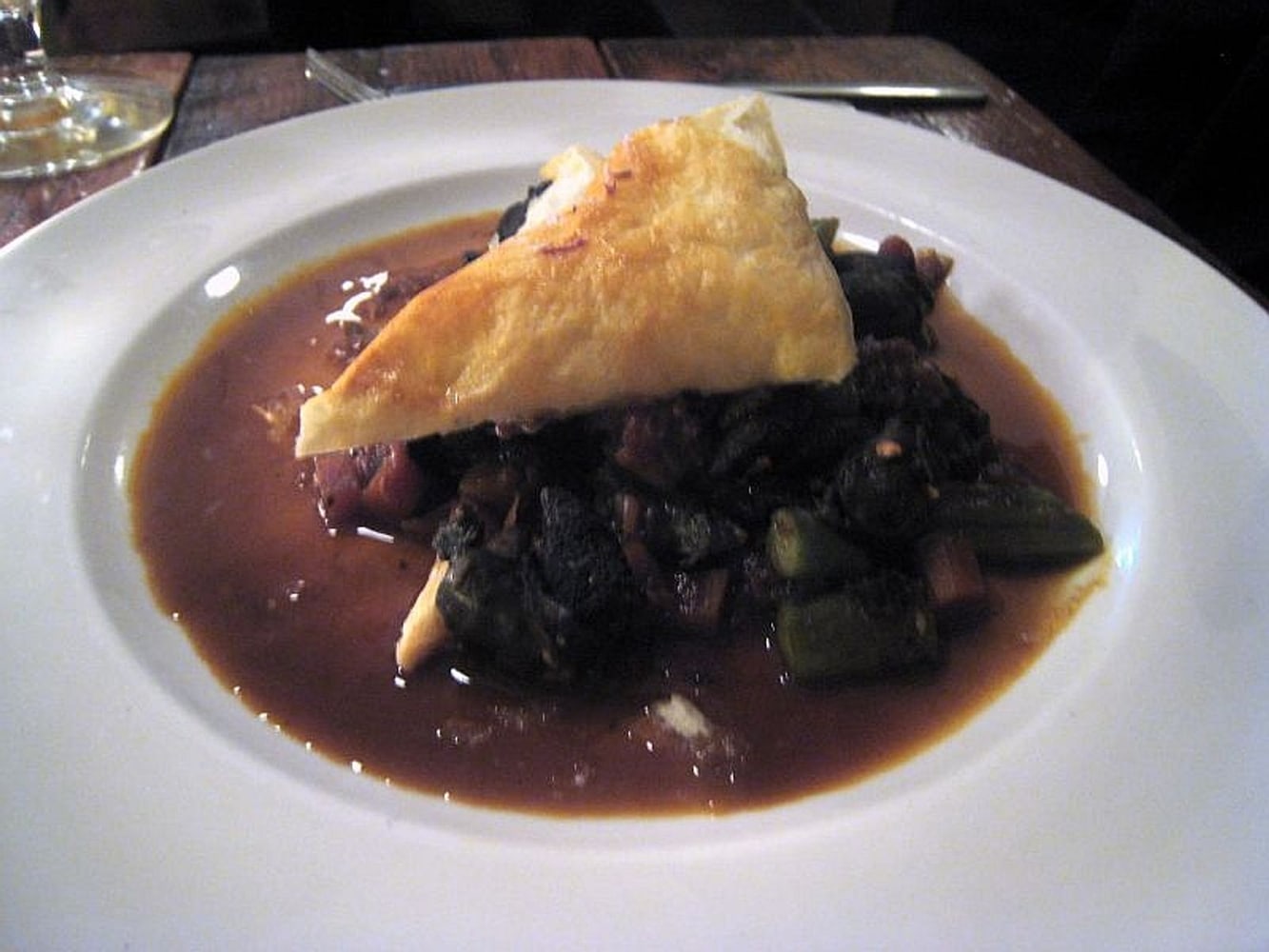
Kedjenou(Kedjenou)
Kedjenou is more like a home-style slow-cooked dish, where chicken, vegetables, and spices are stewed in a pot to create rich flavors. It fits a rustic, home-style taste and is not necessarily available in every tourist restaurant; it is best to ask locals or the hotel to recommend traditional restaurants.
Restaurants: Traditional restaurants, local family-style eateries, Abidjan maquis
Budget: XOF 4,000-12,000
Ivory Coast Local food and restaurants?
Attieke(Attieke) Attieke is a staple at the Côte d'Ivoire table, often served with grilled fish, onions, tomatoes, chili, and oil. When ordering, ask about the price and size of the fish; it is safer to have the spicy sauce served on the side. It is best enjoyed in maquis or seaside restaurants in Grand-Bassam, combining food, soccer on TV, and urban socializing. Maquis restaurants, Grand-Bassam seaside restaurants, hotel-recommended local restaurants XOF 2,000-8,000
Shows, bars, and entertainment
Ivory Coast after dark and local nights
Evening ideas link music, waterfronts, markets and football screens without forcing every night into a match plan.
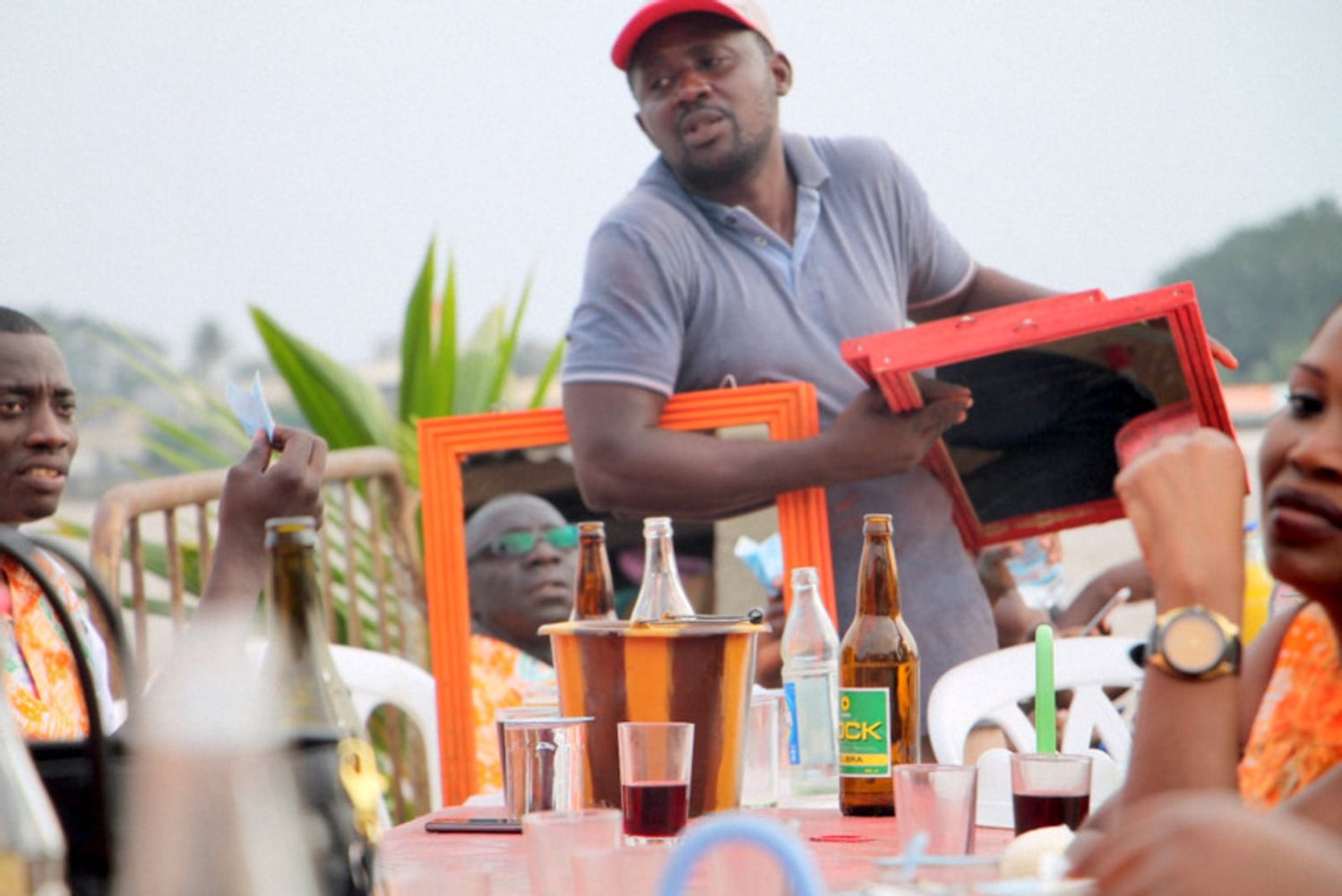
Abidjan maquis nights
Maquis nights combine music, soccer on TV, grilled fish, attieke, and urban socializing. Professional advice is to choose a spot in advance, carry little cash and no ID, ask prices when ordering, and call a car before finishing; do not spontaneously follow strangers to unfamiliar neighborhoods.
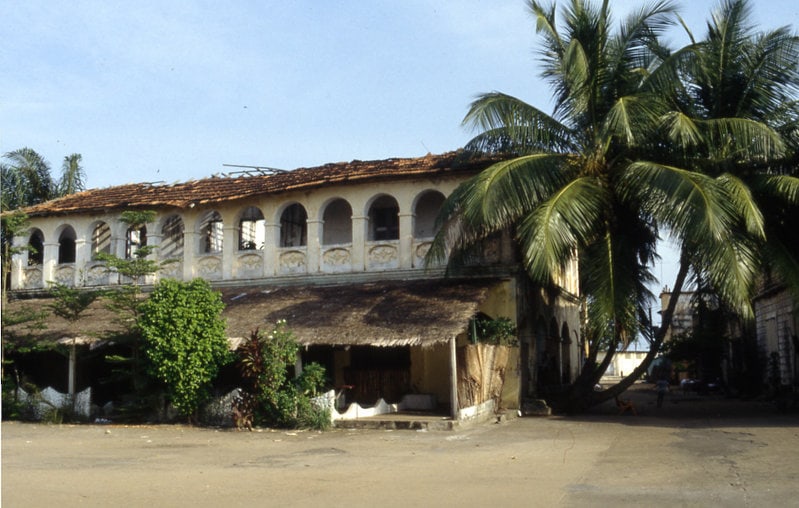
Grand-Bassam day trip
Grand-Bassam is both a seaside weekend spot and a World Heritage old town. Visit the old town and museums in the morning, have a seaside meal in the afternoon, and return to Abidjan by evening or stay overnight. Listen to local advice for swimming; many sea areas have large waves, so do not treat it as a calm bay.
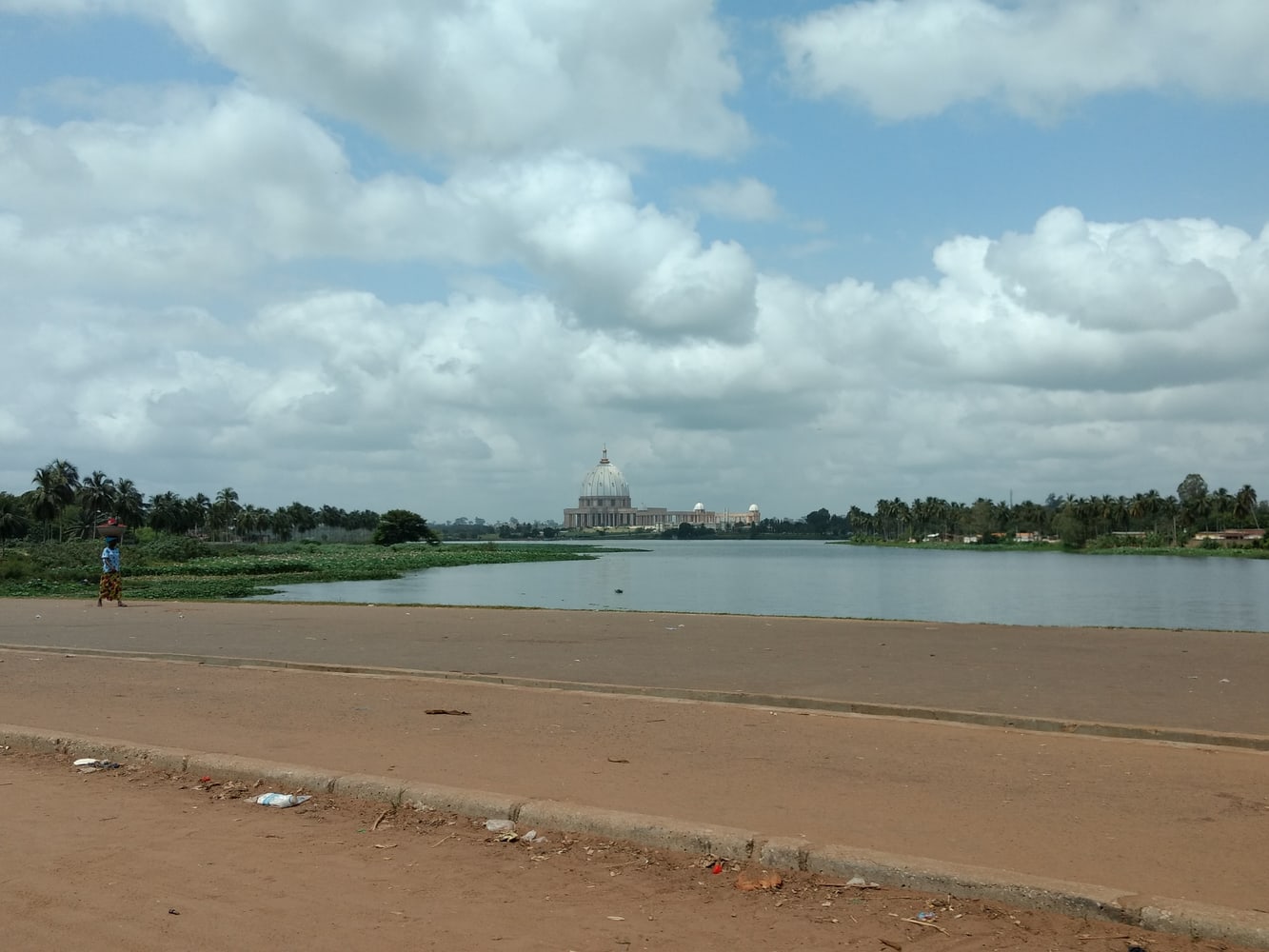
Yamoussoukro Basilica
The Yamoussoukro Basilica is the strongest visual anchor of the political capital, but the drive is long and it cannot be treated as a short trip from Abidjan. Plan for the road, refueling, lunch, driver, and return time; a day trip just for photos will be tiring, so staying overnight is more relaxed.
Domestic football clubs
Ivory Coast football clubs and match culture
Club context adds the local football layer behind Les Elephants, from stadium neighborhoods to supporter routines. The Côte d'Ivoire club module should serve the Abidjan football map and domestic talent export. ASEC, Africa Sports, FC San Pedro, and SO Armee are not just team names, but gateways to youth academies, city derbies, port cities, and the political capital. The focus for tourists is understanding the local football ecosystem, not just temporarily looking for star players.
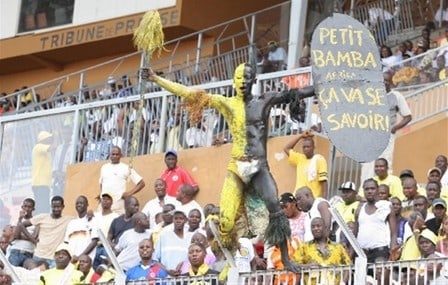
Abidjan (Abidjan)
ASEC Mimosas (ASEC Mimosas)
ASEC Mimosas is one of the most important clubs and youth academies in Côte d'Ivoire, suitable for connecting the local talent system after the Drogba era. When writing about it, emphasis should be placed on the academy, talent exports, and the daily life of football in Abidjan, rather than just listing honors.
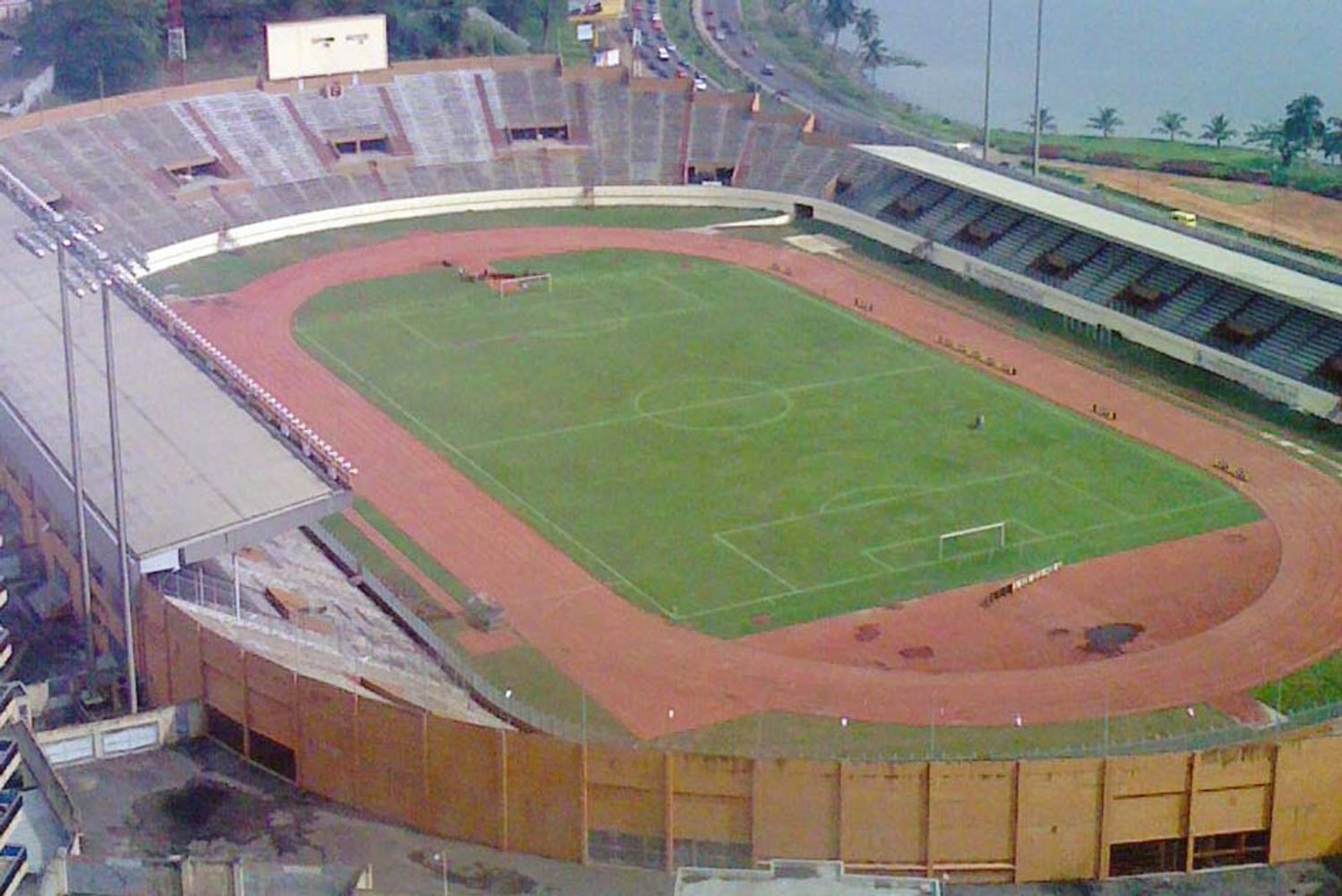
Abidjan (Abidjan)
Africa Sports d'Abidjan (Africa Sports d'Abidjan)
Africa Sports d'Abidjan is a traditional club that can highlight city derbies, long-standing fans, and local league history. It ensures that Abidjan's football memory does not rest solely on the national team.
San-Pedro (San-Pedro)
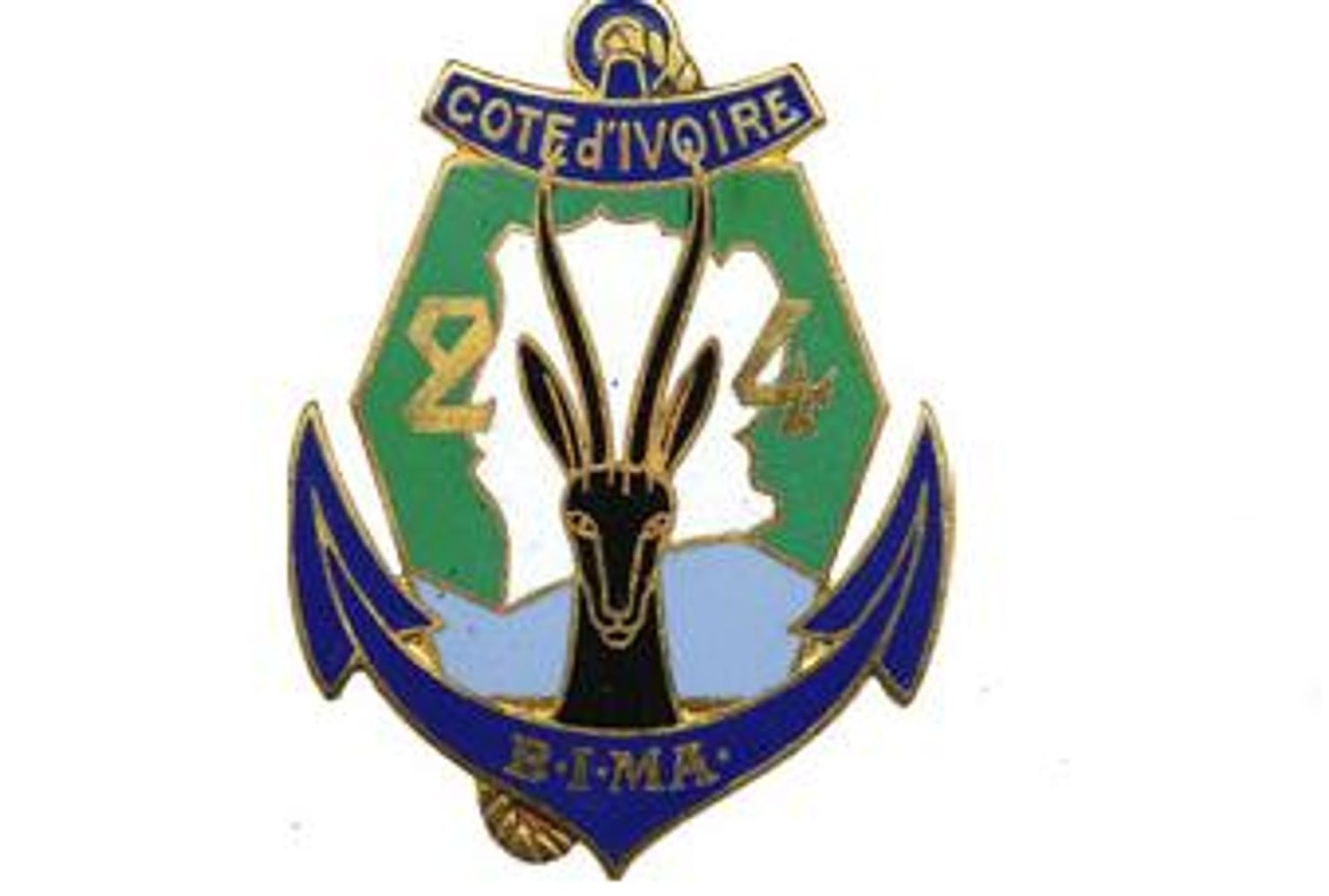
FC San Pedro (FC San Pedro)
FC San Pedro extends the page from Abidjan to the southwestern port and the Cocoa Coast. It is suitable for in-depth routes, illustrating that Ivorian football is not solely concentrated in the economic capital.
Yamoussoukro/Abidjan
SO Armee (SO Armee)
SO Armee is suitable for supplementing the map of the political capital and the domestic league. When writing about it, Yamoussoukro, state institutions, and the local league should be linked together, rather than listing it in isolation.
Landscape anchors
Ivory Coast attractions that match the Les Elephants story
These landscapes and city stops give the football-led route a stronger sense of place. Behind the Elephants lies the football culture of Abidjan, Grand-Bassam, Yamoussoukro, the Cocoa Coast, and the Gulf of Guinea.
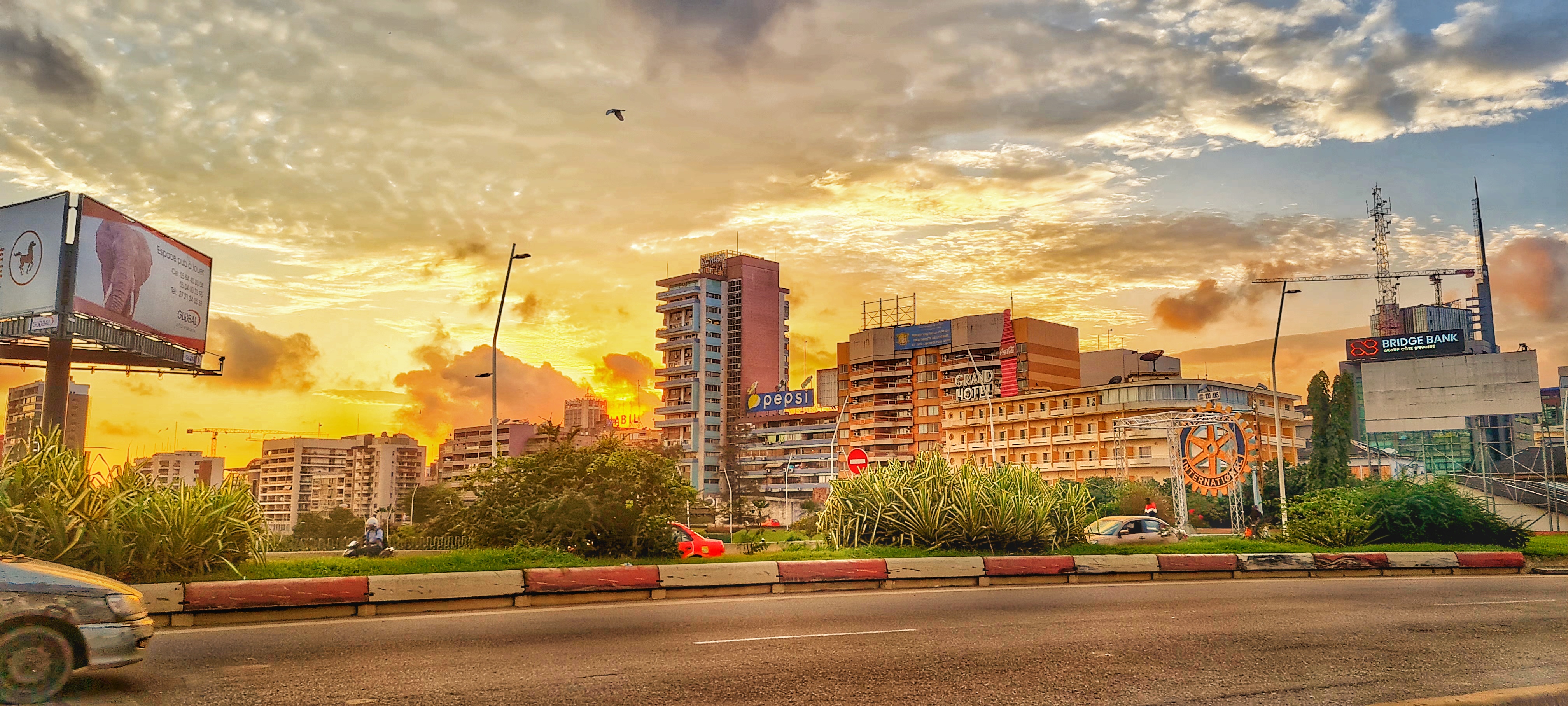
Abidjan
Abidjan is the most realistic base for travel in Côte d'Ivoire: lagoons, the Plateau skyline, the Cocody neighborhood, Banco forest, maquis nights, and cross-district traffic all determine how the itinerary is planned.
Grand-Bassam
Grand-Bassam brings the route to the real Atlantic Ocean and historical sites: World Heritage old town, N'zima fishing village, colonial districts, seaside restaurants, and a strong wave coast that demands respect.
Yamoussoukro
Yamoussoukro serves as an inland contrast to Abidjan: broad roads, the scale of a political capital, and the Basilica of Our Lady of Peace are key scenes for understanding the national imagination of Côte d'Ivoire.
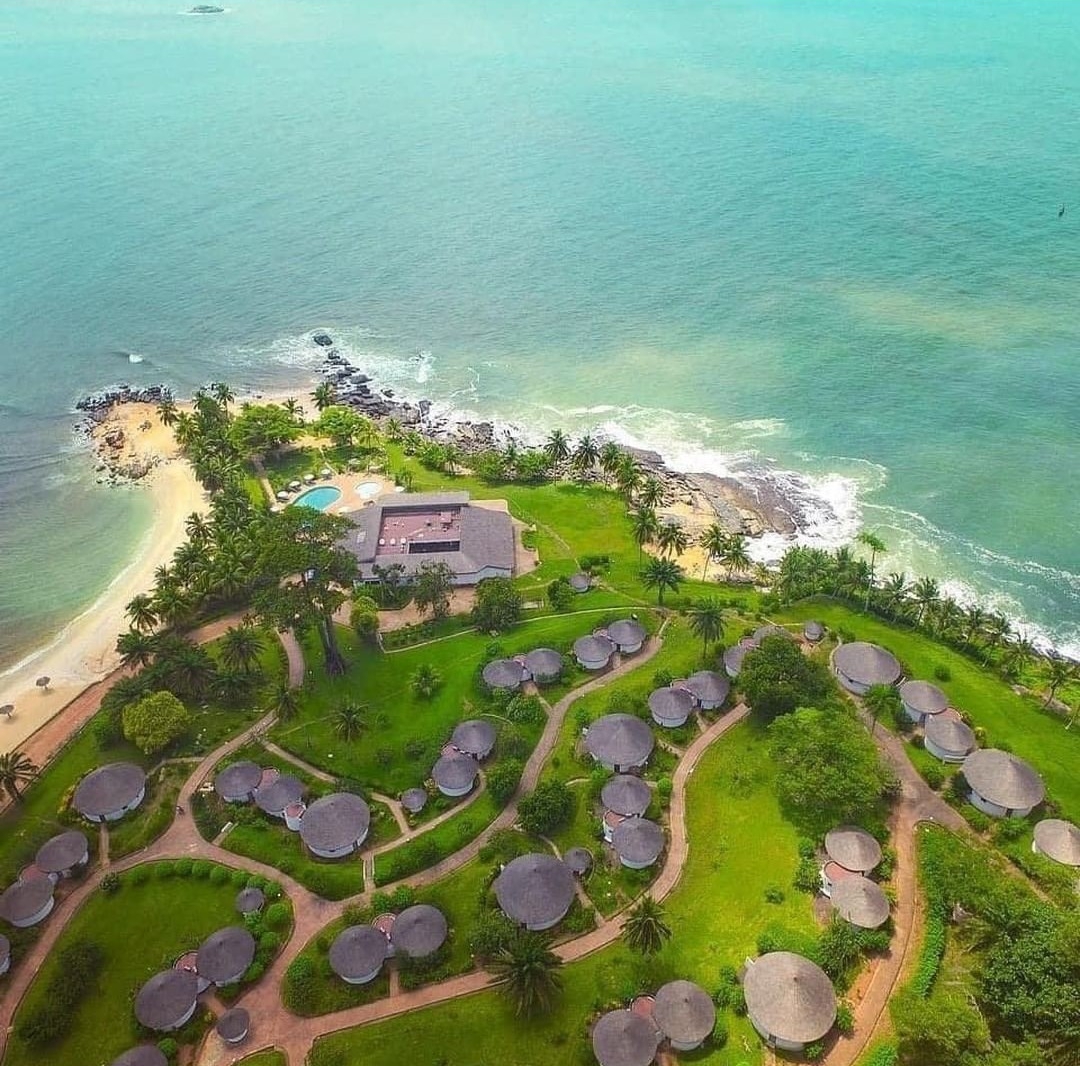
Sassandra
Sassandra is more suitable for slow travelers: river mouths, fishing boats, rainforest-edged beaches, cocoa roads, and long-distance transport on the southwest coast all need to be planned before leaving Abidjan.
Country travel map
Ivory Coast travel map for planning
Save the map to compare airports, hotels, restaurants, clubs and attractions before building the route. The map centers on Abidjan, connecting to Grand-Bassam in the east, Yamoussoukro in the north, and Sassandra and San Pedro in the southwest.
Download travel mapBrowse all downloadable travel maps →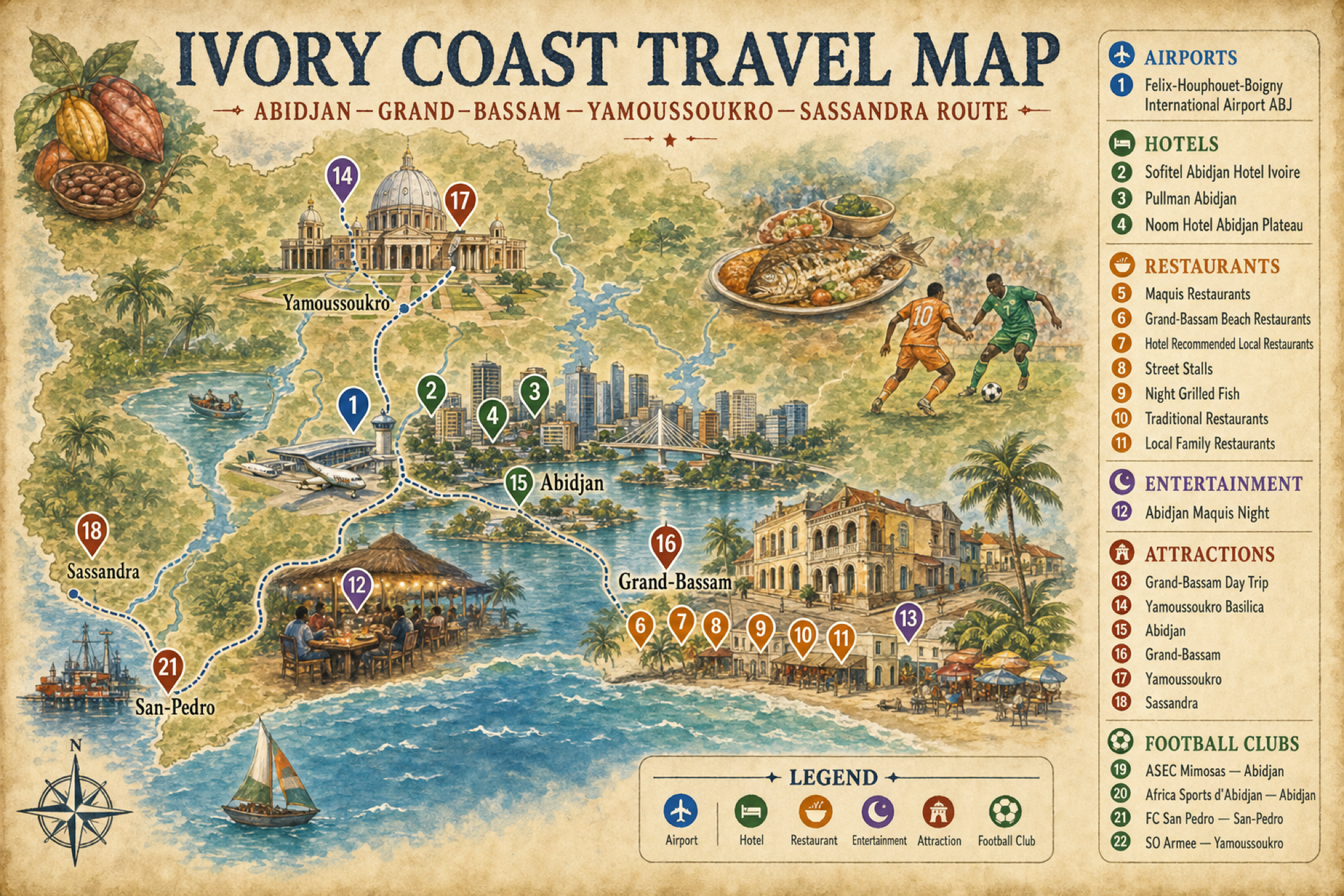
How much money to prepare
Ivory Coast trip budget
A quick cost frame for flights, hotels, food, transport and paid activities before you book. 6-7 day Abidjan + Grand-Bassam + Yamoussoukro trip, it's recommended to prepare approximately $1,200-$2,800 per person.
Many transit options from Europe and Africa, Asian departures usually require transit.
High-end hotels in Abidjan are significantly more expensive than in local cities.
Local maquis is affordable, hotel restaurants are more expensive.
Grand-Bassam, Yamoussoukro, and private car day trips vary greatly.
Short urban trips are cheap, intercity private cars are the main expense.
Travel rules, prices, transport schedules and safety conditions can change. Recheck official entry rules, local advisories and current prices before booking.
Route reference
Ivory Coast itinerary sources
External route references used to check pacing, logistics and travel assumptions.
- Cote d'Ivoire Tourism — Used to verify official travel information.
- UNESCO Grand-Bassam — Used to verify information on the Grand-Bassam World Heritage site.
- FIF Cote d'Ivoire — Used to verify the context of the national team and local football.
- — ASEC Mimosas is one of the most important clubs and youth academies in Côte d'Ivoire, suitable for connecting the local talent system post-Drogba era. When writing about it, emphasis should be placed on the academy, talent exports, and the daily football life in Abidjan, rather than just listing honors.
- — Africa Sports d'Abidjan is a traditional club that allows for the depiction of city derbies, long-standing fans, and local league history. It ensures that Abidjan's football memory extends beyond just the national team.
- — FC San Pedro extends the page's scope from Abidjan to the southwestern port and the Cocoa Coast. It is suitable for in-depth routes, illustrating that Ivorian football is not solely concentrated in the economic capital.
- — Armée Sports is suitable for supplementing the map of the political capital and the domestic league. When writing about it, Yamoussoukro, state institutions, and the local league should be linked together, rather than listing the name in isolation.
Related route
Compare another World Cup travel route
Editorial notes
How this Ivory Coast guide is maintained
Researched and edited by the Travel the Teams editorial team. This guide combines route-planning context, cultural background and the sources linked above; it is not a substitute for official entry, safety, health or transport advice.
Travel requirements and prices change. Confirm current information with the relevant official authorities and providers before booking.